
Overnight missile and drone barrage damages power plants and substations across 11 regions, triggering Kyiv's first emergency cuts since spring as freezing temperatures loom.
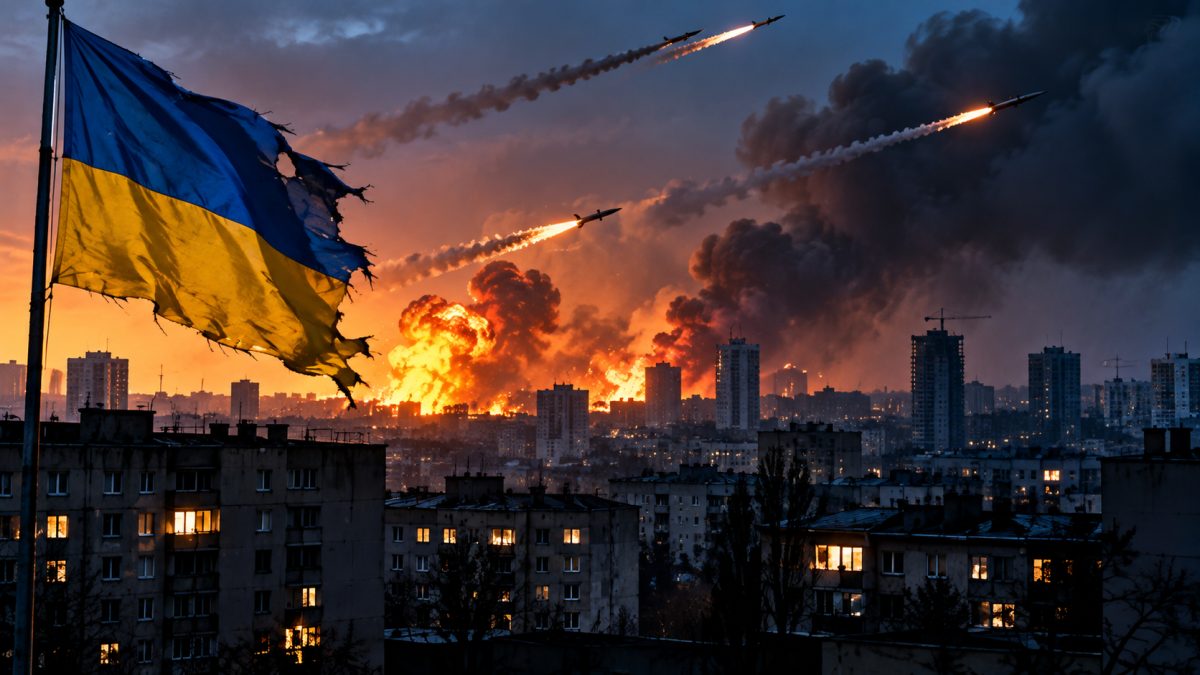
Russia launched its heaviest combined assault on Ukraine's energy infrastructure in months overnight into Wednesday, September 30, 2026, striking power facilities around Kyiv and across multiple regions just as the country prepares for the winter heating season. Ukraine's national grid operator, Ukrenergo, ordered emergency electricity cuts in Kyiv and three surrounding regions, the first such measure in the capital since spring, while officials said the barrage struck at least 11 regions nationwide, killing at least six people and injuring 33, according to Reuters and BBC reporting.
Trapped Civilians in Russian-Occupied Oleshky Boil Weeds for Food as Bodies Are Left for Dogs
A Night of Escalating Strikes Across the Capital
View this post on Instagram
The attack unfolded as missiles and drones tore through the electricity system serving Kyiv and nearby areas, forcing Ukrenergo to impose emergency restrictions after the damage created an immediate imbalance between available generation and demand. DTEK, Ukraine's largest private energy company, confirmed it carried out emergency outages in the capital at Ukrenergo's direction, later reporting that power had been restored to roughly 8,000 homes following what it described as "a difficult night" for Kyiv.
Ukraine's Energy Ministry said consumers in the Kyiv, Dnipropetrovsk, Donetsk, Sumy and Kharkiv regions remained without electricity as the day progressed, though officials did not provide a definitive national total for affected households or a timeline for full restoration. Casualty figures varied throughout Wednesday as rescue and damage-assessment operations continued: BBC reported at least six deaths and 33 injuries nationwide, ABC News cited four deaths in the Kyiv region including a child, and Reuters initially reported one death and five injuries around the capital. The Times of India, citing local officials, put the toll at seven. Such discrepancies reflect the difficulty of compiling a single national count while different agencies report from different regions at different times, rather than any contradiction in the underlying facts.
Trump Signs Russia Sanctions Law, Gains Power for 100% Tariffs on India, China
Koretskyi Calls It the Largest Strike Since Spring
Ukrainian Prime Minister Serhii Koretskyi described the assault as the largest attack on the country's energy infrastructure since spring, saying on Telegram that energy facilities had been hit in several regions as part of a continuing Russian campaign against critical infrastructure. He said Russia had been striking energy infrastructure on virtually every day since the summer, with the frequency of attacks around Kyiv rising sharply from the end of August, according to reporting cited by the Times of India.
Beyond the power grid, Ukrainian officials reported damage to residential buildings, social infrastructure, civilian businesses and railways. Russia's Defence Ministry, for its part, said its forces conducted a "massive" overnight strike targeting facilities it claimed supported Ukraine's military-industrial production, naming the Kyivska electrical substation near Nalyvaikivka, the Kyiv hydroelectric power plant in Vyshhorod, the Trypilska thermal power plant, and an energy-storage facility in Horenychi. Moscow also said it struck a communications centre in Kyiv, an industrial complex in the Odesa region, and port infrastructure in Izmail. Ukrainian authorities confirmed damage to the Trypilska plant — a major electricity supplier for Kyiv — but did not independently verify every Russian claim, including the alleged communications centre strike.
Why Timing Matters: Ukraine's Race Against Winter
The assault's impact is magnified by its timing. Forecasts called for overnight frosts across many areas of Ukraine starting Thursday, October 1, just as the strikes tore into infrastructure that sustains far more than lighting. Damage to generation and transmission networks threatens district heating, water pumping, communications and rail transport, since many of Ukraine's heating systems depend on electricity even when gas or another fuel is the primary source.
Russian forces have repeatedly targeted Ukraine's power infrastructure throughout the full-scale war, with strikes historically intensifying each autumn and winter when electricity demand peaks and damage to heating-related facilities carries the heaviest consequences. Ukrainian officials have characterized the recurring strategy as an effort to "weaponize winter" by stripping civilians of heat, electricity and running water. Wednesday's attack followed weeks of intensifying Russian air activity around the capital, with Moscow significantly increasing missile and drone strikes since the end of August — meaning the September 30 barrage represented an escalation of an already expanding campaign rather than an isolated event.
Grid Operators Scramble as Damage Assessment Continues
Ukrenergo said the emergency cuts were unavoidable given the scale of damage caused by the strikes, while DTEK confirmed it acted on the grid operator's directive to implement outages in Kyiv. The rapid restoration of power to roughly 8,000 households suggested some localized damage could be repaired quickly, even as broader constraints on the grid persisted across the five affected regions.
Ukraine's energy system has weathered repeated Russian bombardment since the February 2022 invasion began, with operators repairing damaged plants, adding emergency generation capacity and strengthening regional interconnections between strikes. Yet the network remains structurally exposed, since large generating stations, substations and high-voltage transmission lines are difficult to conceal, harden or rapidly replace. Officials have said they were preparing for another sustained winter assault, and Wednesday's attack — with continuing outages in five regions and no confirmed schedule for full restoration — signals that preparation is now being tested in real time.
What Comes Next for Ukraine's Power Grid
The immediate priority for Ukrainian authorities is restoring electricity and shoring up the grid before heating demand climbs further. Emergency cuts could be extended or repeated if damaged facilities cannot be fully repaired, or if additional strikes further reduce available generation capacity across the network.
The practical consequences of Wednesday's attack will hinge on the extent of damage to generation assets, substations and transmission lines, the pace of repairs, the availability of imported electricity, and backup power capacity. No final nationwide casualty count, complete damage inventory, or confirmed restoration timeline was available as of Wednesday, and claims about specific military or strategic targets named by Moscow remain unverified by Ukrainian authorities. What is established is that the assault damaged critical power infrastructure, forced emergency cuts in and around Kyiv, disrupted service across multiple regions, and struck at the opening of a season when electricity and heating reliability become most critical for millions of Ukrainians.