
Baseball's all-time hits leader gets cleared by the White House, but his path to Cooperstown still runs through a separate set of rules.
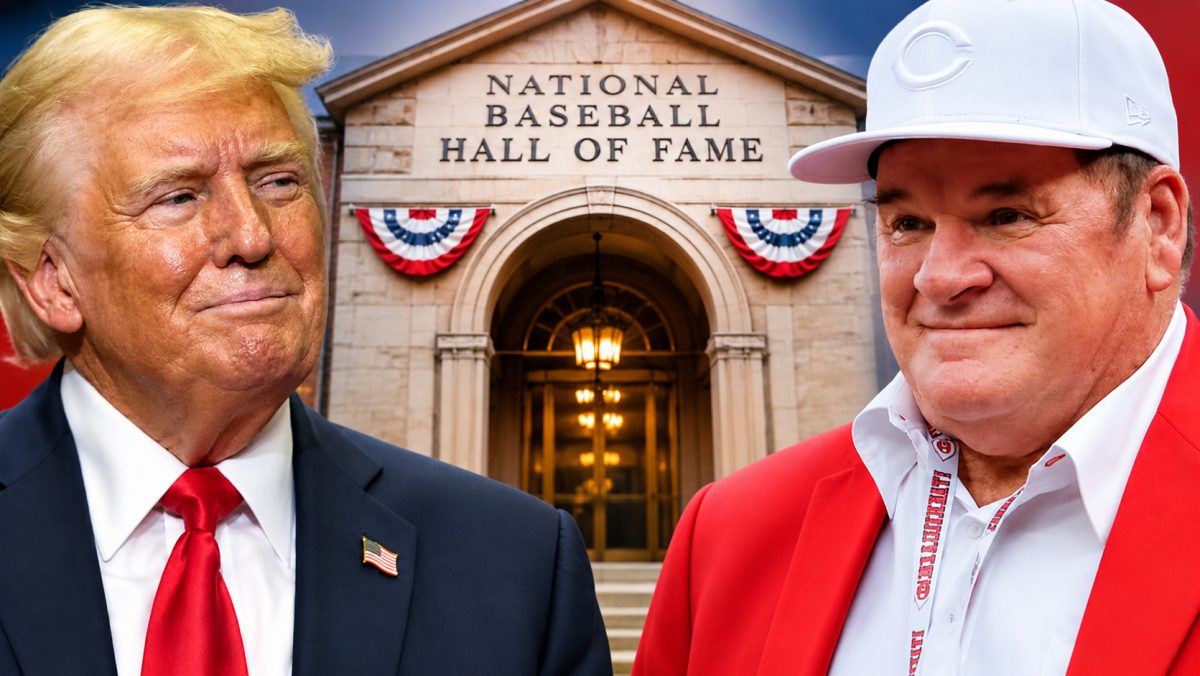
President Donald Trump pardons Pete Rose posthumously, announcing on Thursday, November 19, 2026, that he gave the late Cincinnati Reds icon a "Complete and Total Pardon" for his federal tax conviction, more than two years after Rose died at age 83.
Mets Tarik Skubal Meeting Set Up as Cy Young Ace Nears Free Agency Decision
Trump Announces The Pardon From Air Force One
Trump broke the news in a Truth Social post while flying home from Asia aboard Air Force One. He called Rose a "true Baseball SUPERSTAR & LEGEND" and pointed to his 4,256 career hits, still the most in Major League Baseball history. Trump also wrote that Rose's hit record "will never be broken," though he mistakenly called it a single-season mark rather than a career total.
The president didn't stop there. He said Rose "was treated terribly by Major League Baseball in not allowing him to go into the Baseball Hall of Fame." That line captures the heart of Trump's argument, even though a presidential pardon has no power over how the Hall of Fame runs its own business.
A White House official later clarified what the pardon actually covers. It applies to Rose's 1990 guilty plea for filing false tax returns, not his gambling on baseball games. That distinction matters because Rose was never criminally charged for betting on the sport. His lifetime ban came from Major League Baseball's internal discipline process, not a courtroom.
Georgia Tech Coaching Staff Firings 2026: Why Brent Key Cut Four Assistants
The Tax Case That Sent Rose To Prison
Rose pleaded guilty in 1990 after prosecutors said he failed to report income, including money tied to memorabilia sales and personal appearances. U.S. District Judge S. Arthur Spiegel sentenced him on July 19, 1990, to five months behind bars. Rose served his time and walked free in 1991.
That tax conviction is separate from the gambling scandal that defined the rest of Rose's public life. In August 1989, Rose accepted a spot on baseball's permanently ineligible list rather than fight the league's findings at a formal hearing. Investigator John Dowd had concluded Rose bet repeatedly on Cincinnati Reds games while he was the team's player-manager and manager between 1985 and 1987.
Betting on your own team isn't a small rule violation in baseball. It strikes at the core of competitive fairness. For years, Rose denied ever betting on baseball at all. He eventually admitted to wagering on Reds games, but by then the damage to his reputation and his Hall of Fame chances was already done.
A Hall Of Fame Career Overshadowed By Scandal
Strip away the gambling controversy, and Rose's playing record stands among the best in baseball history. He won National League Rookie of the Year in 1963, helped the Reds capture back-to-back World Series titles in 1975 and 1976, made 17 All-Star teams, and won three batting titles. He spent most of his career in Cincinnati, with later stops in Philadelphia and Montreal.
None of that kept the Hall of Fame's doors open, though. In 1991, the Hall's board passed a rule barring anyone on MLB's permanently ineligible list from being considered for election. That single rule change locked Rose out of Cooperstown consideration for more than three decades, despite the numbers he put up on the field.
Rose died in September 2024, still locked out, still insisting he deserved a second look. His death didn't end the debate. If anything, it pushed baseball toward finally reconsidering his case.
MLB's 2025 Policy Shift Changed The Equation
In May 2025, Commissioner Rob Manfred changed how MLB treats permanently ineligible people after they die. Under the new policy, their ineligible status gets restored once they're gone, opening a door that had been shut for decades. The decision affected 17 people in total, including Rose and Shoeless Joe Jackson, the Chicago White Sox outfielder banned for his role in the 1919 Black Sox scandal.
Manfred's reasoning rested on a simple idea: league discipline shouldn't follow someone past death. That policy shift, not Trump's pardon, is what actually cracked open Rose's path back toward Cooperstown. Reporting points to 2028 as the earliest year Rose could appear before Hall of Fame voters under the new framework, though eligibility is nowhere near a guarantee of induction.
Trump's pardon and Manfred's policy are two separate tracks that happen to be running in the same direction. One wipes away a federal conviction. The other removes a league-imposed barrier. Together, they've revived a conversation that baseball fans have argued over for more than 35 years.
What Comes Next For Rose's Legacy
The pardon itself closes a legal chapter that had nothing to do with wins, losses, or Hall votes. It doesn't erase MLB's investigation, doesn't rewrite the record books, and doesn't force Cooperstown to act. The Hall of Fame is a private institution, and its voters will decide Rose's fate on their own timeline, using their own criteria.
Supporters see the pardon as a symbolic win, proof that public opinion has shifted in Rose's favor since his death. Critics still argue that betting on games involving his own team was a serious breach of trust, regardless of whether any particular bet changed how a game played out. That argument isn't going away just because a pardon was signed.
For now, Rose's 4,256 hits remain the headline number tied to his name, alongside a tax conviction that no longer carries federal consequences. Whether his bronze plaque ever hangs in Cooperstown depends on votes still years away, not on anything written in a presidential pardon.