
Three seasons, one massive fantasy world, and a cancellation that caught fans completely off guard.
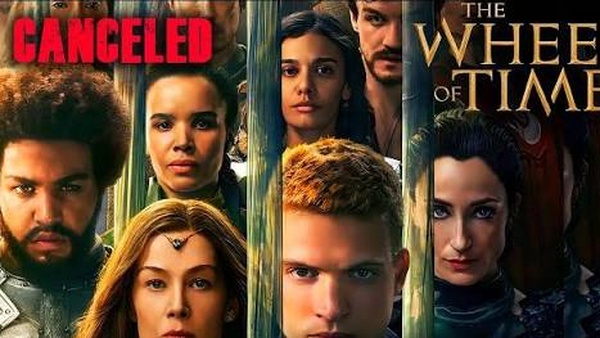
The Wheel of Time premiered on Prime Video on November 19, 2021, and ran for three seasons before Amazon canceled it on May 23, 2025, just six weeks after the season three finale aired. The decision came despite the show earning its best reviews yet, leaving fans of Robert Jordan's fantasy saga wondering why a hit kept getting cut short.
Robert Pattinson James Bond Buzz Grows After Report Names Him Top Pick for 007
How The Wheel of Time Ended Up Canceled
Amazon pulled the plug on The Wheel of Time in May 2025, ending a run that had just produced its strongest season. Season three premiered on March 13, 2025, and scored a 97 percent critics rating on Rotten Tomatoes, according to multiple reports. That made the cancellation sting even more, since the show was clearly getting better, not worse, right before it was cut.
Reports pointed mainly to money as the driving factor behind The Wheel of Time cancellation, not poor reviews or weak storytelling. Big-budget fantasy shows cost a lot to make, and Amazon apparently decided the math no longer worked, even with critics praising the direction the series had taken. No detailed public statement from Amazon spelling out the exact financial breakdown has surfaced, but the timing made the reasoning pretty clear to most industry watchers.
The show's audience scores tell their own story. Season one launched with a rough start, an audience score that hovered around 38 percent on Rotten Tomatoes before climbing to 62 percent over time. Season two jumped to 81 percent, and season three reached 85 percent. Critics loved it even more, with season three hitting that 97 to 98 percent range depending on the source. The series was finding its footing right as the door closed.
Next James Bond Actor Rumors Swirl After Boozy Pub Claim About Josh O'Connor
The Long Road From Book Page To Streaming Screen
Robert Jordan published The Eye of the World in 1990, kicking off a 14-book saga that became one of fantasy's biggest series. Jordan died in 2007 before finishing the story, and Brandon Sanderson stepped in to complete the final three books using Jordan's notes. That towering source material is exactly what made a TV adaptation such a huge gamble from the start.
The TV project was announced on April 20, 2017, with Rafe Judkins signed on as showrunner. Sony Pictures Television, Red Eagle Entertainment and Radar Pictures were involved early on, and Amazon Studios agreed to co-develop the series with Sony in February 2018. Amazon gave it a full green light in October 2018, setting the stage for one of the platform's biggest fantasy bets.
Filming for season one began September 16, 2019, but the COVID-19 pandemic shut production down in March 2020. Filming didn't pick back up until April 2021 and wrapped the following month. Amazon showed real confidence in the project by renewing it for season two on May 20, 2021, six months before audiences had even seen a single episode. Season two then filmed from July 19, 2021, through February 2022, and arrived in 2023.
Squeezing Fourteen Books Into Three Seasons
The Wheel of Time was never going to be simple to adapt. The novels juggle dozens of major characters, several nations, competing religious orders, and a sprawling prophecy about a figure called the Dragon Reborn. Judkins and his team had to compress, merge, and rearrange huge chunks of material just to make each season work on screen.
By season three, the show was already pulling from The Dragon Reborn and The Shadow Rising, the third and fourth novels in Jordan's saga, rather than sticking to one book per season. Some estimates suggest the three completed seasons only covered roughly four of Jordan's fourteen books. That left an enormous amount of story untouched when Amazon decided to stop.
The series was reportedly built around an eight-season plan from the beginning. Squeezing that ambition down into three seasons was described as a massive task for the creative team, and the cancellation means that larger vision will likely never reach the screen in its originally intended form.
Fans And Industry Watchers React To The Shock Decision
The cancellation landed hard because of its timing. Season three wasn't just solid, it was the show's best-reviewed outing by a wide margin, and several outlets highlighted that 97 percent critics' score as proof the series had found its creative stride. Cutting the show right after that peak felt, to many fans, like the worst possible moment to walk away.
Industry coverage framed the decision as a clash between artistic momentum and streaming economics. A show can be improving with critics and audiences alike and still get canceled if the production costs don't line up with viewership numbers in a way that satisfies a studio's budget targets. That tension has become common across prestige streaming television, and The Wheel of Time became one more example people point to.
The core group affected includes Amazon Prime Video, Sony Pictures Television, showrunner Rafe Judkins, stars like Rosamund Pike, Daniel Henney, Zoë Robins, Madeleine Madden, Josha Stradowski and Marcus Rutherford, plus Jordan's estate and Sanderson. Book readers in particular felt the loss, since the adaptation stopped well short of covering the full saga they'd hoped to see brought to life.
What Comes Next For The Wheel of Time Franchise
As of now, there is no confirmed season four, no announced revival, and no replacement project tied to Prime Video. The series stands finished at three seasons and 24 episodes, with Amazon showing no public sign of reversing course. Anyone searching for a quick comeback announcement won't find one in the current record.
The bigger unresolved issue isn't really about scheduling, it's about story. The Wheel of Time television adaptation never got close to finishing Jordan's fourteen-book saga, and that gap is what continues to frustrate fans the most. For now, the show's legacy rests on its existing episodes, its steadily improving reviews, and the much larger literary universe that still exists on the page, waiting for whichever format tries to tell it next.