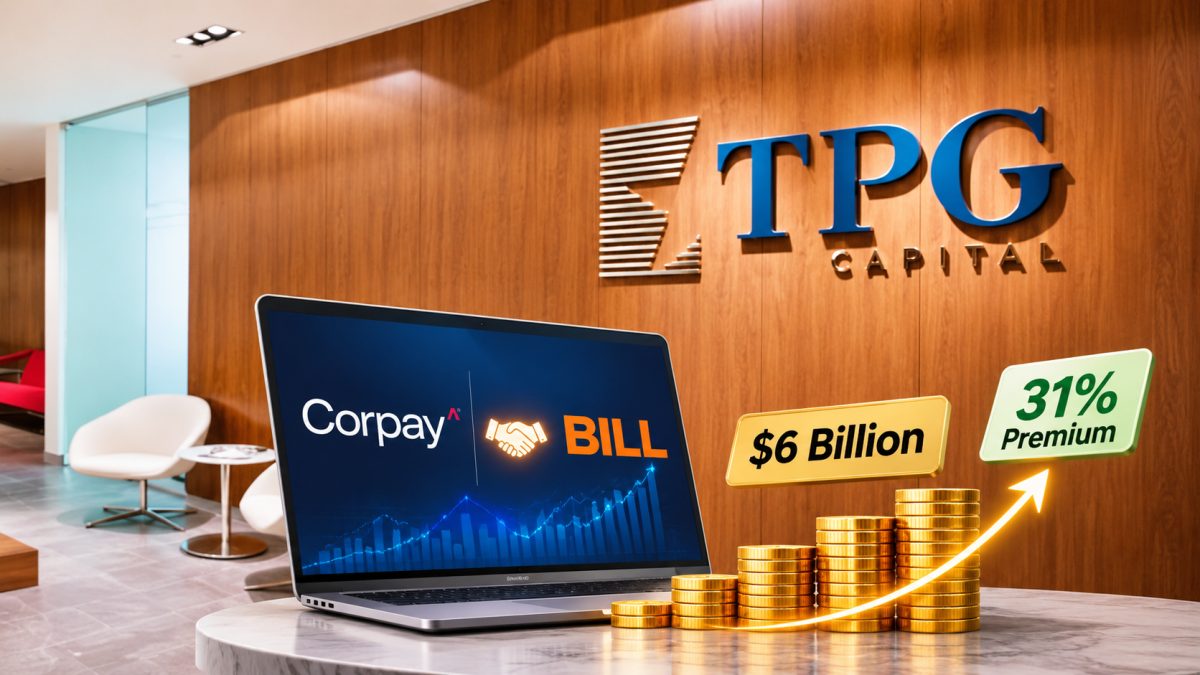

A fintech company trusted by nearly 500,000 businesses is heading into private hands after one of this year's biggest buyout deals.
BILL Holdings announced on November 19, 2026, that it agreed to be acquired by private equity firm TPG and payments company Corpay in an all-cash deal worth about $6 billion. The TPG Corpay BILL acquisition will pay BILL shareholders $63.25 for every share they own, ending the company's run as a publicly traded business.
Nike $5 Billion Revenue Growth 2031 Plan: Can Hill Pull Off the Comeback?
How the TPG Corpay BILL acquisition deal came together
BILL, based in San Jose, California, calls itself an intelligent finance platform. Nearly 500,000 businesses use it to manage, move and maximize their money, handling tasks like accounts payable, accounts receivable, expense tracking and payments. That huge customer base is a big reason why TPG and Corpay wanted in.
Under the agreement, TPG will take the majority ownership stake through its TPG Capital arm. Corpay, a global spend management company that trades on the New York Stock Exchange under the ticker CPAY, is putting in $1.1 billion for roughly one-third of the company. Corpay also picked up something extra: an option to buy the rest of BILL outright, with reports pointing to 2030 as the target window for that move.
Dow Falls 500 Points After Fed Minutes Spark New Rate-Hike Fears
What BILL shareholders get from the $63.25 per share offer
The $63.25 cash price works out to a 31% premium over BILL's 60-day average trading price through November 16, the last full trading day before news leaked that the company was weighing a sale. That premium is the number most shareholders will care about, since it shows how much more they're getting compared to where the stock had been trading before deal talk spread.
BILL's board did not take this decision lightly, but it moved fast once the vote happened. The board approved the transaction unanimously. Starboard Value, which holds the largest stake in BILL, has agreed to vote its shares in favor. Founder and CEO René Lacerte, who built the company from the ground up, also backed the deal and committed his shares to it.
René Lacerte to stay on as CEO after the BILL Holdings takeover
One detail stands out for employees and customers watching this deal closely: Lacerte is expected to stay on as chief executive once the acquisition closes. That matters because it signals the buyers want continuity at the top, not a management shakeup right out of the gate.
BILL's own announcement describes the company as "the intelligent finance platform trusted by nearly 500,000 businesses to manage, move, and maximize their money." That language frames the sale less as a simple payments business changing hands and more as a sale of core financial infrastructure that hundreds of thousands of companies depend on every day.
Corpay, for its part, has been clear about why the numbers make sense on its end. The company expects its $1.1 billion investment to add to its cash earnings per share starting in 2027, the same year the deal is expected to close. That's a forward-looking projection from Corpay's own management, not a locked-in result, but it gives a window into how the company is pitching the investment to its own shareholders.
No financing conditions attached to the $6 billion fintech buyout
One detail that should give investors some confidence: the deal has no financing conditions attached. That means TPG and Corpay aren't waiting to line up loans or outside funding before closing. The money is already accounted for, which lowers the risk that the deal falls apart over a funding gap.
Still, the deal isn't done yet. It needs approval from BILL stockholders and clearance from regulators, along with other standard closing steps. Both companies are targeting the first half of 2027 for the deal to close. Once it does, BILL stock will stop trading on public markets entirely, and the company will operate as a private business under TPG's majority control, with Corpay holding its one-third stake.
What comes next for BILL, TPG and Corpay
The next real milestone will be the stockholder vote, followed by regulatory review. Neither BILL nor its new owners have given an exact date for that vote yet. Regulators will also need to sign off, and that process can take months depending on how closely antitrust officials look at the deal.
Beyond the closing date, the biggest story to watch is Corpay's option to eventually buy out the rest of BILL. If that option gets exercised around 2030 as reports suggest, it would mark a second major ownership change for the company within less than a decade. For now, though, all eyes are on getting this first deal across the finish line, with BILL's near 500,000 business customers likely continuing operations as usual while the ownership paperwork gets sorted out behind the scenes.