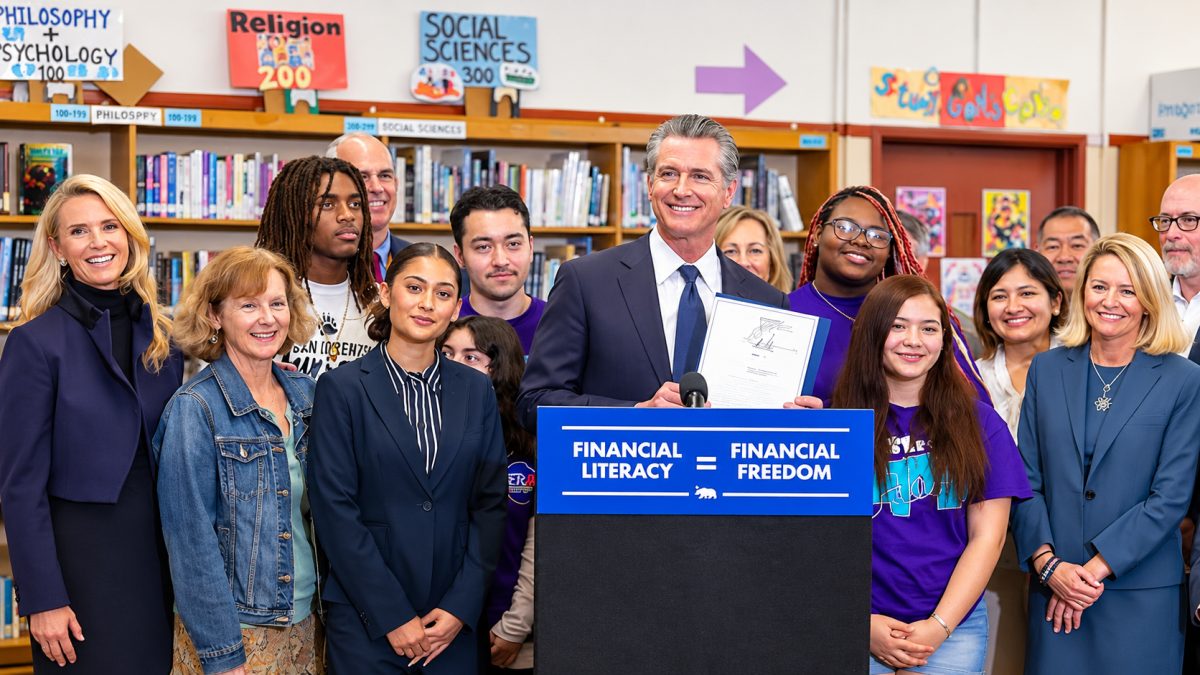

A new report says nearly three in four American high school graduates will soon learn how money actually works before they get a diploma.
A report released in late 2026 projects that 29 states will require every public high school student to take a standalone personal finance course by the time the Class of 2031 graduates. That forecast comes from the National Endowment for Financial Education, working with John Pelletier and the Center for Financial Literacy at Champlain College in Vermont, and it means roughly 73% of public high school graduates, close to 11 million to 11.3 million students, would be guaranteed this kind of class.
Robbinsdale School Finances Under Fire as Parent's Report Challenges District Before Vote
How the 29 states personal finance course by 2031 forecast came together
The number comes from NEFE's 2026 National Report Card on State Efforts to Improve Financial Literacy in High Schools. Researchers looked at state laws, academic standards, and graduation policies already on the books as of May 1, 2026, then tracked which ones are scheduled to fully kick in over the next several years. That's an important detail. This isn't a claim that 29 states already have the requirement running in classrooms today. It's a forecast built on laws that have been passed and dated for rollout.
NEFE actually revised its own number this year. Earlier in 2026, the group had reported that 30 states had enacted standalone, full-semester personal finance requirements. After a closer review of implementation timelines and methodology, that number was adjusted down to 29. The organization was transparent about the change, publishing an explanation of why the count shifted rather than quietly swapping the figure.
Blue Valley Financial Crisis Forces Cuts to Sports, Language Classes and Jobs
What counts as a real personal finance course
Not every mention of money skills in a school handbook counts toward an A grade. The report's bar is specific: a one-semester class with at least 60 hours of personal finance instruction, guaranteed to every student on a path to graduation. States that only sprinkle financial concepts into math class, economics electives, or career training programs don't automatically qualify, even if those efforts are well-intentioned.
That standard matters because it separates exposure from guarantee. A school district might offer a great elective on budgeting, but if it's optional or only available to some students, the state won't earn the top mark. As of the start of the 2026–27 school year, 15 states had already fully implemented their standalone graduation requirements, and seven more were expected to finish rolling theirs out within the next year or so.
A sharp turn from where things stood two decades ago
The scale of this shift becomes clearer against the historical backdrop. NEFE says that less than 20 years ago, only three states guaranteed personal finance education to students. Pelletier has gone further, noting that when the Class of 2007 graduated, not a single state had a personal-finance graduation requirement at all. He called the current trajectory "an astonishing milestone."
By 2026, ten states had already earned an A grade under the report card's current rating system, and the new projection adds 19 more states reaching that mark by 2031. On the other end, the report expects only two states to still be sitting at an F grade by then, a steep drop from where the country stood when almost no state had any requirement in place.
Officials and advocates describe the momentum behind the push
Speaking to K-12 Dive, one official connected to the research summed up the trend plainly: "There is momentum and movement behind the effort to create a national expectation that students receive financial education in high school." Pelletier framed the forecast in similarly direct terms, projecting that when the Class of 2031 graduates, 29 states will require high schoolers to take a standalone personal finance course, with about 73% of that year's graduates covered.
State-level reactions echo that same confidence. In Oregon, which is on track to move from a C grade to an A, Treasury officials quoted Pelletier saying the state's anticipated grade "is good news for the financial future of every Oregon student and comes at a time when states across the country are recognizing that understanding money is critical in today's world." Oregon has been building out a new personal finance class alongside a companion life-skills course as it works toward full implementation.
The real test is whether states follow through
Passing a law is one thing. Getting it running in every school building is another. States now face the harder work of training teachers, deciding which department should own the course, whether it's math, social studies, or career and technical education, and making sure funding actually follows the mandate. The report's own distinction between enacted policies and fully implemented ones is a signal that lawmakers and districts still have real work ahead.
NEFE says that as of May 1, 2026, it found no pending state policy changes scheduled to take effect after 2031, which makes that year the natural finish line for this round of tracking. Whether the final count lands exactly at 29, slips lower due to delays, or climbs higher thanks to new legislation, the clearest fact right now is this: the United States is moving from a country where almost no student had guaranteed access to financial education, toward one where most graduates will walk out of high school having learned how to budget, borrow, and save before they ever sign a lease or take out a loan.