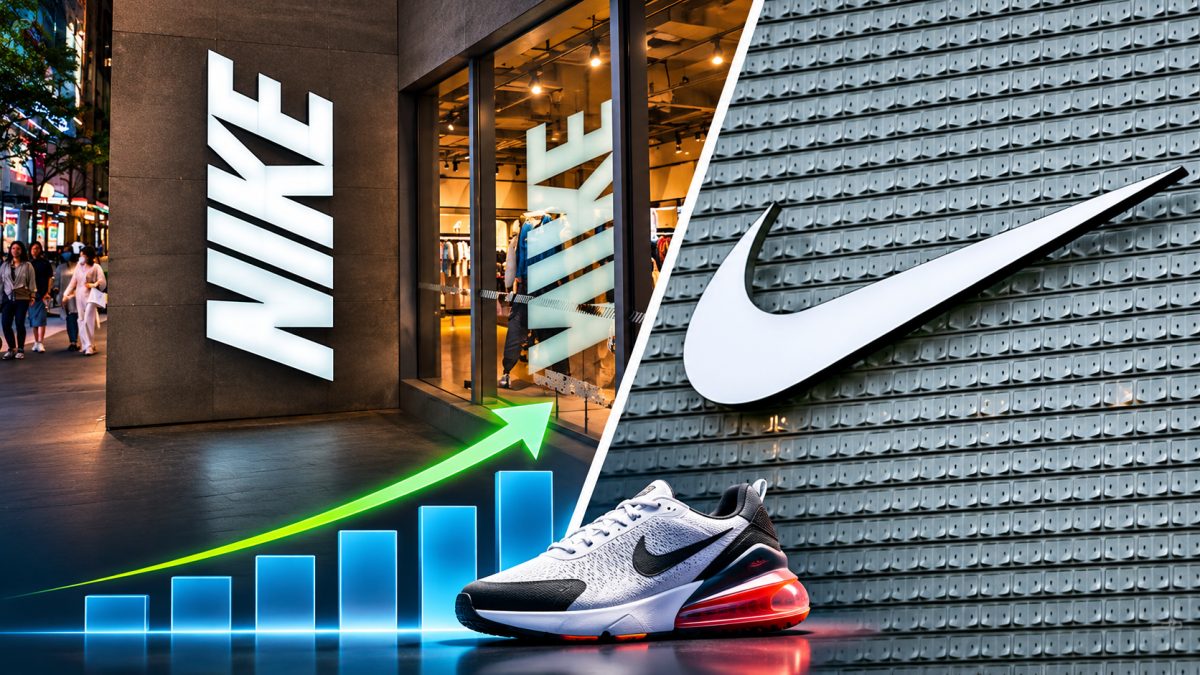

Nike just told investors exactly how it plans to climb out of its slump, and the number everyone is talking about is $5 billion.
Nike unveiled a new long-term plan on Tuesday, November 17, 2026, targeting roughly $5 billion in incremental revenue growth by fiscal 2031, measured against fiscal 2027 as the starting point. The announcement came at the company's first investor day in nearly a decade, led by CEO Elliott Hill.
Alphabet S&P 500 Weighting Hides $10,380 Risk in One $200,000 401(k)
Nike $5 billion revenue growth 2031 plan takes shape at rare investor event
The plan, called Full Stride Ahead, lays out a path Nike hopes will finally end years of weak sales. Instead of spreading resources evenly across every market and product line, Nike is narrowing its focus. The company says five performance sports, its Sportswear business, and 23 priority countries will drive more than 90% of all revenue growth through fiscal 2031.
According to Nike's own filing with securities regulators, "Using fiscal 2027 as the base, by fiscal 2031, the Company is targeting approximately $5 billion in incremental revenue growth." That is not a prediction of total sales. It is the extra revenue Nike hopes to add on top of whatever it earns in fiscal 2027.
Bitcoin Price Analysis November 14 2026: Why BTC Just Hit $65,000
Five sports and 23 countries carry the weight of Nike's turnaround
Nike picked five sports to lead the charge: running, training, global football, basketball, and outdoor. The company expects these performance categories to generate about $4 billion of the $5 billion target, which works out to roughly 80% of the total goal. That is a clear signal that Hill wants Nike to lean harder into athletes and sport-specific gear rather than chase general lifestyle trends.
The remaining $1 billion is expected to come from Sportswear, a category that covers Nike Sportswear, Jordan, and Converse. Nike's filing describes Sportswear using that exact grouping, confirming that Jordan and Converse remain important but are no longer the main growth engine. The 23 priority countries round out the plan, with Nike saying it will hand more decision-making power back to local teams so they can react faster to what shoppers in their regions actually want.
Elliott Hill bets on athletes and performance gear over broad lifestyle push
Hill came back to Nike as CEO in 2025 after years in senior roles at the company earlier in his career. His return followed a stretch where Nike leaned heavily on direct-to-consumer sales and marketplace strategies that did not deliver the growth investors wanted. Full Stride Ahead marks a clear shift away from that approach.
Reuters reported that Nike expects to return to revenue growth in fiscal 2029, roughly matching the pace of the broader athletic footwear and apparel market. From there, Nike expects to outpace that market in fiscal 2030 and fiscal 2031. In other words, Hill is not promising an instant fix. He is asking investors for patience through two more years before the real acceleration kicks in.
The financial framework behind the plan also includes operating margins of 12% to 14% and adjusted earnings per share between $3.00 and $3.50 by the end of fiscal 2031, according to Nike's official presentation and multiple outlets covering the event, including CNBC and WWD.
Investors cheer the roadmap even as execution risk remains
Markets reacted quickly. Nike shares rose about 4% after the investor-day presentation, a sign that investors were relieved to finally get concrete numbers after a long stretch of uncertainty. For months, Nike watchers had been waiting to see whether Hill's strategy would come with real targets or just broad promises.
Still, the plan depends entirely on execution. Nike has to prove it can turn renewed focus on running shoes, training gear, football products, basketball lines, and outdoor equipment into actual sales growth, not just a slower decline. The company also needs its selected countries to perform well enough to justify putting so many eggs in fewer baskets. Analysts covering the announcement, including those at WWD and the Economic Times, noted that prioritizing performance sports could boost both profitability and sales, but only if Nike's product innovation and marketing can keep pace with rivals.
What Nike's fiscal 2027 baseline means for the years ahead
The fiscal 2027 baseline gives investors a fixed point to measure everything against. Every quarter between now and fiscal 2031 will be watched for signs that Nike is on track toward that $5 billion figure. Fiscal 2029 becomes the first real checkpoint, since that is when Nike expects growth to return at all. Fiscal 2030 and fiscal 2031 then need to show Nike beating the broader market, not just matching it.
For now, Hill has given Nike a scoreboard. The next few years will show whether Full Stride Ahead turns into the comeback the company is promising, or whether the five sports and 23 countries strategy needs another rework before fiscal 2031 arrives.