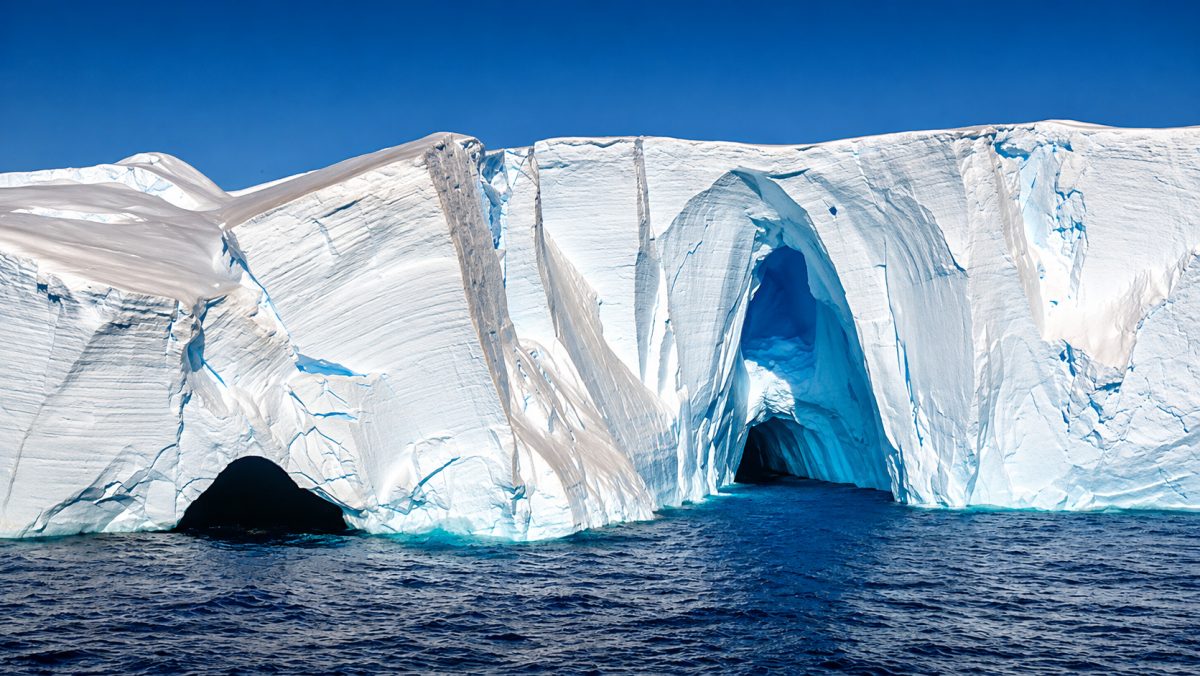

The ground under West Antarctica is popping up far faster than anyone expected, and now we know why.
Scientists have found that rapidly rising Antarctic bedrock beneath the Amundsen Sea Embayment in West Antarctica is lifting by as much as 41 millimeters each year, according to a study published in Science and reported by Gizmodo on November 17, 2026. The cause, researchers say, is an unusually warm and weak layer of mantle rock sitting right below the crust.
Haloferax Volcanii Mars-Like Conditions Test Shows a Microbe That Just Won't Quit
Rapidly rising Antarctic bedrock traced to a soft mantle layer
Researchers built a three-dimensional model of Earth's interior under Antarctica to figure out why the land there keeps rising so fast. They combined GPS readings, satellite data, and records of ice loss stretching from 1990 to 2020 to test their theory. The result pointed to one clear answer: the mantle beneath West Antarctica is far softer than scientists had assumed.
This soft layer is called the asthenosphere. It sits just under the rigid crust and can flow like thick syrup when pressure changes. When a heavy ice sheet melts away, the weight pressing down on the land disappears, and that squishy mantle material flows back in underneath, pushing the crust upward. Because the mantle here is so weak, that push happens in decades, not in the thousands of years older models predicted.
The European Space Agency summed up the discovery simply, saying the finding shows how Earth's squishy interior gives rapid rise to Antarctica. GPS stations placed on rocky ground poking through the ice recorded that uplift directly, giving scientists hard numbers instead of guesses.
Disappearing Planet TOI-2535 b Vanished From Sight
Why West Antarctica behaves differently from older models predicted
For years, scientists believed the bedrock under ice sheets would barely move for thousands of years after ice melted. That assumption came from treating mantle rock as something that resists flow almost everywhere on the planet. But a 2018 study in Science broke that idea apart. It used GPS data from the POLENET network and found the Amundsen Sea Embayment rising by about 1.6 inches per year, or roughly 41 millimeters.
Pennsylvania State University, one of the institutions behind that earlier work, explained that bedrock response had been thought to take 10,000 years, yet the real numbers showed motion happening right now, within a human lifetime. Ohio State University researchers backed this up too, noting that GPS findings could only be explained by a mantle with low viscosity, meaning it flows much more easily than normal mantle rock.
A broader review of Antarctic geophysics research, published in mid-November 2026, found viscosity estimates in these fast-moving regions as low as 10^17 to 4×10^19 pascal-seconds. That is potentially 10 to 300 times weaker than the global average mantle. The same review also found uplift rates reaching as high as 63 millimeters per year in parts of the Amundsen Sea Embayment and the Antarctic Peninsula, some of the fastest rebound numbers ever measured in a once-glaciated place.
What this means for future ice loss and sea levels
Rising bedrock is not just a curiosity for geologists. It actually touches the edge of the ice sheet itself, at a boundary called the grounding line, where ice resting on land starts floating on the ocean. If the land underneath rises, it can change the shape of that boundary and the depth of water nearby, in some cases making it harder for glaciers to slide off into the sea as quickly.
A 2025 modeling study published in Nature Communications looked at this effect over longer timescales. It found that bedrock uplift could reduce Antarctica's total contribution to sea-level rise over the coming centuries under certain scenarios. That same study noted mantle viscosity in these regions could drop by a factor of ten under changing stress, and by up to a thousand times in some long-range projections, making the rebound effect even stronger than first thought.
Still, researchers are careful not to oversell this. The uplift can act like a brake on some glaciers, slowing things down, but it cannot stop warming oceans or warming air from doing damage elsewhere. Ice shelves can still weaken, and glaciers in other parts of Antarctica are still retreating regardless of what the bedrock below is doing.
Not every part of Antarctica is behaving the same way
Interestingly, this rapid rebound is not happening everywhere on the continent. Studies looking at East Antarctica have found spots where the bedrock is actually still sinking, not rising. Researchers think that happened because ice built up or pushed forward late in Earth's more recent geological past, and that region's crust is still catching up to that older weight rather than responding to today's melting.
This patchwork behavior means scientists cannot apply one single number for mantle strength across the whole continent. Crust thickness, mantle temperature, and ice history all vary by location, and each of those factors changes how fast or slow the ground responds. That is exactly why the new three-dimensional model matters. It treats Antarctica as a place with many different mantle personalities instead of one uniform slab of rock.
Researchers now aim to map hidden mantle differences across the continent
The next step for scientists is building better maps of crustal thickness, mantle temperature, and underground rock structure across all of Antarctica, not just the fast-moving sectors. Those details will decide how much future rebound can realistically slow ice loss in specific glacier basins versus places where the mantle barely budges.
Going forward, ice-sheet models used to predict sea-level rise are expected to stop treating Antarctica's mantle as one single value and instead build in these regional differences. The strongest slowing effect will likely stay concentrated in the Amundsen Sea Embayment and nearby weak-mantle zones, while areas sitting on thicker, stiffer crust may barely feel any difference for centuries to come.