
People keep asking if a giant space rock was really named after a TV bad guy, and the truth is a little more interesting than that.
Asteroid Apophis, officially called 99942 Apophis, was discovered on June 19, 2004, by astronomers Roy Tucker, David Tholen and Fabrizio Bernardi, and it was not formally named after the Stargate SG-1 villain, even though that character played a real role in how the name came about.
SpaceX Starship Catch Succeeds, But Why Did the Booster Still Blow Up?
How The Asteroid Apophis Stargate Villain Rumor Started
The mix-up makes sense once you know the timeline. Stargate SG-1 premiered in 1997, and its main villain, played by Peter Williams, was named Apophis. Seven years later, when Tucker, Tholen and Bernardi found a new near-Earth asteroid, they were already familiar with that character's name from the show.
When it came time to pick an official name, the team leaned into ancient Egyptian mythology instead of pop culture. Apophis, also known as Apep, was the Egyptian deity tied to chaos, darkness and destruction. That fit the asteroid's unsettling reputation perfectly, since early data suggested it might actually be dangerous.
David Tholen later addressed the asteroid Apophis Stargate villain connection directly. He called the TV tie-in “icing on the cake,” according to NASA, but he was clear that the asteroid was not named for the television character. TVLine reported the same explanation, noting the name was chosen because the asteroid's destructive potential matched the mythological figure's story.
GPM J071507−114153: Dead Star Near Sun-Like Twin Sends Pulses Every 8 Minutes
From 2.7 Percent Impact Odds To A Safe Flyby
Apophis didn't just grab attention because of its name. Right after its discovery, it was temporarily labeled 2004 MN4, and early calculations gave it a 2.7% chance of hitting Earth on April 13, 2029. For a newly found asteroid, that number was alarming enough to make headlines worldwide.
Scientists at NASA's Jet Propulsion Laboratory kept watching. Using radar observations and refined orbit tracking, they slashed the uncertainty around its 2029 position by 98%. That extra precision changed everything. On March 26, 2021, NASA announced there is no risk of Apophis hitting Earth for at least the next 100 years.
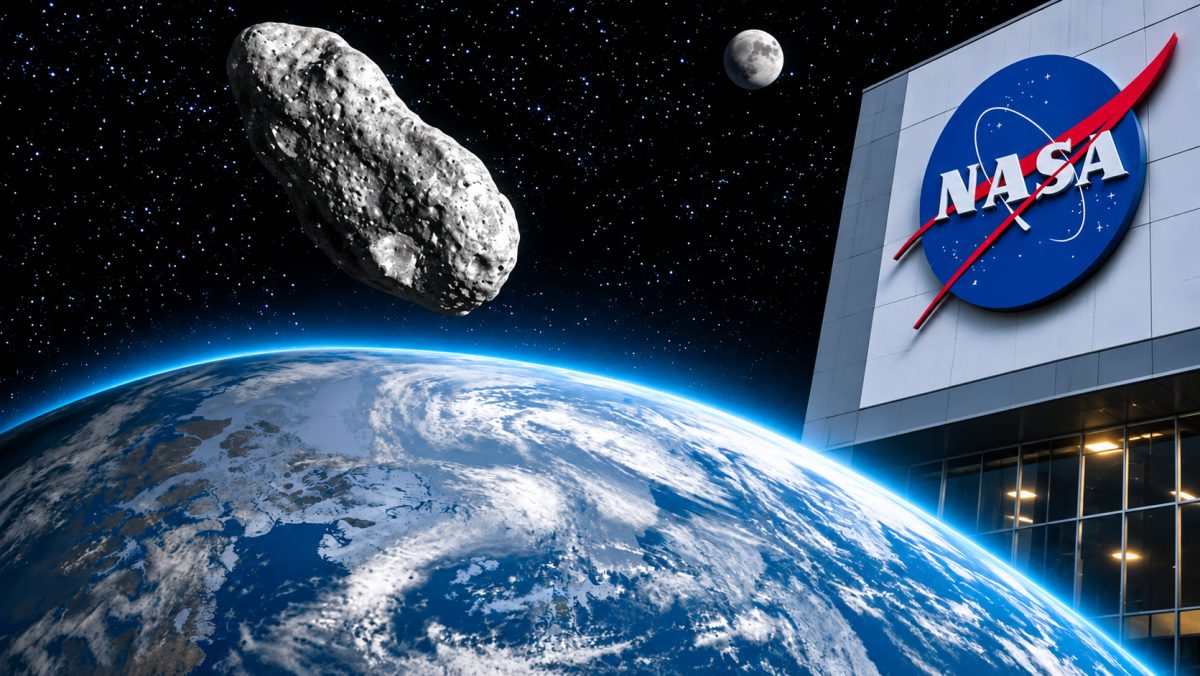
The asteroid itself is no small object. NASA describes it as roughly 1,100 feet, or 340 meters, across, close to the length of an NFL football field and about as tall as the Eiffel Tower. That size is exactly why early impact estimates felt so serious, even after they turned out to be wrong.
What NASA And ESA Are Planning For The 2029 Flyby
Instead of a disaster, April 13, 2029 is shaping up to be a rare science opportunity. NASA says Apophis will pass about 20,000 miles, or 32,000 kilometers, from Earth's surface. That is closer than many geosynchronous satellites orbit our planet, which makes this an unusually close call for an asteroid this large.
NASA's official Apophis page states plainly that the asteroid “will safely pass close to Earth” that day. The European Space Agency's numbers line up closely, putting the distance at under 32,000 kilometers from Earth's surface. JPL's more detailed tracking puts the closest approach at roughly 38,000 kilometers around 21:46 UTC, with slight differences depending on whether the measurement is taken from Earth's center or its surface.
Two space agencies are already preparing missions around the event. The European Space Agency's Ramses mission is planned to launch in April 2028 and reach Apophis by February 2029, arriving before the flyby so it can watch the encounter happen in real time. NASA, meanwhile, has redirected its former OSIRIS-REx spacecraft, now renamed OSIRIS-APEX, to study Apophis right after the close pass.
Why Scientists Care More About The Science Than The Scare
For researchers, Apophis is less about fear and more about a rare natural experiment. NASA expects Earth's gravity to physically affect the asteroid during the flyby, possibly changing its spin, shifting its orbit slightly, and even triggering quakes or small landslides on its surface.
OSIRIS-APEX will be there to measure exactly what changes. Scientists want to know how a close brush with a planet reshapes an asteroid, something that is nearly impossible to study without an event like this happening naturally. That data could help future planetary defense efforts long after 2029 has come and gone.
So while the asteroid Apophis Stargate villain story makes for a fun bit of trivia, the real headline is simpler. A once-feared space rock turned into one of the best-studied objects in our solar system, named for an ancient god of chaos, not a sci-fi villain, and set to put on a safe, unforgettable show in the sky.