
He missed almost the whole summit, yet everyone was still talking about him by the end of the night.
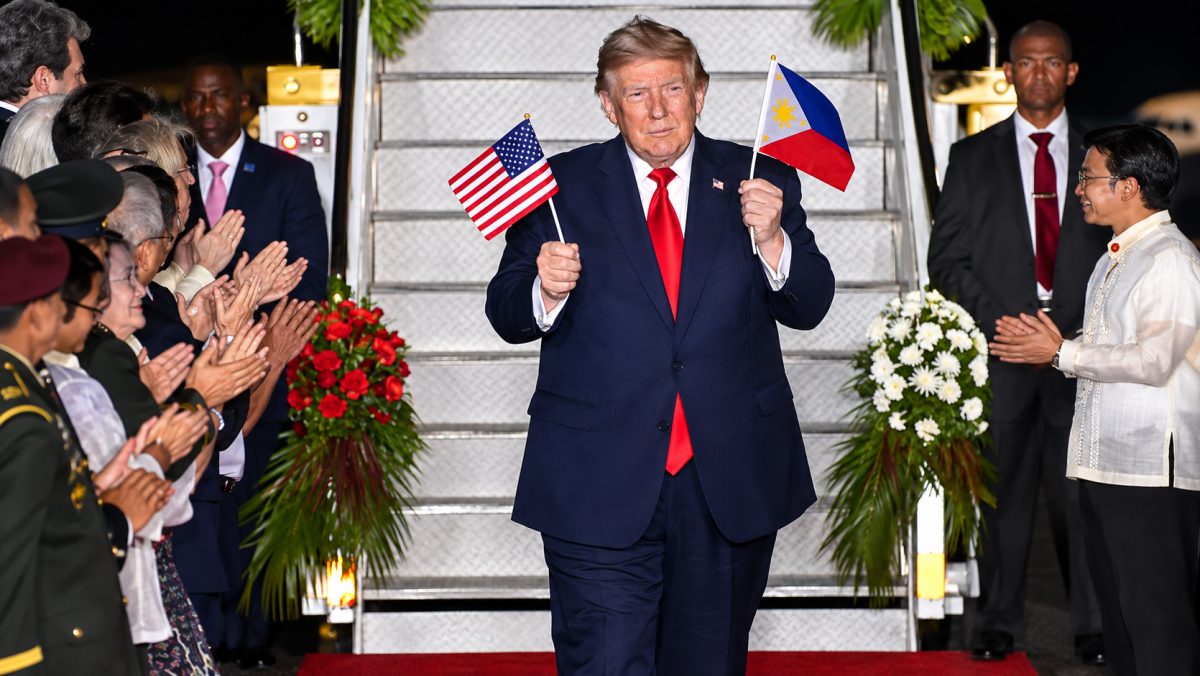
President Donald Trump landed in Manila on Tuesday, Nov. 17, 2026, just as the 49th ASEAN Summit's closing ceremony was already underway, then used his brief stop to meet Quad leaders and announce a preliminary trade deal with Thailand. His late arrival at the Trump ASEAN Summit 2026 Manila gathering highlighted how much weight Washington still carries in Southeast Asia, even when the American president shows up at the very end.
Trump Meme Coin Dinner Hits Snag as Only 130 Wallets Fill 185 Seats
A Late Landing That Changed the Summit's Mood
View this post on Instagram
Trump touched down at Ninoy Aquino International Airport at around 5:33 p.m. local time, capping off more than 18 hours of travel. By then, ASEAN leaders had nearly finished their closing ceremony, leaving Trump with almost no window to take part in the summit's core discussions.
That timing set an awkward tone. Southeast Asian leaders had spent days trying to steer the Trump ASEAN Summit 2026 Manila talks toward regional concerns, hoping to avoid getting pulled into the bigger tug-of-war between Washington and Beijing. Instead, Trump's arrival, brief as it was, became the thing everyone was reacting to. The Washington Post noted that even though he missed most of the actual summit, he still loomed over the talks simply by being there.
Trump Commerce Closes Nvidia Chip Loophole Tied to Spy Scandal in China
Quad Leaders Meet at Trump's Manila Hotel
Rather than diving into ASEAN's closing sessions, Trump headed to the Solaire resort, where he sat down with the leaders of Australia, India and Japan. It marked the first Quad meeting of his second term, and organizers had even arranged for part of the broader gathering to happen near his hotel, underscoring how much the schedule bent around his limited time in the Philippines.
The four leaders walked away with a handful of concrete commitments. They agreed to boost maritime patrol-aircraft activity across the Indo-Pacific, strengthen cooperation against cyberattacks and push forward a new initiative to speed up artificial intelligence development. Their joint statement described the Quad as "a force for good and a partnership of action, committed to peace, stability and prosperity." It was a clear attempt to show the grouping still functions as a serious counterweight to China's influence in the region, separate from whatever happened at the ASEAN sessions themselves.
Thailand Trade Statement Steals the Spotlight
The biggest headline from Trump's short Manila stop came from Thailand. He appeared alongside Thai Prime Minister Anutin Charnvirakul to sign what both sides called a joint statement agreement on reciprocal trade. Trump was blunt about how he saw it, telling reporters it was "a very big, actually, it's a very big trade deal," even though it stopped short of being a finished legal agreement.
Under the terms described, Thailand would scrap tariffs on American exports and tear down major non-tariff barriers hitting U.S. vehicles, medical devices, pharmaceuticals, ethanol and poultry. Thailand also committed to buying $2.6 billion worth of American agricultural goods. Trump said the final paperwork would be wrapped up "in the coming weeks," which means the numbers and terms could still shift before anything becomes binding.
Later that evening, Trump joined an ASEAN leaders' dinner, where he praised his host, Philippine President Ferdinand Marcos Jr. The warm words gave Marcos a visible diplomatic win at home, even as questions lingered about how seriously Washington treats the summit itself versus the optics of showing up for dinner and a trade signing.
Southeast Asia's Balancing Act With Two Superpowers
The deeper story here is about leverage. ASEAN countries trade heavily with China, but many also lean on the United States for security guarantees and economic partnerships. That dependence is exactly why Trump's late arrival still mattered so much. His presence, however brief, reminded everyone in the room that American attention shapes regional politics whether or not he sits through the formal meetings.
Manila was never meant to be the main event on this trip anyway. It was the opening stop before Trump heads to China for high-stakes talks with Chinese President Xi Jinping and Russian President Vladimir Putin, reportedly including three-way nuclear discussions. Trump also floated the idea of meeting North Korean leader Kim Jong Un at some point during the broader trip, though that remains unconfirmed. Placing Manila first, before the bigger meetings in Beijing, only reinforced the sense that the ASEAN Summit functioned as a warm-up stop rather than the trip's centerpiece.
What Comes Next for Trade and Diplomacy
The immediate next step is turning the Thailand joint statement into an actual signed trade agreement. Until that happens, the $2.6 billion agricultural purchase and the promised tariff cuts remain commitments on paper rather than enforceable terms. Businesses on both sides will be watching closely to see whether the coming-weeks timeline holds.
Further out, attention shifts to China, where Trump's sit-downs with Xi and Putin are expected to dominate global headlines. For ASEAN, the lingering question is whether future summits can hold their own agenda, or whether they'll keep serving as a brief stopover before the real power meetings begin somewhere else. Tuesday's events in Manila didn't answer that question, but they certainly didn't settle any doubts either.