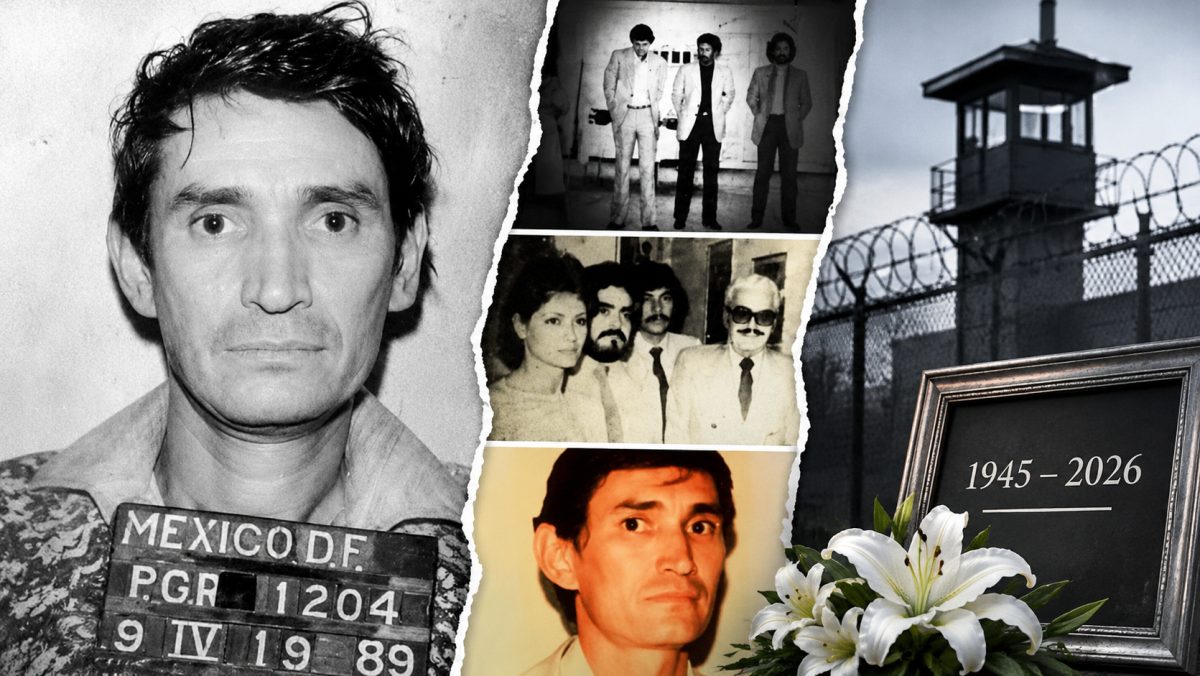

The man once called Mexico's boss of bosses spent his final two days fighting for his life in a private hospital room, far from the prison cell that held him for decades.
Miguel Ángel Félix Gallardo, the Guadalajara Cartel founder widely seen as a key architect of Mexico's modern drug-trafficking world, died Sunday, November 15, 2026, at age 80 in a hospital in Guadalajara, Jalisco, after being rushed from prison two days earlier for emergency treatment.
Iran Tankers Hit Mines in Strait of Hormuz, Three Ships Burn in One Day
Miguel Ángel Félix Gallardo Death Confirmed by Officials
?? Guadalajara cartel co-founder Miguel Ángel Félix Gallardo has died at 80. They called him the “Boss of Bosses.” He was arrested in 1989 and later found guilty in the murder of a U.S. DEA agent. He spent decades behind bars. He was moved from prison to a hospital in his final days and reportedly died of multiple organ failure. If you’ve watched Narcos Mexico on Netflix, you already know his story. The old godfather of Mexico’s drug trade is gone. Writer: Daniyal https://t.co/5RcpgrwY9k
— Mario Nawfal (@MarioNawfal) November 15, 2026
Security officials confirmed the death, and the news was first reported by the Mexican outlet Milenio before spreading through international wire services. Félix Gallardo had been moved from the Puente Grande prison complex on November 13 after suffering a serious medical emergency. He was taken to a private hospital in Guadalajara's Lomas del Country neighborhood, where doctors placed him under close observation.
The Jalisco Security Secretariat said he was admitted with a reserved prognosis, meaning doctors were not confident he would recover. Local reports later said he died around 2 p.m. on Sunday, and several outlets pointed to multiple-organ failure as the cause. However, no formal medical report had been made public at the time these reports were published, so that detail still needs official confirmation from the Jalisco prosecutor's office.
Russia Demands NATO Pull Back in Eastern Europe as Price for Ukraine Peace
From Small-Time Police Officer to Cartel Kingpin
Félix Gallardo was born January 8, 1946, and rose through Mexico's criminal underworld during the 1970s and 1980s to become one of the most powerful traffickers the country had ever seen. Working alongside Rafael Caro Quintero and Ernesto Fonseca Carrillo, he helped build what American investigators later named the Guadalajara Cartel. The group built smuggling routes stretching from Mexico's interior to the U.S. border, creating a business model where regional bosses worked together instead of fighting each other.
That model made the Guadalajara Cartel incredibly powerful for a time, but it also planted the seeds for what came next. Once the organization's top leaders were arrested and jailed, the cartel broke apart. Former lieutenants and territories split off and formed new groups, and historians often trace the roots of the Sinaloa, Tijuana and Juárez trafficking organizations back to that fallout. In that sense, Félix Gallardo's downfall reshaped the entire landscape of organized crime in Mexico.
The Camarena Murder That Changed Everything
Nothing defined Félix Gallardo's legacy more than the 1985 kidnapping, torture and murder of U.S. Drug Enforcement Administration agent Enrique Kiki Camarena Salazar, along with Mexican pilot Alfredo Zavala Avelar. The killing set off a diplomatic firestorm between Washington and Mexico City and turned into one of the most infamous cases in DEA history. Félix Gallardo was arrested in April 1989 and charged in connection with the murder, along with separate accusations tied to drug trafficking, bribery, weapons and money laundering.
He was first sentenced to 40 years behind bars. Decades later, in 2017, a new sentencing in the Camarena case reportedly gave him 37 years. In a rare 2021 interview, Félix Gallardo, then 75, described his failing health, saying he had half of his body paralyzed. That same account noted he had already spent 32 years in Mexican custody for the Camarena killing, a case that never stopped following him even as his body broke down.
Declining Health Behind Bars for Years
Félix Gallardo's physical condition had been a recurring part of his story long before his final hospital stay. In 2014, he was moved from the maximum-security Altiplano prison to a medium-security facility because his health had worsened so much. Some reports said he was granted house arrest in 2022 due to ongoing medical problems, though later accounts in November 2026 describe him being transferred directly from the Puente Grande prison complex, not a house-arrest setting. That gap in the record is something Mexican authorities will likely need to clarify.
Whatever his exact custody status was in his final days, the pattern is clear. This was a man whose body had been failing for years, even as his name continued to carry weight in conversations about Mexico's drug war. His death closes the loop on one of the most consequential criminal careers in modern Mexican history, even if the organizations his cartel spawned are still very much active today.
A Chapter Closes, But the Story Isn't Over
No statement from the DEA, the U.S. Department of Justice, or the Camarena family had surfaced in the hours after the news broke. Mexican authorities largely stuck to confirming the basic facts of his death rather than offering broader commentary. That restraint stands in contrast to how loudly Félix Gallardo's name echoed through decades of cross-border law enforcement efforts.
What happens next will likely include a formal medical report explaining the exact cause of death, along with possible statements from officials reflecting on his place in Mexican criminal history. His death does not erase the networks his cartel left behind, but it does mark the end of a life that helped define how Mexico's drug trade actually works. For investigators, historians and families affected by the violence tied to his empire, the real story of Félix Gallardo's impact is far from finished.