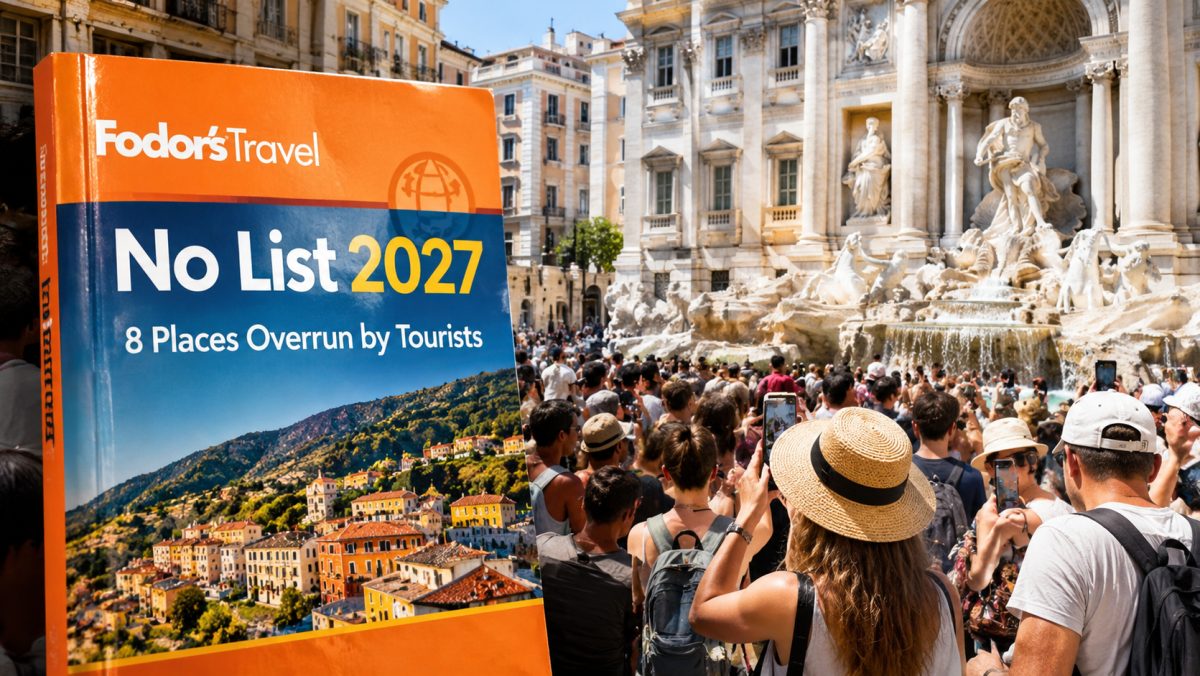

Eight famous places are asking for a breather, and Fodor's just put them on a list travelers can't ignore.
Fodor's Travel Guide released its 2027 No List on November 10, 2026, naming eight destinations under heavy strain from tourism. The list includes the Albanian Riviera, the Amalfi Coast, Bali, Kyoto, Edinburgh, Sedona, and the Greek Islands, all facing crowding, pollution, or housing problems tied to visitor numbers.
Russell Brand Sentenced 10-and-a-Half Years , Judge Calls Him a 'Sexual Predator'
Why Fodor's No List 2027 Singles Out These Eight Spots
The Fodor's No List 2027 is not a ban. It's a warning sign. Each destination made the cut because tourism has outpaced what local roads, water systems, waste services, or housing markets can handle. Fodor's has used this approach for years, pointing at places that need a pause rather than a permanent goodbye.
Bali landed on the list because of waste problems. Nearly 7 million international visitors arrived in 2025, almost 10% more than the year before, plus 26.6 million domestic trips. Air-quality sensors reportedly caught pollution spikes tied to rubbish burning, a sign that trash disposal can't keep up with demand. Kyoto returned to the list too, after reporting nearly 63 million visitors in 2025, the highest number since records began back in 1958. Crowding and bad tourist behavior in historic neighborhoods pushed the city back onto Fodor's radar.
Egypt Train Crash November 2026: Why One Train Slammed Into Another, Killing 7
How Overtourism Shows Up Differently in Each Location
Edinburgh's trouble is concentrated, not spread out. Fodor's points to the Old Town, where major festivals bring seasonal floods of visitors. Short-term rentals have squeezed housing, and public infrastructure strains hard during peak weeks. The Amalfi Coast faces a similar squeeze, with traffic jams, high housing costs, and environmental wear and tear that's been building for years. An airport expansion completed in 2026 could bring even more visitors, adding pressure to roads already packed.
Sedona, Arizona, shows how a small town can buckle under big numbers. Roughly 3 million people visit every year, but fewer than 10,000 people actually live there. That mismatch hits trails, parking, roads, and the red-rock desert landscape itself. The Greek Islands made the list for a different reason: water scarcity. Popular islands struggle to supply fresh water and manage waste when their population multiplies during peak season, and infrastructure built for small communities simply can't stretch that far.
A Once-Hidden Coastline Becomes a Warning Story
The Albanian Riviera offers maybe the clearest lesson in the whole 2027 list. Just a few years ago, travel writers pitched it as a quiet alternative to Italy or Greece. Now it's seeing fast development, rising visitor demand, and the same infrastructure strain found in older tourist hubs. Its presence on the list shows how quickly a lesser-known coastline can turn into the next crowded hotspot once word gets out.
This pattern worries people who study tourism trends. A destination marketed as an escape from crowds can become crowded itself within a few short years. Fodor's has flagged this cycle before, and the Albanian Riviera's rapid rise fits right into that warning.
What Fodor's Says the List Is Really For
Fodor's has been clear that the No List isn't meant to scare people away from travel altogether. In an earlier piece about Chile's Atacama Desert, which made the 2024 No List, Fodor's explained the goal is to raise awareness and remind travelers that some places could use a break. That same spirit carries into the 2027 edition. The idea is to get people thinking about when they travel and how many other travelers might be doing the same thing at the same time.
Other coverage frames the list as a nudge to rethink plans, not cancel them. Travelers are encouraged to visit nearby regions that get fewer visitors, to travel outside peak months, and to spend money with local businesses instead of crowding the same handful of famous spots. Venice and Barcelona, two cities long associated with overtourism debates, reportedly do not appear on this year's list, suggesting some destinations can shift on and off depending on changing conditions.
What Comes Next for These Pressured Destinations
The road ahead looks bumpy for several of these places. The Amalfi Coast's airport expansion could pull in even more visitors right as local roads already struggle with existing traffic. Bali, Kyoto, Edinburgh, and Sedona all face similar questions about whether local governments can manage growing demand without hurting housing supply, water systems, or fragile natural areas.
No legal deadlines or binding rulings are tied to the Fodor's No List 2027. It functions instead as an annual flashpoint in a bigger argument about how much tourism a place can handle before quality of life for residents starts slipping. Whether that means visitor caps, new pricing rules, or better waste investment will likely play out differently in each destination, but the list itself is expected to return next year, pointing at whichever places need a break next.