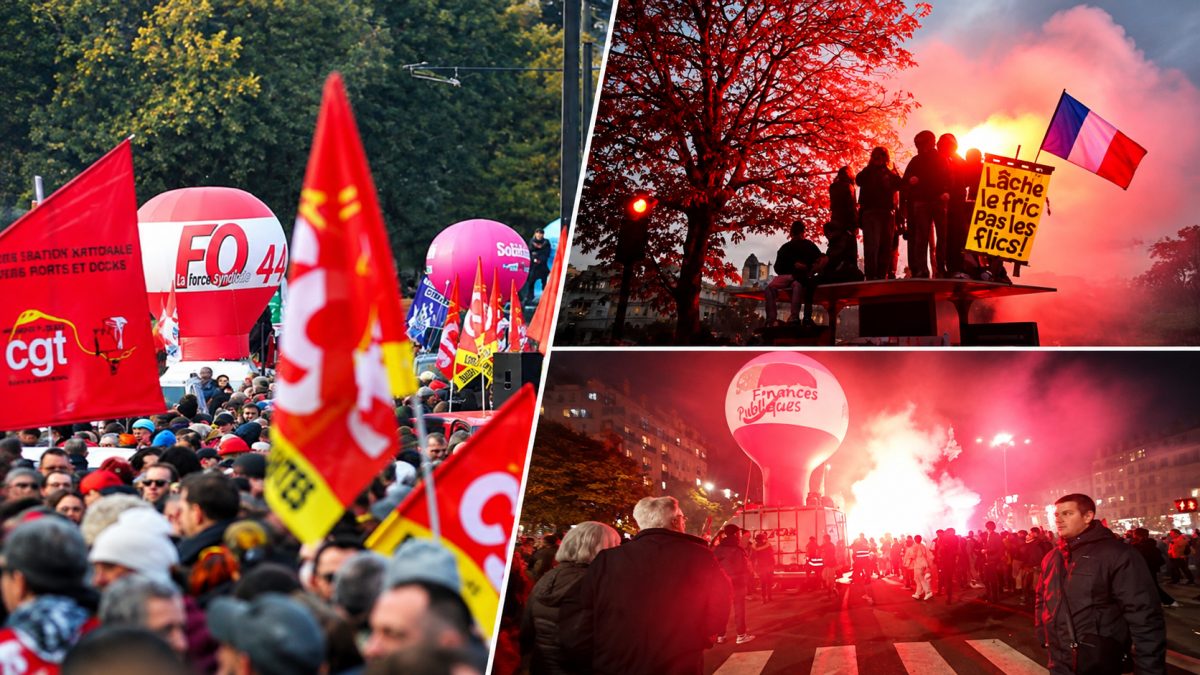

Workers, students and teachers flooded French streets together, and even the government seemed surprised by how big the crowd grew.
France strikes in November 2026 reached a new peak on Thursday, November 5, when roughly 575,000 people marched in cities across the country, including Paris, Lyon and Marseille, to demand higher wages, stronger pensions and an end to public service cuts. Government officials called it the largest single day of protest since the unrest began in September.
Bismillah C'est Les Ténèbres Meaning: Why This French Slogan Went Viral
How the France Strikes November 2026 Numbers Grew Through the Day
The crowd size did not start out record-breaking. Interior Minister Laurent Nunez said the count stood at about 270,000 people earlier in the day, then swelled to nearly 600,000 by evening. The government's final official estimate landed at approximately 575,000 demonstrators, a number that still made November 5 the biggest protest day since the movement began two months earlier.
The strike was organized by L'intersyndicale, the umbrella group representing France's main trade unions. That unity mattered. Rather than one sector walking out alone, workers from education, public transportation, postal services and health care all joined at once, shutting down or severely limiting services nationwide. Schools, universities and rail lines all felt the impact, with many simply closing for the day.
More than 250 separate actions took place across France, and authorities were clearly bracing for trouble. As many as 70,000 police officers were deployed to cities where marches were planned. That preparation proved necessary in some places. AFP reported tear gas, violence and vandalism breaking out in several cities, even as most of the demonstrations remained peaceful marches calling for what protesters described as a dignified wage.
Simu Liu Reportedly Marries Allison Hsu in France, but Confirmation Is Still Missing
What French Workers and Students Are Actually Demanding
Money was at the center of nearly every sign and chant. The CGT, one of France's largest unions, called for an immediate 10 percent increase in the minimum wage. Unions also pushed for broader pay increases, pension protections, tax reform and guarantees that public services would not be gutted by budget cuts.
A joint statement from France's main unions summed up the frustration driving people into the streets: fuel, food products, rent, gas and electricity have all gone up, they said, while wages and pensions have not kept pace. That gap between rising bills and flat paychecks is the engine behind the entire movement.
Students added their own pressure to the mix. The movement traces back to September 21, when high schoolers in Paris's southeastern suburbs began protesting overcrowded classrooms, teacher shortages and crumbling school buildings. What started as a local education complaint spread nationally over the following weeks, merging with the labor movement until the two became hard to separate.
The Economic Backdrop Behind France's Strike Wave
These protests are not happening in a vacuum. France's economy actually shrank 0.1 percent in the third quarter of 2026, pushing the country close to recession and leaving it lagging behind other European Union economies. Credit-rating agencies have been watching France's debt levels closely, adding pressure on the government to act.
At the same time, the government has been trying to shrink its budget deficit through proposed cuts of roughly 60.6 billion dollars in the 2027 budget. Unions see that plan as a direct threat to jobs, wages and the public services that many French households rely on. That tension, government austerity on one side and household cost pressure on the other, is what pushed so many different groups into the streets on the same day.
Tensions had already been building for weeks before November 5. Protests and unrest intensified after October 17, which AFP described as the worst rioting France had experienced in years. The strikes did not come out of nowhere. They came after a month of escalating anger that the government had struggled to contain.
Why the Political Stakes Go Beyond a Single Strike Day
The timing could hardly be more sensitive for France's leadership. The country is roughly six months away from elections to choose a successor to President Emmanuel Macron, and polling has shown the far right leading the race, according to AFP. A protest movement this large, touching nearly every public service sector, gives opposition parties plenty of ammunition heading into that vote.
There is also a real risk the disruption could spread further. Unions have warned that energy infrastructure, including refineries and nuclear power plants, could be affected if energy sector workers decide to join future walkouts. That would raise the economic stakes significantly beyond canceled trains and closed schools.
No specific date for the next nationwide strike has been confirmed yet, and the government has not announced any reversal of its budget plans or a formal response to the 10 percent wage demand. But with unions and students now moving together rather than separately, and with elections approaching, this looks less like a single protest day and more like the opening chapter of a longer political fight over who pays for France's economic troubles.