
A burial mound in Siberia just rewrote what we know about the first people who got high on purpose.
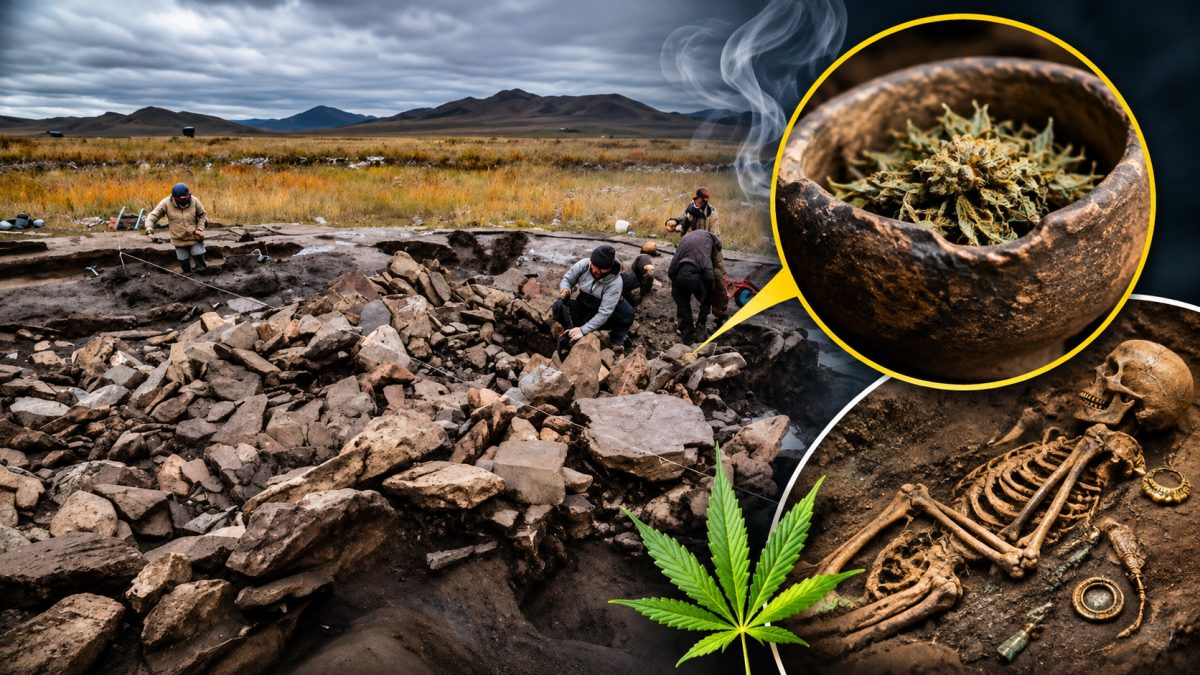
Archaeologists digging at the Tunnug 1 burial mound in Siberia's Uyuk Valley have found the earliest direct evidence of humans using cannabis as a psychoactive drug, dating to around 800 to 760 B.C., nearly 2,800 years ago. The team recovered more than 1,000 whole cannabis seeds and found THC-related chemicals preserved in human hair.
Why Earwax Deters Insects: The Sticky, Slippery Trick That Stops Ants Cold
Digging Through a 2,800-Year-Old Siberian Tomb Cannabis Burial Site
The discovery happened at Tunnug 1, a massive elite tomb built during the early Scythian period, a time when horse-riding pastoralist groups roamed the Eurasian steppe. Gino Caspari, a researcher at the University of Bern, has led work at the site since 2017, and his team has been slowly piecing together what happened there thousands of years ago.
Inside and around the burial, researchers noticed tiny black specks scattered through the soil. Those specks turned out to be cannabis seeds, over 1,000 whole ones and roughly 500 broken fragments. Caspari said the seeds "are not there by accident," pointing to a deliberate act rather than random plant debris blowing into the grave over centuries.
AutoDNA Autonomous Laboratory Runs 11,000 DNA Steps With Little Human Help
How Scientists Confirmed Ancient Cannabis Use in the Siberian Tomb
Finding seeds alone does not prove anyone got high. Cannabis has been grown for thousands of years for fiber, food, and medicine, so researchers needed something stronger. That proof came from preserved human hair found at the site, which carried chemical signatures matching THC, the compound responsible for cannabis's mind-altering effects, along with cannabinol, a related substance that forms as THC breaks down over time.
Radiocarbon dating placed the seeds firmly between 800 and 760 B.C. Every hair sample the team tested came back positive for these chemical markers, giving scientists confidence that people connected to the tomb had absorbed cannabis compounds into their bodies, not just left plant material lying around as decoration or offering.
A Disturbing Theory Tied to Horse and Human Sacrifice
What makes Tunnug 1 unsettling is what else was buried there. Archaeologists found the remains of dozens of horses that appear to have been sacrificed, along with scattered human bones that may point to human sacrifice as well. That combination led Caspari to raise a troubling possibility about why cannabis showed up in such large amounts.
Caspari told CNN that because the site held so many sacrificed horses and possible human victims, cannabis "might also have been used to sedate the victims before something bad happened to them — but we cannot prove that." He was careful to frame this as a theory, not a confirmed fact. The hair samples show exposure to cannabis, but they cannot tell researchers who those people were, how they died, or whether they were willing participants in a ritual or victims of one.
Why This Siberian Discovery Changes the Cannabis Timeline
Before this find, the clearest evidence for early cannabis intoxication came from sites in China, but Tunnug 1 pushes the timeline back further and strengthens the proof with two different types of evidence working together. Having both dated seeds and drug compounds in human hair gives scientists a much stronger case than seeds alone could ever provide.
Researchers from Germany, Russia, Sweden, and Switzerland worked together on the study, which was reported as appearing in the journal Science. Outlets including Reuters, CNN, New Scientist, and Scientific American have covered the find, largely framing it as a major step forward in understanding how ancient steppe cultures used plants in their rituals and daily lives.
What Comes Next for Research at the Siberian Tomb
The team plans to keep studying Tunnug 1, looking closer at where exactly the seeds were placed, testing more human and horse remains, and trying to figure out whether the cannabis was burned, smoked, or used some other way during the burial ceremony. These details could help explain whether the plant played a comforting role, a ceremonial one, or something darker tied to sacrifice.
Confirming the sacrifice theory will take more work, including closer analysis of skeletal trauma and additional chemical testing across more individuals from the site. For now, the clearest fact standing on solid evidence is simple: nearly 2,800 years ago, people at this Siberian tomb deliberately used cannabis, and it likely affected their minds just as it does today.