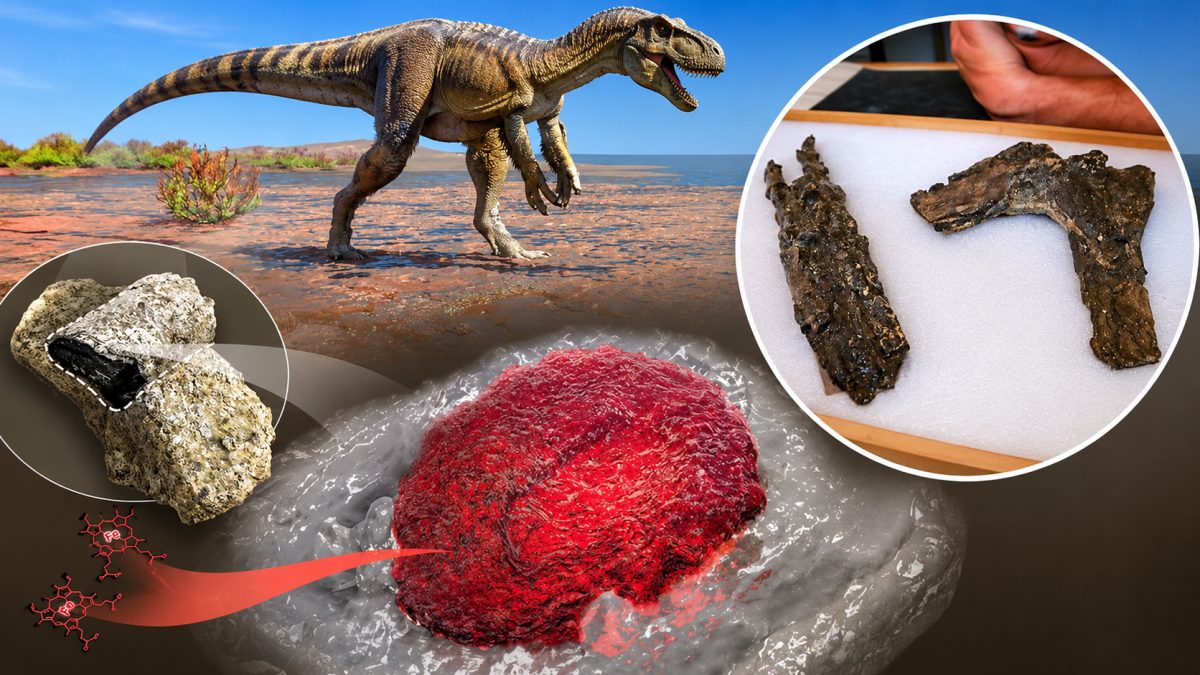

A small meat-eating dinosaur from Brazil just gave scientists their best look yet at what might be ancient blood.
Scientists have found a dinosaur blood fossil inside the leg bones of a 115-million-year-old theropod from Brazil, marking what researchers call the strongest chemical evidence yet of blood-related material surviving inside a dinosaur skeleton. The team, led by Kliti Grice of Curtin University, published the findings on November 2, 2026, in the Proceedings of the National Academy of Sciences.
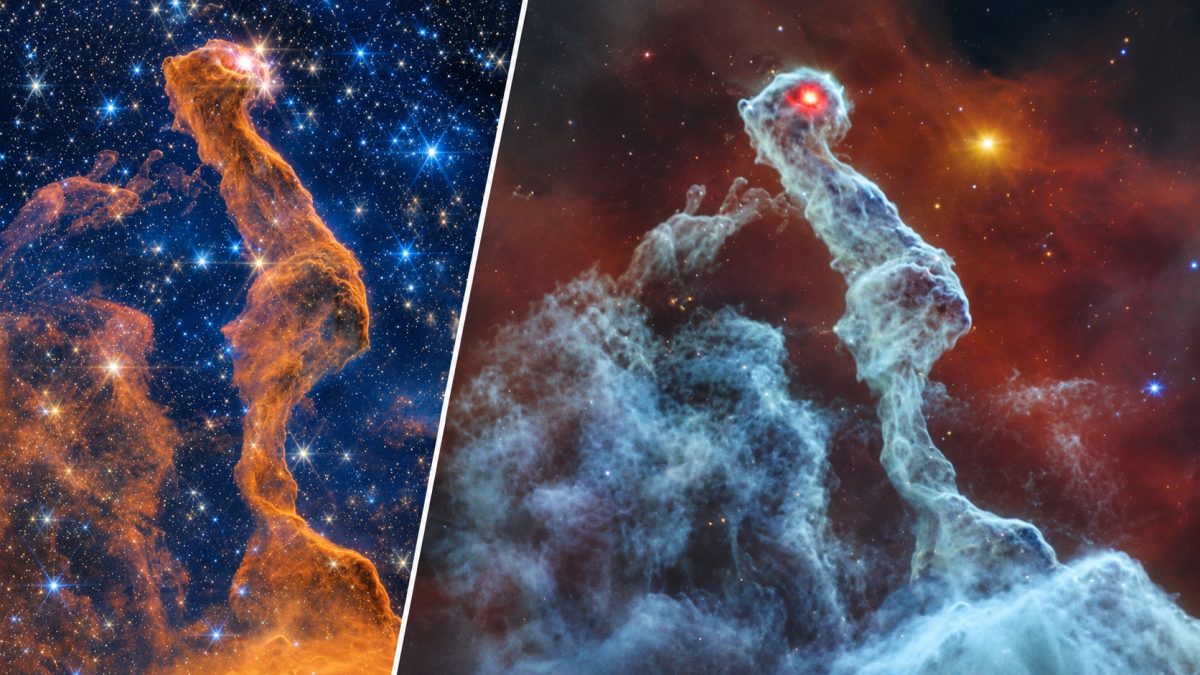
Cat's Head Nebula Hubble Webb Images Reveal a Sinister Glowing Red Eye
How the dinosaur blood fossil was discovered
The bones belonged to Aratasaurus museunacionali, a feathered, three-meter-long predator that lived during the Cretaceous Period in what is now northwestern Brazil. Scientists think the animal was young, maybe around four years old, when it died. The fossil itself was reportedly found back in 2008, but it took years of careful study to reveal what was hiding inside it.
When researchers sliced thin sections of the hind-limb bone and looked under a microscope, they spotted something strange. Tiny oval-shaped structures sat inside the channels where blood vessels once ran through the bone. Their shape and position looked just like red blood cells. That alone was interesting, but not new. Earlier studies had reported similar shapes in other fossils before.
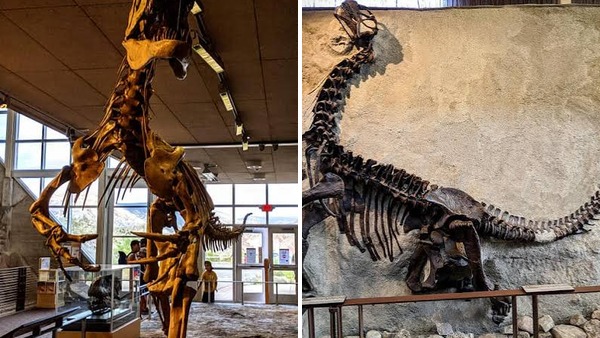
Ironstone Bonebed Moab Dig May Hold North America's Oldest Dinosaur Fossils
Chemical signals point to real blood traces
What makes this dinosaur blood fossil different is the chemistry. The team ran tests on the material and found heme-related compounds, including heme B. Heme is the iron-rich part of hemoglobin, the protein that carries oxygen through blood and gives it that red color. Finding this chemical signature next to the cell-shaped structures gave the researchers much stronger evidence than shape alone could ever provide.
Grice described the moment plainly. "To detect intact heme-derived molecules in 115-million-year-old red blood cells is astonishing: this really is a landmark discovery," she said. Her team also found traces of collagen, another building block of animal tissue, adding more weight to the case that this is real biological material and not just a coincidence of mineral shapes.
Why this ancient bone survived so long
Blood cells rot away almost immediately after an animal dies. So how did anything survive for 115 million years? The answer seems to lie in how this particular dinosaur ended up buried. Reports describe the bone being covered quickly, within weeks of death, and wrapped inside a thick, microbe-rich mat. Scientists found the blood-cell-like structures were closely linked to hausmannite, a manganese mineral that may have helped lock everything in place like a natural time capsule.
This detail matters a lot. The researchers checked whether the chemical signals might have just come from the microbes themselves instead of ancient blood. They found the molecular signatures inside the suspected cells were different from the surrounding microbial mat. That difference is a key part of their argument that they are looking at dinosaur material, not just contamination from ancient bacteria.
Not everyone is convinced, and that is normal science
It is worth being clear about what this discovery actually is. No one found liquid blood sloshing around inside a fossil. What they found is mineralized residue and chemical traces locked inside ancient bone. The original molecules did not survive untouched, they were altered and turned to stone-like material over millions of years, then studied with modern chemistry tools.
Some experts remain cautious about how confidently anyone can say this material came from dinosaur blood rather than some other altered organic matter. That skepticism is a normal part of how science works, especially with claims this old and this bold. The researchers themselves built their case on three things lining up together, the cell-like shape, the location inside blood vessel channels, and the heme chemistry. Each point alone would be weak. Together, they make a stronger argument.
What scientists want to check next
The next step for this field is replication. Other scientists will want to examine more Aratasaurus bones and other extremely well-preserved dinosaur fossils to see if similar heme signatures show up again. Researchers will also need to rule out contamination even more carefully and compare their chemical results against a wider range of microbial mats and minerals from similar burial sites.
If this kind of evidence turns up in other dinosaur species, it could open a whole new way of studying ancient life, using chemistry instead of just bones and shapes. For now, scientists are calling this Brazilian fossil one of the best-preserved dinosaur specimens ever examined, a bone that quietly held onto chemical whispers of blood for 115 million years before anyone thought to look.