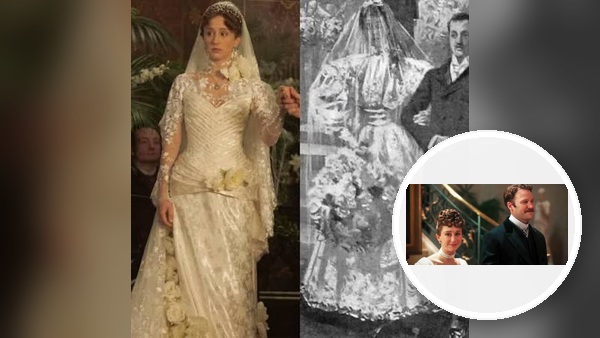

A fictional wedding on HBO sent fans searching for the true story of an American heiress forced into a title she never wanted.
Gladys Russell's reluctant walk down the aisle in The Gilded Age season 3 closely mirrors the real 1895 marriage of Consuelo Vanderbilt to Charles Spencer-Churchill, the ninth Duke of Marlborough, a union arranged by Vanderbilt's own mother to buy the family a place in high society.
Barbara Barrie Dead at 95: Why Her Final Choice Honored Her Own Advocacy
Gladys Russell Consuelo Vanderbilt Parallel Drives Season 3 Plot
On the show, Gladys, played by Taissa Farmiga, gets pushed into marrying the Duke of Buckingham by her mother, Bertha Russell. Gladys wants something else entirely. She loves someone else. But Bertha sees the marriage as a ticket to a title and a higher social rank for the whole family, so she pushes the match forward anyway.
The show doesn't hide how torn Gladys feels about it. In one key scene, she shows up late to her own wedding at St. Thomas Church in June 1884, stuck upstairs, wrestling with whether to go through with it at all. That moment of hesitation is the clearest echo of what really happened to Consuelo Vanderbilt more than a century ago.
How To Watch The 2026 Daytime Emmy Awards Free Without Cable Tonight
Consuelo Vanderbilt Duke of Marlborough Wedding Shocked New York
Consuelo Vanderbilt was the daughter of William Kissam Vanderbilt and Alva Vanderbilt, heirs to one of the biggest railroad fortunes in America. She had everything money could buy. What she didn't have was a say in who she'd marry. Her mother wanted a European title in the family, and she set her sights on Charles Spencer-Churchill, the ninth Duke of Marlborough, a man with a famous name but a family estate badly in need of cash.
Consuelo married the duke on November 6, 1895, at St. Thomas's Church in New York. Some records list her as 18, others as 19, depending on how the birth date and wedding date line up. Either way, thousands of people showed up just to catch a glimpse of the bride. It was treated like the celebrity wedding of its era.
The money behind the marriage tells its own story. Reports say the duke received $100,000 a year, worth around $3.2 million today, plus $2.5 million in railroad stock, worth roughly $81 million now. Other accounts describe it simply as a massive dowry meant to prop up the Marlborough estate and keep the family's lifestyle afloat.
Dollar Princess Marriages Defined An Entire Era
What happened to Consuelo wasn't unique. Historians call it the "dollar princess" trend. Rich American families wanted the prestige of a European title. Cash-strapped aristocratic families wanted American money to save their estates. Put those two needs together, and you get a wave of marriages built more on business than love.
Alva Vanderbilt was relentless in making this happen for her daughter. According to historical accounts, she met the Duke of Marlborough while traveling abroad and pursued the match hard, even though Consuelo wasn't on board with the idea. That tension between a mother's ambition and a daughter's wishes is exactly what showrunner Julian Fellowes borrowed for Gladys and Bertha's storyline.
The show changes plenty of details. Gladys marries a fictional Duke of Buckingham, not a Duke of Marlborough. Her wedding happens in 1884, over a decade before Consuelo's actual ceremony. These changes let the show fit the story into its own timeline, which focuses on the clash between old New York money and the new fortunes trying to break in.
What Happened After Consuelo Vanderbilt Said I Do
The marriage didn't end well. Consuelo and the duke separated in 1906, after roughly a decade together. For much of their 25-year marriage, they lived apart, even though they stayed legally married for years. A change in marital law reportedly opened the door for Consuelo to file for divorce on grounds of desertion, and the divorce became final in 1921. She married French industrialist Jacques Balsan soon after. In 1926, the Vatican annulled her first marriage to the duke, according to historical records.
Consuelo and the duke did have two children together, and historians generally describe the marriage as a social success but a personal failure. She got the title. She became the first American woman to hold the rank of duchess. But by her own later accounts, she never wanted any of it in the first place.
Why The Comparison Still Resonates Today
Outlets covering the show, including Vogue, Harper's Bazaar, Tatler, and Christie's, all point to the same thing: Gladys's story borrows the emotional core of Consuelo's real life, even if the names and dates changed. Both women wanted to marry for love. Both of their mothers wanted a title more than they wanted their daughter's happiness.
There's no official HBO statement confirming Gladys was built as a direct copy of Consuelo. But the pattern is too close to ignore, and it's exactly why the comparison keeps showing up in entertainment coverage. The show gives viewers the drama. History gives them the sobering reminder that for women like Consuelo, status sometimes came at the cost of everything else.