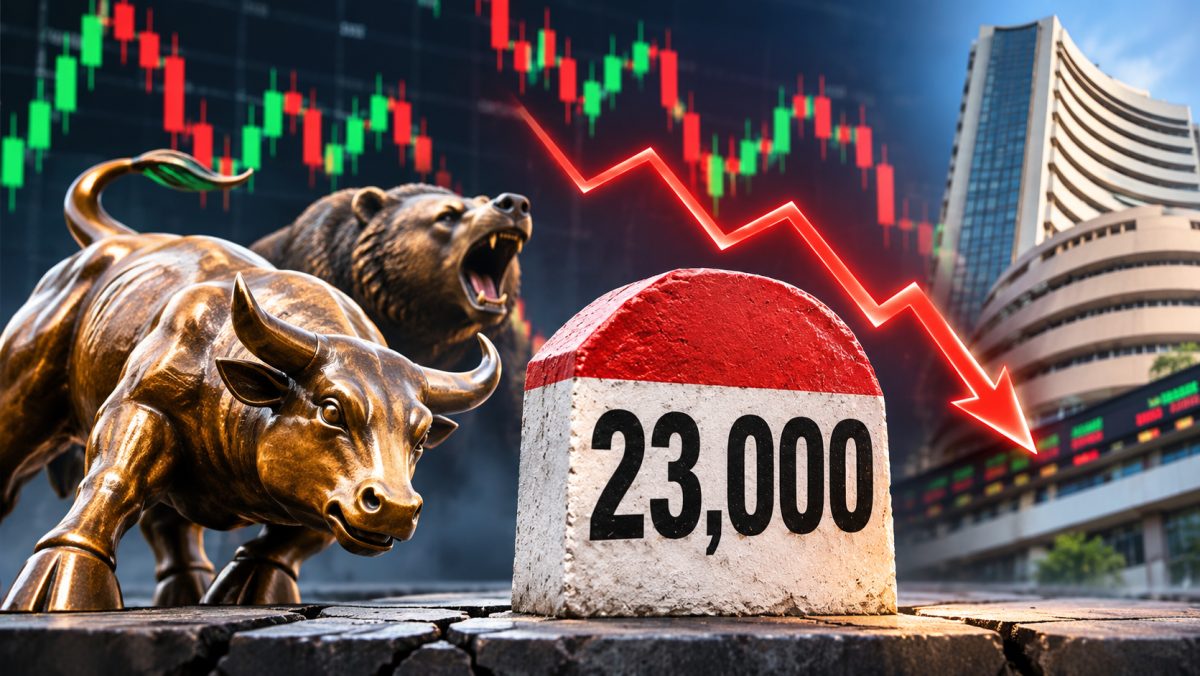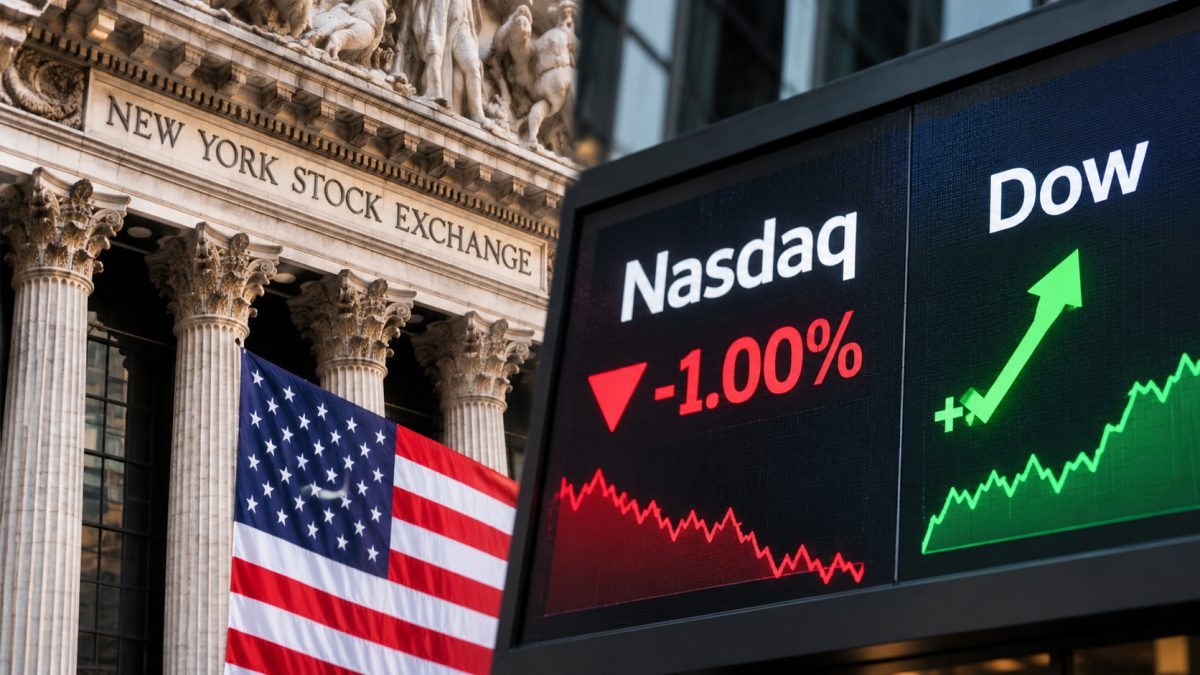

Wall Street split down the middle Monday as traders dumped tech stocks but kept buying everything else.
U.S. stocks moved in opposite directions on Monday, November 2, 2026, as the Nasdaq Composite dropped 1.07% to close at 25,164.32 while the Dow Jones Industrial Average climbed 0.41% to 51,983.98, extending a rotation away from artificial-intelligence and technology stocks that began with Friday's steep selloff.
US Stocks Today October 30 2026: Why Intel's Crash Sank the Nasdaq
Nasdaq falls as Dow rises in a split trading day
The numbers tell a clear story. The S&P 500 slipped 38.67 points, or 0.51%, to settle at 7,541.40. The Nasdaq 100, which tracks the biggest tech names, fell even harder than the broader Nasdaq, dropping 1.39% to 27,989.82. Meanwhile, the Dow added 213.67 points, showing that money didn't leave the stock market altogether. It just moved somewhere else.
What makes this session interesting is how it started. Both the Nasdaq and S&P 500 were up strong in early trading, with the Nasdaq climbing as much as 1.4% and the S&P 500 up around 1.1%. Then sellers came back. By the closing bell, those early gains had flipped into losses for both indexes, while the Dow held onto its advance the whole time. The Russell 2000, which tracks smaller companies, slipped just 0.21% to 2,805.88, suggesting the pain stayed mostly concentrated in big tech and AI names rather than spreading everywhere.
US Stocks Today: Alphabet Revenue Miss Sparks AI Capex Jitters on Wall Street
Friday's selloff set the stage for this rotation
To understand Monday, you have to look back at Friday, October 30. That session was brutal. The Nasdaq dropped 747.73 points, or 2.9%, landing at 25,437.00. The S&P 500 fell 1.8% to 7,580.07, and the Dow lost 1.1%, closing at 51,770.31. Some market watchers called it Wall Street's worst day since June. The Nasdaq ended at its lowest level in three months, and the S&P 500 hit its weakest close in more than a month.
For the full week ending Friday, the Nasdaq had dropped 2%, the Dow fell 0.9%, and the S&P 500 lost 0.6%. The root worry behind all this selling wasn't new, but it got louder. Investors are asking whether the massive money being poured into AI data centers, chips, and infrastructure will actually turn into real profits anytime soon. CNBC reported that investors "continued to move out of tech stocks and add exposure to other parts of the market," which is exactly what played out again on Monday.
Oil prices tumble on hopes for US-Iran diplomacy
Outside of tech, oil was the other big story Monday. Crude prices fell sharply on optimism that the United States and Iran might be moving toward some kind of diplomatic resolution that could help end the Iran conflict. Cheaper oil usually sounds like good news for everyday consumers and businesses because it can ease inflation pressure and lower costs across the board.
But it also added a layer of uncertainty for energy companies and for investors trying to figure out what a shifting geopolitical picture means for the broader economy. Reuters noted that the S&P 500 ended lower even as oil tumbled, showing that falling energy costs alone weren't enough to rescue the tech-heavy indexes from their afternoon slide.
Apple's earnings and midterm elections loom large
Two big events were sitting right in front of investors as Monday's trading wrapped up. Apple shares dipped ahead of its quarterly earnings report, with traders eager to see fresh signs of iPhone demand and overall consumer spending strength. Apple has become something of a bellwether for how much confidence the market still has in the technology sector after a rough stretch.
Then there's Tuesday, November 3, when U.S. midterm elections could shake things up further. Election results often move markets because they can shift expectations around taxes, government spending, regulation, and trade policy. Combined with the ongoing AI valuation debate, these two events gave investors plenty of reasons to stay cautious heading into the new week, even with the Dow managing to finish in positive territory.
What the mixed close really tells investors
The most telling detail from Monday isn't that stocks fell. It's that they fell unevenly. When the Nasdaq drops and the Dow rises on the same day, that usually means investors aren't panicking and running for the exits. They're simply moving their money toward companies that make steady profits right now, instead of companies promising bigger profits years down the road from AI spending.
Semiconductor and AI-related shares remained among the weakest performers, while financial companies held up much better, based on sector patterns tracked through Monday's close. Whether this rotation turns into a longer-lasting trend will likely depend on what Apple reports this week and how the market reacts to Tuesday's election results. For now, the message from Wall Street is simple: tech is getting a timeout, while the rest of the market keeps grinding higher.