
A cash check during pregnancy and after birth may be doing something doctors couldn't do alone — keeping Flint newborns alive.
Flint's neonatal mortality rate fell by nearly half in 2025, dropping from about 10.2 deaths per 1,000 live births to roughly 5.1, according to a study tied to Rx Kids, the city's unconditional cash program for pregnant residents and new parents, which launched in January 2024.
MCA Role in NCLT Appointments: Why It Denies Control After SC's 'Hijacked' Jab
How Rx Kids Flint Neonatal Mortality Numbers Changed
Researchers compared Flint births and deaths in 2025 against the years 2021 through 2024, using statewide Michigan birth and death records. Neonatal mortality counts deaths that happen within the first 28 days of life, a narrow but critical window when babies are most fragile. During the earlier period, Flint's rate sat around 10 per 1,000 live births, more than double the rate seen in the rest of Michigan.
By 2025, that number had dropped to about 5.1 per 1,000. Science News also reported a sharper drop in early-neonatal deaths, those happening in just the first week of life, falling from roughly 8 per 1,000 to 2 per 1,000. Michigan's statewide neonatal mortality rate in 2025 was close to 3.9 to 4 per 1,000, meaning Flint still trails slightly behind the state average, but the gap has closed dramatically.
2026 ED138 Dwarf Planet Candidate Found Past Pluto ,Why It's Not Official Yet
What Rx Kids Actually Pays Families
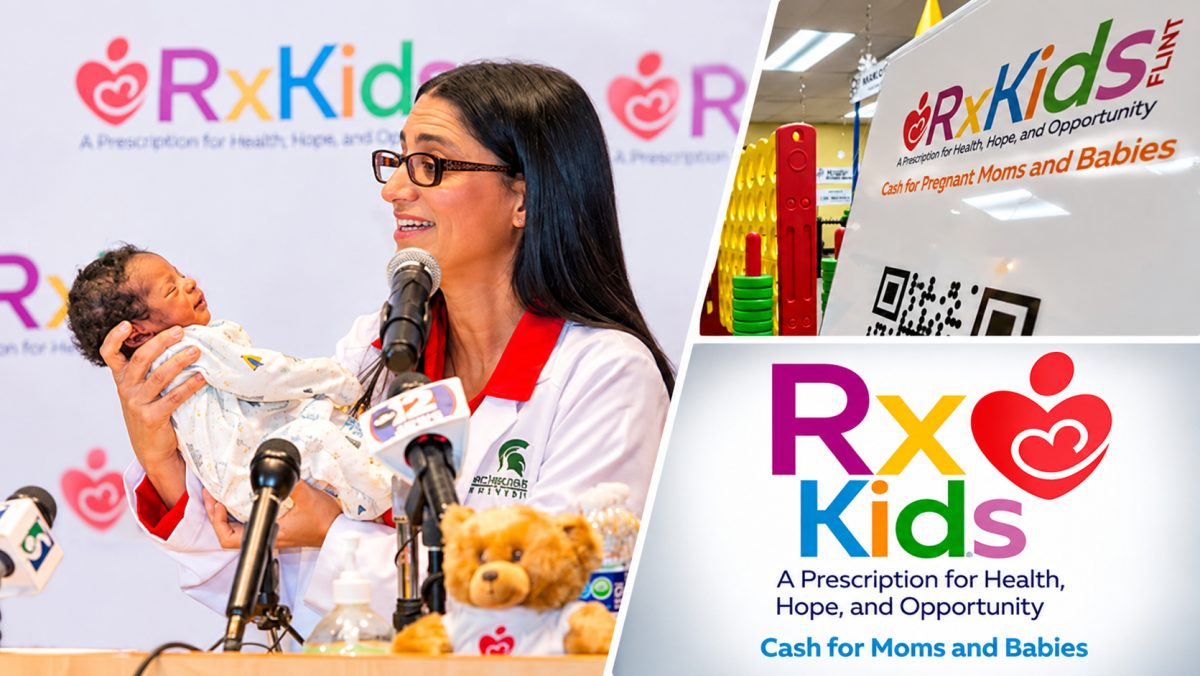
Rx Kids gives pregnant residents a one-time payment of $1,500 during pregnancy. After the baby arrives, families get $500 a month, and in Flint that support has generally continued for a full year, adding up to as much as $7,500 per family. Unlike many assistance programs, there are no strings attached. Parents don't have to prove how they spent the money or file paperwork showing it went toward diapers, rent or medical bills.
That design is intentional. The program's founders built it around a simple idea: families already know what they need most, whether that's a car repair to make it to a prenatal visit, a utility bill, or baby formula. Rx Kids was founded and is led by Dr. Mona Hanna, the pediatrician known for helping expose the Flint water crisis, along with University of Michigan poverty researcher Luke Shaefer.
Officials and Researchers React to the Drop
Dr. Mona Hanna pointed to the new study as proof that cash support functions as a public health tool, not just a financial one. Rx Kids officials said that for years, babies born in Flint were more than twice as likely to die in the neonatal period compared with babies born elsewhere in Michigan. In 2025, they said, that disparity was effectively wiped out.
Michigan State University's College of Human Medicine, which helped document the findings, described the result as neonatal deaths being cut by nearly 50% following the program's rollout. The study was reported as being published in JAMA Pediatrics, and local outlets including MLive and the Detroit Free Press covered officials crediting Rx Kids directly for the shift. Earlier evaluations of the program had already linked it to more consistent prenatal care, fewer preterm births, fewer babies born underweight, fewer NICU admissions, and less smoking during the third trimester, all factors that could help explain why fewer newborns are dying.
Why Flint's Hardship Made This Program Necessary
Flint's infant health struggles didn't start with this study. The city has long dealt with economic hardship, housing instability, transportation gaps and the lingering effects of its water crisis, all of which can strain a pregnancy or a newborn's first weeks of life. Before Rx Kids, those pressures showed up starkly in the data, with Flint babies dying at more than twice the rate of babies born elsewhere in the state.
The program treats those pressures as a medical issue, not just a social one. Instead of offering another clinic visit or pamphlet, it hands families money at the exact moments bills pile up fastest, right before and right after a baby arrives. One related analysis also found that investigated child welfare allegation rates dropped in Flint after Rx Kids began, falling to 15.5% compared with 20.6% in comparison cities, suggesting the cash support may ease stress in ways that extend beyond physical health alone.
Expansion Plans and the Questions Still Unanswered
Rx Kids isn't staying in Flint. By July 2026, the program had grown to nearly 50 Michigan communities and reached more than 13,000 families, according to Michigan State University. Detroit and Cleveland have both looked at or adopted similar versions, generally offering $1,500 during pregnancy and $500 a month for the first six months after birth. Lawmakers elsewhere have also started exploring no-strings cash support for new mothers.
Still, researchers are careful to note this is an observational study. It shows a strong association between Rx Kids and better survival outcomes, not absolute proof that cash payments alone caused every avoided death. Other factors, like changes in health care access or shifts in population, could play some role. The bigger test now is whether Flint's results can be repeated in bigger cities, rural towns and communities with different starting conditions, and whether the gains last once families stop receiving the payments.