
A rock that looked ordinary in the desert sand turned out to be one of the oldest pieces of another planet ever found on Earth.
A 4.1 billion-year-old Martian meteorite, now named Teghaza 001, was identified after being found in Mali's Sahara Desert in 2022, scientists announced this week, revealing fresh proof that water altered the Red Planet's crust during its earliest history.
SpaceX $40 Billion GPU Debt Financing Closes, But Musk Warns Hundreds Will Fail
Rose-Colored Rock Turns Out To Be A Piece Of Mars
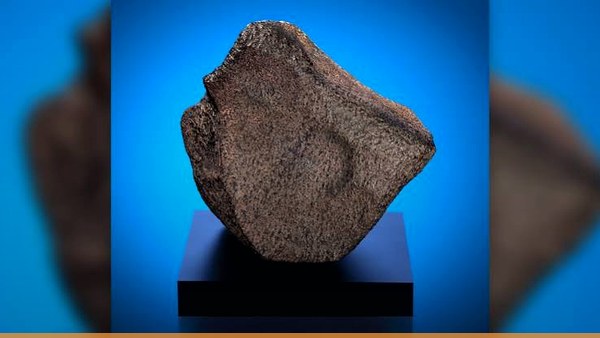
The story starts in 2022, when someone came across strange reddish stones in the Sahara Desert, about 34 kilometers from the village of Bir Chali in Mali. There were eight pieces in all. The biggest one was roughly the size of a fist. Put together, the fragments weighed almost two pounds.
Nobody knew right away what they had found. The stones got their name, Teghaza 001, from a nearby salt plain once used for salt mining. It was the color that first caught attention, a soft rose or pinkish tone unlike typical desert rocks. But it took lab work to figure out where this thing actually came from.
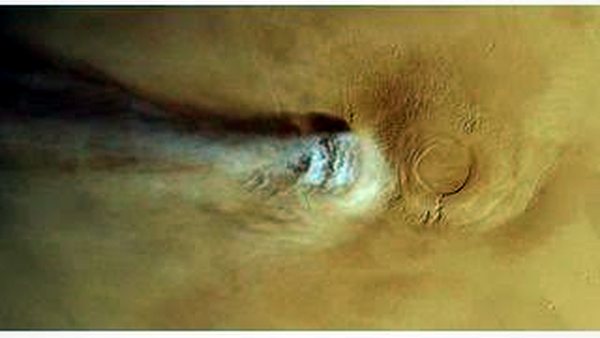
Scientists studied the meteorite's minerals and chemistry and compared them to data gathered by NASA's Mars Reconnaissance Orbiter. The match was clear. Zircon crystals and volcanic minerals inside the rock lined up with features seen in Mars's southern highlands. That comparison is what confirmed Teghaza 001 did not come from Earth at all.
Prem Watsa IDBI Bank Deal: Why Fairfax Just Paid $5.6 Billion for Control
4.1 Billion-Year-Old Martian Meteorite Points To Ancient Water
Dating the rock was the next big step. Researchers used uranium-lead dating on the zircon crystals trapped inside the meteorite. That method placed its formation at roughly 4.1 billion years ago, back when Mars was still a young planet cooling from its violent birth about 4.5 billion years earlier.
NASA called Teghaza 001 one of the three oldest Martian meteorites ever found on Earth. Reuters went further, reporting it might be the oldest among all 435 known Martian meteorites currently cataloged by scientists. Whether it holds that exact title depends on how researchers define "oldest," since some meteorites contain individual mineral grains that are even older, even if the full rock formed later.
What makes this meteorite stand out isn't just its age. It's what the age reveals. A researcher named Liu, involved in the study, said isotope evidence shows that Mars's surface had water more than 4.1 billion years ago. That's a direct, specific claim, not a guess. Hydrogen and oxygen isotopes inside the rock's minerals carry the chemical fingerprint of ancient water moving through Mars's crust.
Why Scientists Call This Discovery Rare
Mars formed around 4.5 billion years ago, but its earliest chapter has always been hard to study. No spacecraft has brought samples straight back from the planet yet. So meteorites like this one are the only physical pieces of Mars that scientists can actually hold and test in a lab.
Before Teghaza 001, two meteorites stood out as the oldest known samples. One is Allan Hills 84001, dated to about 4.1 billion years. The other is Northwest Africa 7034, which contains material older than 4.3 billion years. Teghaza 001 adds something different. It's a complete igneous rock, meaning scientists can study both how it formed from cooling magma and how water changed it afterward, all in one sample.
The findings were published October 29 in the journal Science, and coverage quickly spread through outlets including Reuters, NASA's Jet Propulsion Laboratory, CBS News, the New York Times and Smithsonian Magazine. Researchers have been careful about what this discovery does and does not prove. It does not show that life ever existed on Mars. What it does show is that early Mars had water interacting with rock, one of the basic ingredients scientists look for when judging whether a place could ever support life.
What Happens Next For Mars Research
Scientists plan to keep studying Teghaza 001's zircon crystals and isotope signatures, comparing them against Allan Hills 84001, Northwest Africa 7034, and orbital images of Mars's southern highlands. Each comparison helps build a clearer timeline of what Mars looked like in its first few hundred million years.
The discovery also adds weight to arguments for bringing actual samples back from Mars through future missions. Meteorites like Teghaza 001 traveled through space and sat in a desert for an unknown stretch of time before anyone found them, so there's always some uncertainty about what happened to them along the way. A sample collected directly from the Martian surface and returned to Earth would remove much of that guesswork.
For now, Teghaza 001 stands as a rare physical link to a planet most people will only ever see through photographs. A rock that sat quietly in the Sahara for who knows how long has given scientists one of their best windows yet into what Mars looked like when it was young, wet, and still taking shape.