
Wall Street got spooked when two tech giants admitted their AI bets are costing a lot more cash than investors expected.
US stocks today October 30 2026 fell sharply in New York trading after Intel and Amazon released quarterly results that rattled confidence in the artificial-intelligence boom. The Nasdaq Composite dropped 2.9%, the S&P 500 lost 1.8%, and the Dow Jones Industrial Average slid 1.1%, as investors questioned whether massive AI spending will pay off anytime soon.
US Stocks Today: Alphabet Revenue Miss Sparks AI Capex Jitters on Wall Street
Intel and Amazon Spark a Tech-Wide Retreat
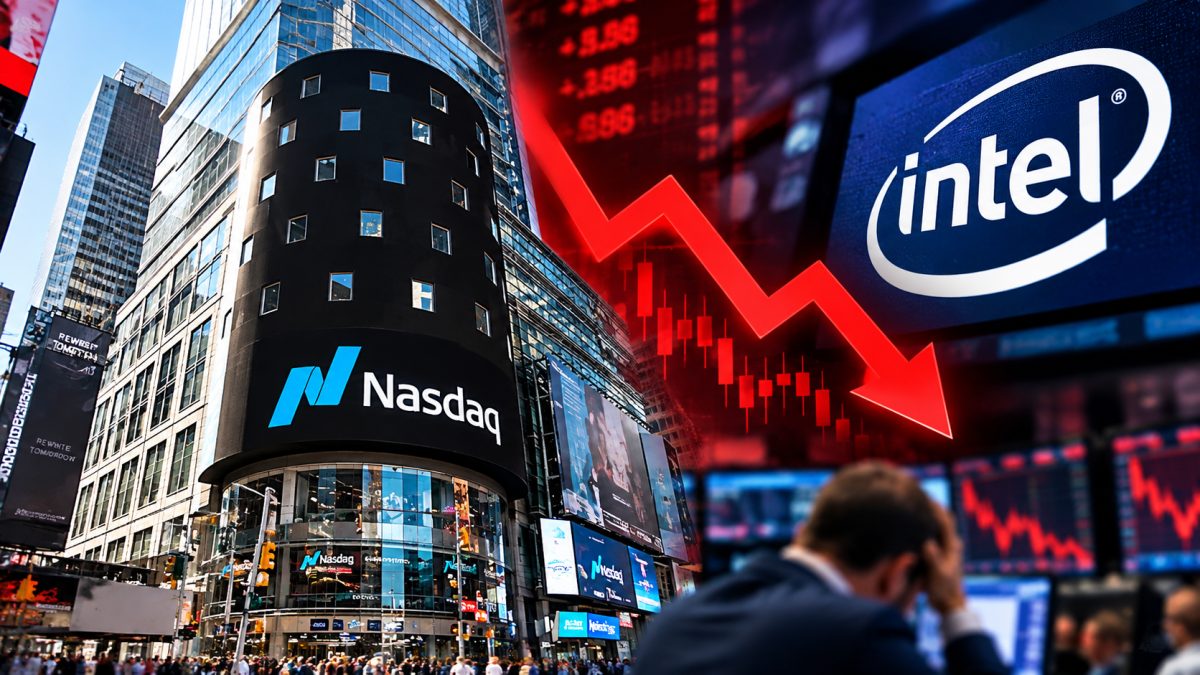
The trouble started Thursday evening, October 29, when Intel and Amazon both posted results after the closing bell. Intel beat expectations on its third-quarter numbers, but that good news got buried under a blunt warning: the company expects to burn cash this year. Investors heard that and ran. Intel shares fell around 29%, according to multiple market reports, making it possibly the worst single-day drop in the company's history.
Amazon told a similar story in a different way. The company reported a steep cash outflow for the third quarter and said its capital spending would stay unusually high, with one report pointing to a roughly $220 billion AI infrastructure budget for 2026. Shares dropped as much as 7.2% before the opening bell, though Amazon clawed back some losses by the close, settling closer to a 2% decline as investors weighed its strong data-center and AI revenue growth against the spending shock.
Nasdaq Sinks 400 Points as Google Stock Tumble Rattles Wall Street
Nasdaq AI Selloff Intel Amazon Earnings Drags Down the Broader Market
By the time trading opened, the damage was already spreading. The Nasdaq opened at its lowest level in more than two months, and Nasdaq futures had tumbled more than 2% overnight. The Dow actually opened higher, up about 41 points, but that early optimism faded fast as selling pressure built through the morning.
By late morning, the Dow had swung into a loss of nearly 374 points, down 0.71%, while the S&P 500 had fallen 1.56% and the Nasdaq was off 2.48%. The slide kept building into the afternoon. By the closing bell, the Nasdaq had posted its biggest one-day percentage loss since June 5, and both the S&P 500 and the Nasdaq had turned negative for the entire month of October.
The pain wasn't limited to Intel and Amazon. Reddit shares fell 29%, matching Intel's steep decline, and Sandisk, a chipmaker seen as a major winner from AI-related spending, dropped 13%. Microsoft, Meta Platforms and Alphabet, all big players in the AI infrastructure race, fell another 1% to 2% after already sliding earlier in the week. Bitcoin fell too, and gold touched a one-year low, suggesting the nervousness reached well beyond tech stocks.
Dow Jones Falls as Investors Question AI Spending Math
At the heart of the selloff is a simple but uncomfortable question: are companies spending too much, too fast, on AI without knowing when it will pay off? Intel's cash-burn warning combined weak personal-computer demand with expensive manufacturing expansion plans, a mix that left investors worried the chipmaker is stuck paying big bills with no clear payoff date.
Amazon's situation highlighted a different worry. Even one of the most profitable companies in the world is posting negative free cash flow because it keeps pouring money into AI data centers, chips and infrastructure. Reuters described the core investor concern as the "timeline for returns" on that spending. In plain terms, companies are betting billions that AI demand will eventually catch up to the cost of building it all. Friday's selloff showed that patience for that bet is wearing thin.
The market had already been running hot before this. The Nasdaq was sitting about 7.8% below its recent closing high, and October was shaping up as the index's worst month since March 2025. That made the market more fragile heading into Intel and Amazon's reports, since any bad news had less cushion to absorb the blow.
What the Intel Cash Burn and Amazon Capital Expenditure Warnings Mean Next
For everyday investors, the selloff is a reminder that strong AI demand headlines don't automatically mean strong near-term profits. Intel and Amazon both showed that building AI infrastructure, chips, data centers and computing power costs enormous amounts of money upfront, while the revenue to match that spending can take years to show up.
Wall Street's next test comes from other big AI spenders and beneficiaries still due to report earnings and spending guidance in the coming weeks. Investors will be watching capital-expenditure numbers, data-center usage rates and whether AI revenue growth is actually accelerating fast enough to justify the spending. Until those numbers show real cash coming back in, Friday's rout stands as a warning that even the biggest tech names aren't immune to doubts about when the AI payoff actually arrives.
For now, the October 30 selloff leaves a simple scoreboard. Intel lost nearly a third of its value in one day. Amazon's cash flow went negative. And the Nasdaq, S&P 500 and Dow all closed in the red, proving that AI optimism alone can only carry stock prices so far before investors start demanding proof.