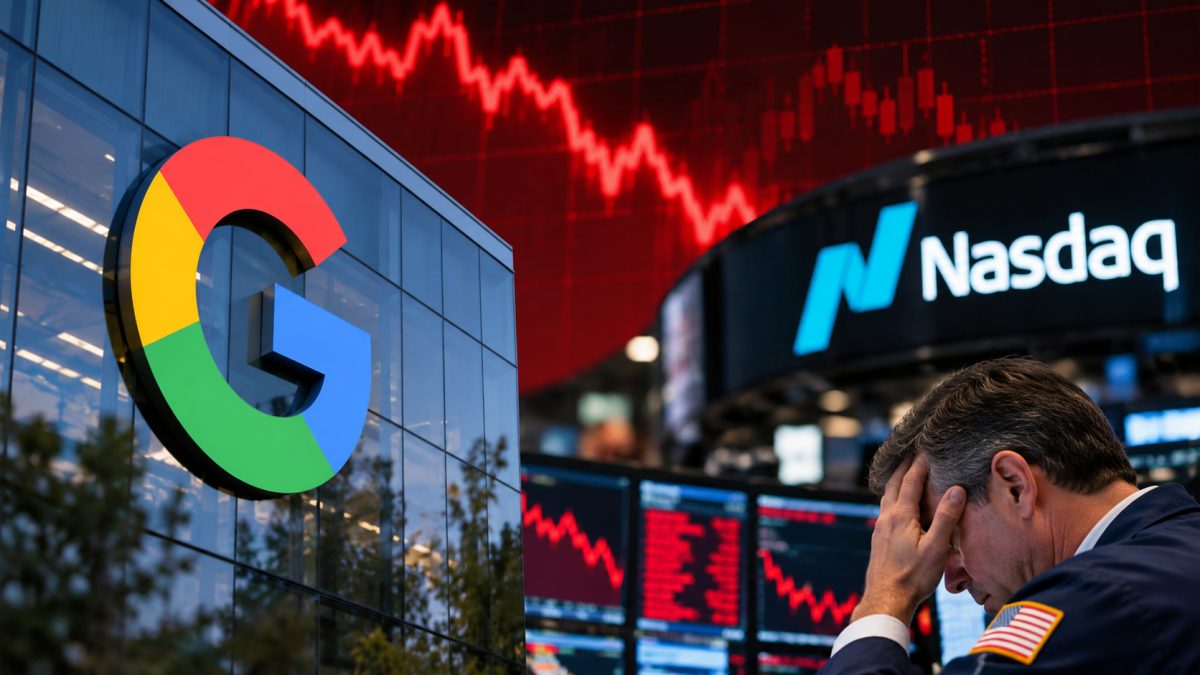

Google's parent company just had its worst trading day in more than two decades, and Wall Street felt the shock wave instantly.
The Nasdaq sinks 400 points Google stock tumble sent shockwaves through Wall Street on October 29, 2026, after Alphabet's third-quarter earnings spooked investors worried about runaway artificial intelligence spending. The Nasdaq Composite closed at 26,184.72, down 436.54 points, or 1.64%, while Alphabet shares collapsed 12.6% in their steepest single-day drop since the company went public in 2004.
Anthropic IPO Filing Sends Stocks Higher — Here's Why Wall Street Cheered
Nasdaq Sinks 400 Points as Alphabet Shares Crater
Google stock plunges 13% in LARGEST LOSS in Alphabet's history after Q3 earnings miss The crash wiped out over $400 BILLION in market value Aggressive AI hardware spending and lower ad monetization on AI-generated search results triggered a $9.1B negative cash flow panic https://t.co/hgdmoQ8YBz
— RT (@RT_com) October 29, 2026
Alphabet reported earnings after the bell on Wednesday, October 28. Earnings per share landed at $2.12 on revenue of $127.58 billion. Google Cloud was the bright spot, with revenue roughly doubling to $30.7 billion and beating what analysts had penciled in. But that good news got buried under a weaker-than-expected showing in search and advertising, the engine that still powers most of Alphabet's profits.
By the time trading opened Thursday, the damage was already visible. Alphabet shares tumbled more than 10% in premarket action, then kept falling. When the closing bell rang, Class A shares were down 12.6%, a drop so steep that multiple outlets described it as the stock's worst day in Alphabet's history as a public company. The S&P 500 slipped 0.3% to 7,720.39, and the Dow Jones Industrial Average dipped 132 points, or 0.3%, to 52,342.56. Because Alphabet carries such heavy weight in tech-focused indexes, its selloff did outsized damage to the Nasdaq even though, as Fortune noted, most stocks in the S&P 500 actually rose that day.
US Stocks Today: Nasdaq Jumps as SpaceX and Super Micro Spark AI Buying Frenzy
Why Investors Are Losing Patience With AI Spending
The real story here isn't just a revenue miss. It's a question mark hanging over Alphabet's entire AI strategy. The company's property and equipment purchases topped $51 billion for the quarter, pushing free cash flow into negative territory by more than $9 billion. Schwab's market commentary pointed out that Alphabet also signaled capital spending would rise again next year, which made investors nervous about how long this investment phase will last before it pays off.
Analysts at Citizens didn't hold back. "The deceleration in search caught us off guard this quarter, as we believed Google was reaping greater rewards from the growing search market driven by AI," the firm said, downgrading Alphabet from outperform to market perform. Bank of America pointed to a related concern, saying the search-revenue miss drove the entire quarter's top-line shortfall and tied it to users getting AI-generated summaries before they ever click a traditional ad link.
A Stock That Was Winning All Year Suddenly Falls Behind
What makes this selloff sting even more is the timing. Alphabet entered the session up roughly 4% for 2026, a far cry from the S&P 500's approximately 13% gain over the same stretch. One brutal trading day was enough to erase that modest cushion and push the stock into the red for the year. That kind of reversal doesn't happen often to a company of Alphabet's size, and it explains why traders across the market reacted so sharply.
The selloff also landed on a day already loaded with market-moving news. Investors were digesting fresh inflation data described as cooler than expected, along with the Federal Reserve's decision to hold interest rates steady. Reuters reported the Nasdaq fell more than 1% as Alphabet's results reignited broader worries about soaring AI costs across the tech sector, not just at Google. The combination of hot inflation concerns, a central bank standing pat, and Alphabet's stumble proved too much for the Nasdaq's three-session winning streak, which snapped on Thursday.
Ripple Effects Across the Technology Sector
Alphabet wasn't trading in isolation. Yahoo Finance reported that Nasdaq futures had already been shaky after Samsung also disappointed investors, meaning Alphabet's stumble landed on a market already on edge about big tech spending commitments. The AP's coverage described the drop as potentially historic, noting it dragged the broader U.S. market lower even as other sectors held relatively steady.
The Dow's smaller decline, compared to the Nasdaq's sharper fall, tells its own story. Caterpillar also weighed on the Dow that day, according to Investopedia, but the damage there was nowhere near what hit tech-heavy indexes. That gap between the Dow and Nasdaq confirms this was largely an Alphabet and AI-spending story, not a broad economic panic.
What Comes Next for Alphabet and the Broader Market
The road ahead for Alphabet hinges on one simple question: can all that AI infrastructure spending eventually turn into real revenue growth? Investors will be watching the company's next earnings report closely for signs that search monetization is stabilizing and that capital expenditures are starting to show returns instead of just draining cash.
For now, there's no confirmed date for a specific Alphabet product launch or investor event that might shift the narrative. What is clear is that Wall Street has shifted from cheering AI ambition to demanding proof it pays off. Until Alphabet delivers stronger search numbers alongside its cloud growth, this selloff may continue to shape how investors view not just Google, but the entire AI spending boom across big tech.