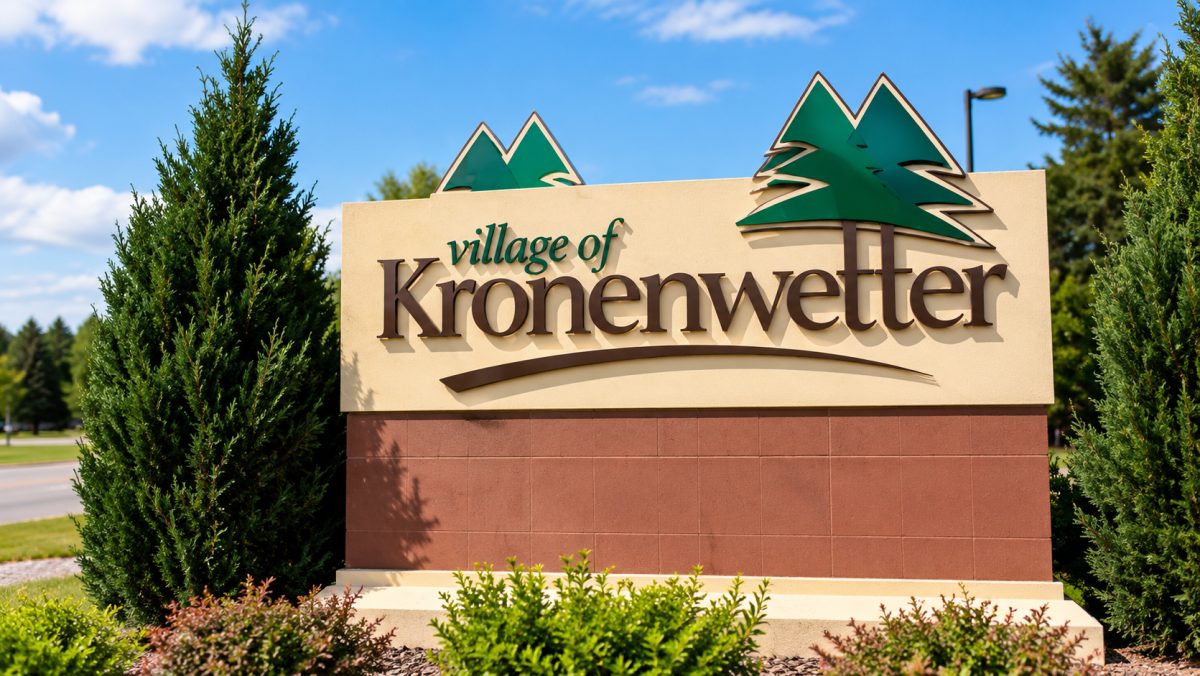

Village leaders say new road work, a struggling tax district and fresh borrowing are about to squeeze the budget.
Kronenwetter's finance director says the village's tax rate is likely to go up in 2027 as officials start borrowing money again, move leftover debt cash into the general capital program, and keep bailing out a troubled tax district. The village board will hold a public hearing and vote on the 2027 budget on Nov. 9, 2026.
Peapack-Gladstone Q3 2026 Earnings Call: Profits Jump as Expenses Fall
Finance director lays out the case for a higher Kronenwetter tax rate
John Jacobs, the village's finance director and treasurer, told officials the rising tax rate is tied to Kronenwetter's very first long-range capital plan. That plan covers 10 years, from 2027 through 2036, and totals about $30.6 million in projects. Only the first year is locked into the 2027 budget right now, but it already points toward higher costs.
The 2027 slice of that plan includes about $4.32 million in projects. The biggest one is a $2.89 million rebuild of Maple Ridge Road. To pay for it, the village plans to borrow $1.865 million through general-obligation notes. Most of that, roughly $1.69 million, covers Maple Ridge Road. Another $175,000 would go toward the Buska Park playground.
Jacobs wrote that Kronenwetter had never before kept a long-term plan for "infrastructure, facilities, and equipment purchases or replacements." That gap is part of why the village is now facing a wave of borrowing decisions all at once instead of spreading them out over time.
National City Mayoral Race Financial Struggles Could Bankrupt the City by 2030
Debt-service levy numbers show the squeeze taking shape
Beyond new borrowing, the village wants to move $863,200 in unused proceeds from general-obligation notes issued back in October 2024 out of Tax Increment District 2 and into the general capital projects fund. That money would be useful for paying for projects, but it comes with a cost. Shifting it this way leaves the village on the hook for about $1.04 million in extra principal and interest payments down the road.
Put together, these moves change the debt-service math in a real way. Instead of the debt-service portion of the tax levy dropping by $17,150, as earlier projections expected, it's now on track to rise by $12,478, landing around $810,500 for 2027. That's a swing of roughly $30,000 from where the village thought it would be just a year or two ago.
Jacobs has said his goal is to keep the debt-service levy "relatively flat or stable." But the numbers he's presenting to the board suggest that goal is getting harder to hit once new borrowing and the TID 2 fund transfer are factored in together.
Tight state levy limits and a struggling tax district add pressure
Kronenwetter doesn't have much wiggle room under Wisconsin's levy limit rules, which cap how much the village's operating levy can grow each year outside of debt service. For 2027, the state only allows about $16,306 in total operating-levy growth. Of that, $12,167 comes from new construction, which grew the village's tax base by just 0.651% this year. Another $4,139 comes from the scheduled closing of Tax Increment District 3 in February.
That 0.651% growth rate is weak by Kronenwetter's own recent history. It has stayed under 1% for three years straight, a steep drop from the nearly 3% growth the village saw five years ago. With so little new money coming in, there's almost no cushion to absorb rising costs, debt payments, or the ongoing bill for struggling tax districts.
That struggling district is Tax Incremental District 1, which the state classifies as severely distressed. TID 1 lost $2,546,900 in value in 2026, a 12% drop. Because the district can't generate enough new tax revenue to cover its own debt, the general fund has stepped in every year since the village board made that call back in December 2020. The yearly subsidy has typically run around $125,000, but Jacobs estimates the 2027 payment could climb to between $150,000 and $200,000.
What the TID 1 subsidy means for the general fund going forward
The general fund has already advanced roughly $2.79 million to cover TID 1's shortfalls over the years. Jacobs projects that running balance could grow to $3.66 million by 2029 before it finally starts shrinking. To help offset that cost, he's proposed charging TID 1 about 3.75% interest on the money it owes the general fund. That interest charge could bring in an estimated $104,500 in 2027, money that could help lower the pressure on the overall village tax levy.
Jacobs also pointed to a silver lining buried in the numbers. Additional state-authorized aid, he wrote, "will be very helpful to minimize the impact of requiring the Village's tax levy to be increased significantly in order to 'balance' the 2027 budget." That aid won't erase the pressure from borrowing and TID 1, but it could soften how much taxpayers feel it.
None of this is locked in yet. The capital plan beyond 2027 is a planning framework, not a firm commitment, and trustees can still add, cut or delay projects in future years. The real test comes Nov. 9, when the village board holds its public hearing and vote on the 2027 budget, setting the actual tax rate residents will see on their bills.