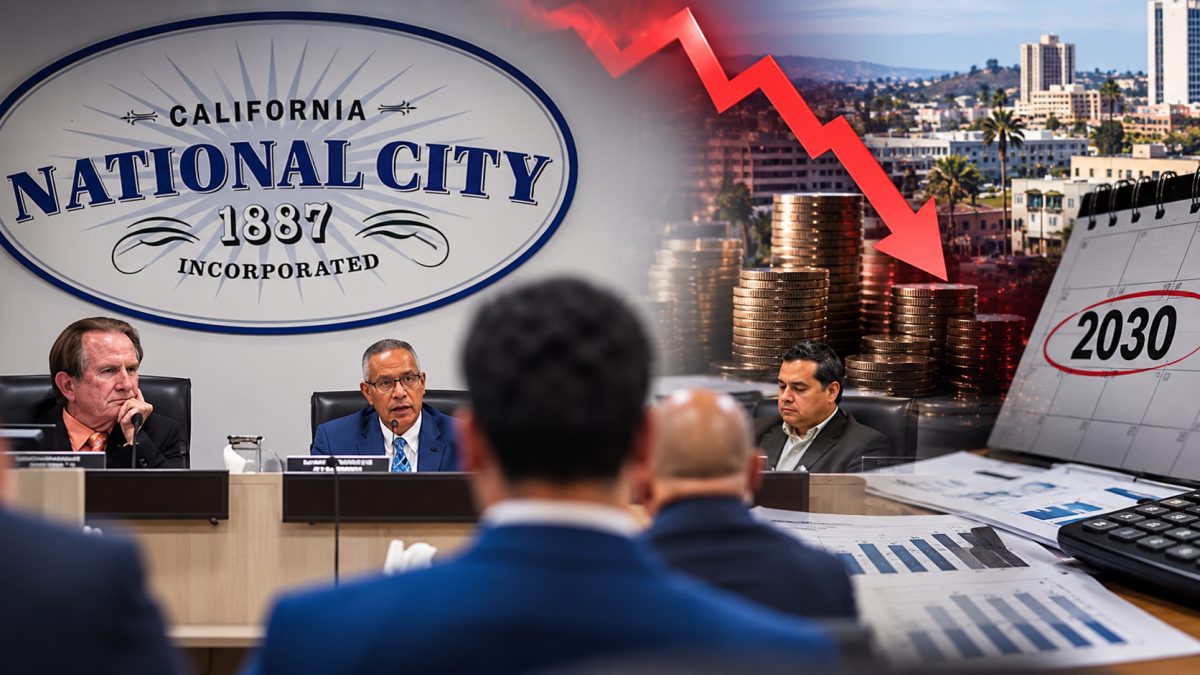

Two sitting council members are fighting over who broke the budget, and voters have to pick someone to fix it.
The National City mayoral race financial struggles have taken over the campaign trail ahead of the Nov. 3, 2026 election, as Councilmembers Marcus Bush and Jose Rodriguez trade blame for a budget shortfall City Manager Doug Schulze says could push the city toward insolvency by 2030.
Iowa AG Brenna Bird Sues Dollar General Over Register Overcharges
How the National City mayoral race financial struggles took shape
What started as a four-way contest narrowed fast. City Treasurer John Beauchamp dropped out on Oct. 16, just under three weeks before Election Day, and threw his support behind Bush. Former Mayor Ron Morrison had exited earlier, back in August, setting up what the San Diego Union-Tribune called a bruising race between Bush and Rodriguez. That left two council members, both of whom had a hand in the city's financial decisions, asking voters to trust them with the top job.
The stakes go beyond who sits in the mayor's chair, which pays $69,000 a year as of 2025. National City's adopted budget faces a shortfall estimated between $12.7 million and $13 million. Schulze has warned the gap could balloon to roughly $30 million by 2029 if nothing changes, with insolvency a real possibility by 2030. Emergency reserves were expected to drop below $500,000 by June, even though standard guidance calls for about $15 million in reserves for a city running an $89 million budget.
India West Asia Crisis Fuel Fertiliser Stocks: Why Officials Say There's No Shortage
Bush and Rodriguez clash over blame for National City's budget deficit
Both candidates were on the council when it approved raises that pushed employee compensation up roughly 46% over three years, while revenue barely moved. Bush has owned his part in it. "They earned them, but we didn't build a plan to pay for them," he said, adding that the city covered the gap using unassigned general fund reserves that are "now almost gone."
Rodriguez sees it differently. He's pushed back on claims that the city is in dire straits, telling the Union-Tribune the city actually has "healthy reserves" of "$80-$85 million." That number stands in sharp contrast to reports of emergency reserves falling under $500,000, and it's not entirely clear whether Rodriguez is counting a broader pool of funds than the emergency reserve figure Schulze and others have cited. The Union-Tribune's editorial board sided with Bush in its Oct. 21 endorsement, criticizing Rodriguez's reading of the city's financial health.
Campaign cash and allegations add fuel to the National City mayor candidate debt fight
Money has become its own battleground. By late September, Bush had raised just over $17,000 and spent about half of it, with donors split between locals and outsiders, though more than two-thirds lived outside National City. Rodriguez had raised more than $45,000 and spent around $28,000, with about $10,000 coming from unions and roughly a third of his donors based in National City. Beauchamp, before he dropped out, had reported no donations or spending at all.
During a KPBS interview, Rodriguez alleged that business interests opposed to a proposed business-license fee update helped bankroll Bush's political operation, claiming as much as $90,000 flowed into related campaign efforts. He also raised questions about a $50,000 contribution tied to Cindy Lopez, a District 1 candidate, suggesting Bush used it to boost Lopez while serving his own interests. Neither allegation has been confirmed against campaign-finance filings, and the exact nature of the transactions remains unclear. Earlier in the year, filings showed Rodriguez had raised $12,661 and spent about $11,060 between January and June, while Bush's prior council committee reported just $1,170 raised and $2,509.22 spent, with Bush saying he'd clear up old debt before filing a dedicated mayoral statement.
A disputed fee and shrinking district budgets show the fight over money is citywide
The proposed business-license-fee update sits at the center of the policy fight. Supporters say it could bring in somewhere between $7.5 million and $11 million, a meaningful dent in the deficit. Beauchamp opposed it, along with other business owners in the city. That opposition is part of what Rodriguez claims fueled outside spending against the fee and, by extension, support for Bush.
On Oct. 12, the council took up another cost-cutting idea much closer to home: eliminating or shrinking the $100,000 annual budgets each of the four council members gets to spend in their districts. Bush estimated the move could save between $200,000 and $300,000. It's a small slice of a much bigger hole, but it shows how far the council is willing to go to show voters it's serious about tightening its belt.
What a Bush or Rodriguez win means for National City's financial future
Whoever wins on Nov. 3 inherits a city with a shrinking reserve, a widening deficit, and years of staff turnover and internal division to sort through. Beauchamp, before leaving the race, had called for cutting staff, contracting out services, and chasing grant funding. Bush has said he wants to start by laying out exactly how the city landed in this hole, pointing to hiring controls and operational reviews as next steps. Rodriguez has leaned more on revenue fixes and has kept pressing his case that the city's financial picture isn't as bleak as officials have made it sound.
There's also a twist nobody asked for. If either Bush or Rodriguez wins the mayor's race, their council seat opens up, and that could trigger a special election costing taxpayers at least $350,000, according to the city clerk. For a city already short on cash, that's one more bill nobody wants to pay. Voters now have to weigh not just who they trust to fix the budget, but what it might cost just to fill the seat they leave behind.