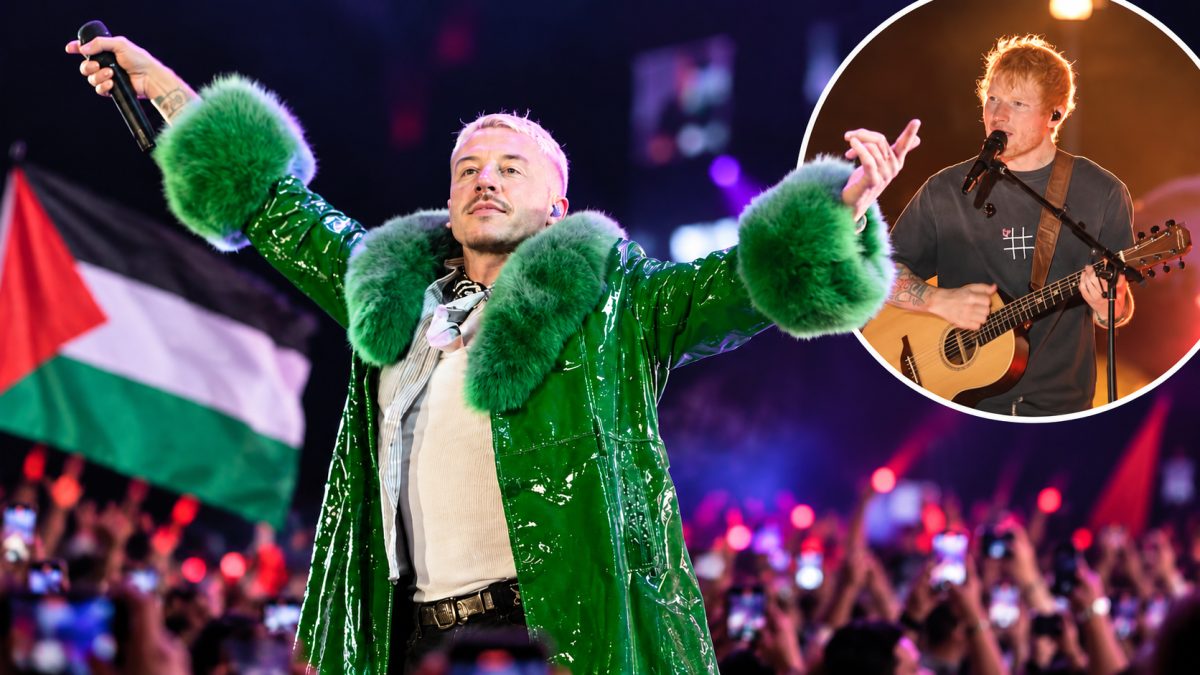
A rapper dropped from a stadium tour turned the backlash into a brand new cause, starting in Ireland.
Macklemore kicked off his Free Palestine tour with a Dublin concert on Oct. 26, 2026, dedicating the night to what he called love and liberation. The show came just over a month after Ed Sheeran dropped him from the Loop Tour over his pro-Palestinian comments onstage, and it drew surprise guests Hozier and Kneecap to the Dublin stage.
Heidi Klum Halloween Costumes: Why Her Medusa Look Took 6 Months to Build
Dublin Night Sets the Tone for the Free Palestine Tour
View this post on Instagram
The Dublin stop marked the first of only three planned shows, with Paris next on Oct. 29 and London closing things out on Oct. 30. Live Nation described the run as a chance for Macklemore to join with artists and friends for performances that center Palestine and Palestinians while raising money for humanitarian aid. Every dollar from ticket sales is going to a long list of groups, including Anera, Medical Aid for Palestinians, the Palestine Children's Relief Fund, Jewish Voice for Peace and UNRWA USA.
During the Dublin show, Macklemore didn't shy away from the controversy that got him here. He told the crowd that part of the reason he wanted to do this tour was so he could stand on a stage and say two words close to his heart: Free Palestine. Then he added something that captured the whole fight he's been in for weeks. Those two words, he said, are so threatening to some people. Hozier and Kneecap joining him onstage gave the night extra weight, since both acts are known for folding political messages into their music.
Sacha Baron Cohen Donald Trump Brilliance Claim Shocks Fans Ahead Of Ali G Return
How the Ed Sheeran Tour Fallout Started This Whole Chain of Events
This tour didn't come out of nowhere. Macklemore had been opening for Sheeran on his stadium tour when, at a Sept. 5 show at MetLife Stadium in New Jersey, he told the crowd he wanted to use the platform to say Free Palestine before launching into his song Hind's Hall, a track tied to pro-Palestinian protests at Columbia University. He also made a point of separating criticism of Israel from criticism of Jewish people, telling Jewish fans in the crowd that being against what he called genocide was not an attack on them personally.
Soon after, Macklemore was pulled from the rest of Sheeran's U.S. dates, including two shows at Gillette Stadium in Massachusetts. Macklemore said the move came after pressure tied to Robert Kraft, the Patriots owner who also founded the Foundation to Combat Antisemitism. Kraft said his concerns went beyond the New Jersey comments, pointing to what he called a pattern of antisemitic rhetoric and imagery from Macklemore that he found harmful to Jewish communities. Macklemore pushed back hard on that framing, insisting that standing with Palestinians is not the same as hating Jewish people.
Statements From Both Sides Reveal a Deep Divide
Macklemore laid out his thinking in a blunt Instagram statement, writing that there is no neutral position between the oppressor and the oppressed. He argued that when one side holds the bombs and gets heavy financial backing from the United States, staying silent isn't neutrality at all. That statement became a rallying point for fans who saw his removal from the tour as punishment for speaking his mind.
Sheeran, for his part, tried to stay above the fray while still addressing it. Days after the New Jersey shows, several of his other opening acts dropped out in solidarity with Macklemore, throwing his tour into chaos. When Sheeran returned to the stage in Philadelphia, he said his heart had been broken by the Israel-Hamas war and that he'd been forced into difficult decisions. He later called the situation in Gaza catastrophic and unjustifiable, even as he maintained the choice to remove Macklemore wasn't his alone.
Why This Story Matters Beyond One Concert Lineup
The whole episode taps into a much bigger fight happening across the music industry right now, one about where the line sits between political speech and antisemitism, and who gets to draw that line. Macklemore's backers see his Dublin show, and the tour that follows it, as proof that artists can turn a career setback into direct action for a cause they believe in. His critics, including Kraft, argue that some of his language and imagery go further than legitimate criticism of a government's policies.
The Israel-Hamas war itself traces back to the Hamas-led attack on Israel on Oct. 7, 2023, which triggered Israel's military campaign in Gaza. Macklemore has repeatedly called that campaign a genocide, a label Israel firmly rejects. That disagreement over language sits at the center of nearly every clash connected to this story, from the MetLife Stadium comments to Kraft's objections to the debate still playing out online after Dublin.
What Comes Next for Macklemore's Short but Loud Tour
With Dublin behind him, attention now shifts to Paris on Oct. 29 and London on Oct. 30, the final two stops on this short run. No additional dates have been announced, and based on everything released so far, this appears to be a tightly contained three-show project rather than an open-ended tour. Still, the ripple effects look likely to stick around much longer than the shows themselves.
Between Kraft's allegations, Sheeran's careful public comments, and Macklemore's decision to funnel every ticket dollar toward humanitarian groups, this story has become bigger than one rapper's setlist. It's now a flashpoint in an ongoing argument about what artists can say onstage, who controls that platform, and what happens when a single phrase like Free Palestine becomes a test of where an entire industry stands.