
Goyal says businesses everywhere want less paperwork, but Europe isn't listening the way India has.
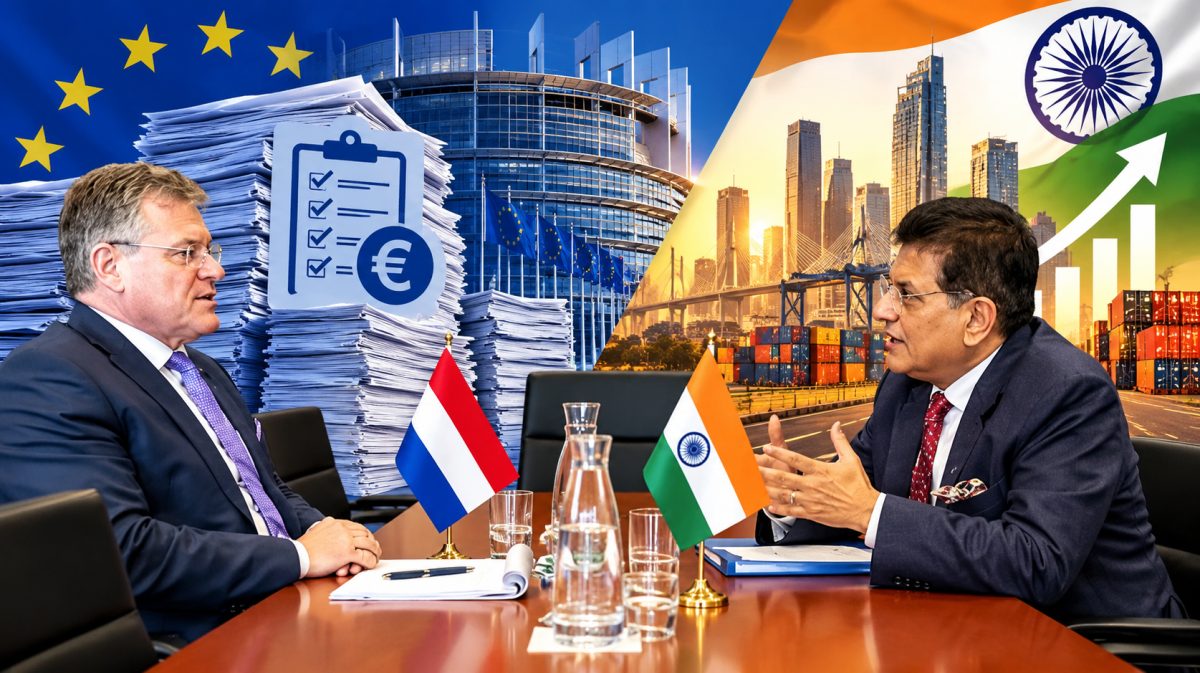
Commerce and Industry Minister Piyush Goyal criticized Europe's regulatory burden on businesses at the India-Netherlands Business Forum in The Hague on Monday, October 26, 2026, saying companies want simpler procedures, less paperwork and more freedom to operate. He urged Dutch firms to deepen ties with India instead.
Bessent Says Europe Refused Tariffs on India, China Over Russian Oil
Goyal Tells The Hague Europe Needs To Simplify
View this post on Instagram
Standing before Dutch business leaders, Goyal didn't hold back. He said the world is tired of red tape. Companies everywhere, he explained, want fewer compliance headaches and faster approvals. His exact words captured the frustration many exporters feel: "The world wants deregulation. The world wants more freedom. The business world is looking for less compliance burden, simpler processes, simpler procedures, less paperwork."
Goyal didn't stop at general complaints. He pointed straight at India as the example Europe should follow. "Sadly, you need to take a lesson or two from us on that," he told the gathering, referring to India's own push to cut red tape for businesses. He added that European business owners often pull him aside after public events, telling him privately that he should be even tougher in calling out the regulatory overburden they face.
Central Bank of India Q2 FY27 Results: Profit Jumps 21% as Loans Surge 30%
A Pattern Building Since Berlin
This wasn't a one-off remark. Just four days earlier, on October 22, 2026, Goyal took aim at Europe's climate rules during the Berlin Global Dialogue. He specifically named the EU's Carbon Border Adjustment Mechanism, known as CBAM, and the European Union Deforestation Regulation as policies that could backfire on Europe itself.
At that event, he warned that these rules risk pushing up infrastructure and living costs while making European industries less competitive globally. He went further, saying Europe was "trying to foist an artificial situation onto themselves" through restrictive standards that could end up hurting its own economy, especially sectors like automobiles. He also cautioned that tighter trade barriers from Europe could trigger retaliation from trading partners.
Dutch Minister Pushes Back On CBAM
Not everyone in the room agreed with Goyal's framing. Dutch Foreign Trade and Development Cooperation Minister Sjoerd Sjoerdsma defended several categories of EU rules, particularly those tied to climate protection, product quality, consumer safety and security. He made it clear these weren't rules Europe planned to scrap anytime soon.
"When it comes to climate, quality of products, security and safety of products, these are rules that very much benefit the consumers of the European market. And of course, we should keep those rules," Sjoerdsma said. But he didn't dismiss Goyal's broader point entirely. He acknowledged that rules which are unnecessary, or that needlessly block trade, deserve a second look. Some reports also noted he pointed out that the European Commission is already working on its own deregulation push, suggesting Brussels isn't entirely deaf to these complaints.
Why This Matters Right Now For Trade Talks
The timing of this back-and-forth is no accident. Just days before his Hague remarks, on October 22, Goyal said the India-EU free trade agreement could become operational within four to five months. That's a big deal for businesses on both sides, and Goyal used the opportunity to tell companies to get ready now. He advised firms to start identifying partners, swapping product details, preparing samples and understanding quality and pricing expectations before the deal kicks in.
This regulatory dispute, then, isn't happening in isolation. It's unfolding right as India and the EU are trying to finalize one of the most significant trade agreements either side has negotiated in years. Goyal's criticism of CBAM and other rules signals that even as the FTA moves forward, friction over compliance costs and climate-linked trade measures isn't going away. Separately, at another engagement, Belgian Prime Minister Bart De Wever said the India-EU FTA would strengthen trade ties and open doors for companies, talent and investment, framing the deal as a way to make both economies more resilient against global disruptions.
What Comes Next As Both Sides Dig In
Nobody expects this disagreement to vanish overnight. India will keep pushing for simpler compliance and lower trade friction, arguing that cumbersome rules hurt businesses and raise costs for everyone involved, including European consumers. European governments, meanwhile, aren't likely to abandon rules built around climate commitments and consumer protection just because businesses find them inconvenient.
The real question going forward is whether Europe's promised deregulation efforts, the ones Sjoerdsma hinted at, actually translate into lighter paperwork and faster approvals without gutting the safety and environmental protections Dutch officials insist on keeping. With the India-EU trade agreement potentially landing within months, how this regulatory tug-of-war plays out could shape how smoothly businesses on both sides actually benefit from the deal once it's signed.