
Brazil's two political worlds collided again, and this time the outcome was anything but certain going in.
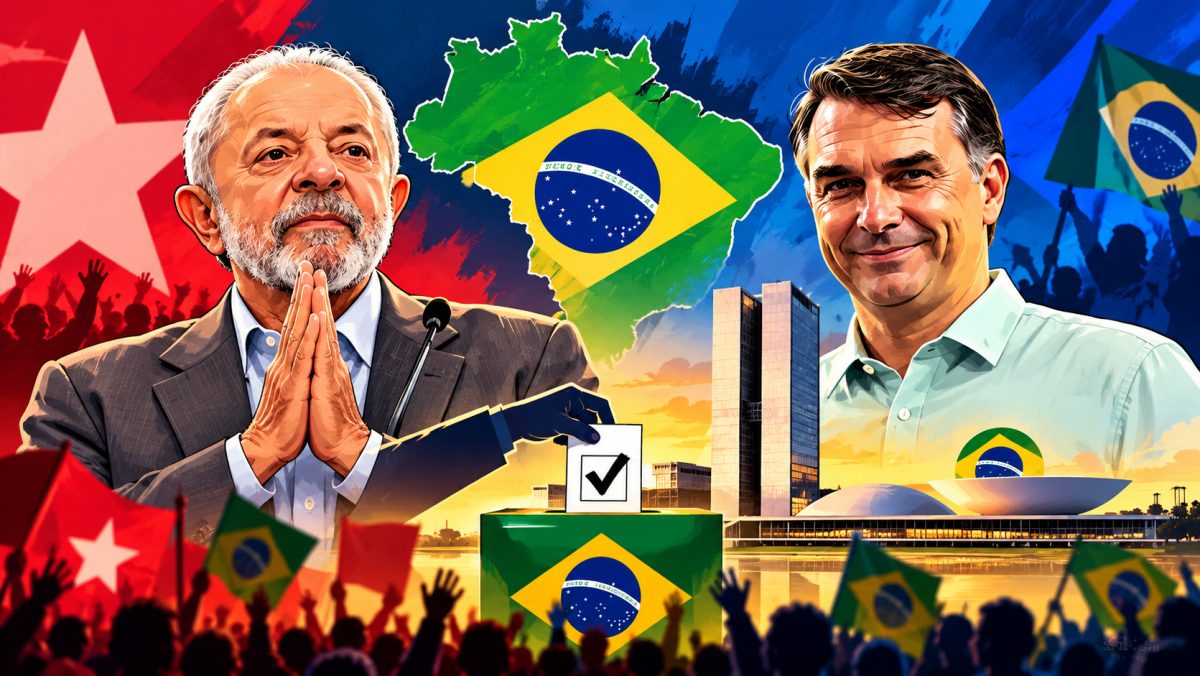
Brazilians voted Sunday, October 25, 2026, in a presidential runoff between incumbent Luiz Inácio Lula da Silva and Senator Flávio Bolsonaro, the eldest son of former President Jair Bolsonaro, closing out one of the tightest and most consequential elections in the country's recent history. The Brazil election 2026 Lula Bolsonaro runoff capped a campaign that scrambled expectations and left the left-wing incumbent fighting from behind.
Spain Housing Vote Defeat Sparks Mass Protests as Pedro Sánchez Faces Snap Election Pressure
How the Brazil Election 2026 Lula Bolsonaro Runoff Unfolded
The runoff became necessary because neither man cleared 50% of valid votes in the October 4 first round. Flávio Bolsonaro finished first with roughly 47.03% of the vote, around 56.1 million ballots, while Lula trailed with about 45.16%, or 53.9 million votes. That gap, close to 2.2 million votes, stunned political watchers because most pre-election polling had shown Lula either tied or slightly ahead.
The first-round result was described as the narrowest first-place margin in Brazilian presidential election history, and it flipped the entire narrative of the race overnight. Lula, who had returned to the presidency after defeating Jair Bolsonaro in 2022, suddenly found himself the underdog heading into the second round, a position few expected him to be in just weeks earlier.
On runoff day itself, voting did not go smoothly. Bad weather and transportation breakdowns in parts of the country forced Brazil's Superior Electoral Court to extend polling hours by two hours nationwide, pushing the close of voting to 7 p.m. Brasília time, or 6 p.m. Eastern Time in the United States. Officials said counting would begin immediately after polls shut, with a winner expected within hours.
Voya Financial Faces No-Confidence Vote as Activist Investor Questions CEO's Strategic Credibility
A Campaign Built on Two Very Different Visions
Lula ran on his record of social programs, poverty reduction, and environmental protection, particularly efforts tied to the Amazon rainforest. His campaign leaned into his experience and his past electoral win over the elder Bolsonaro, framing this election as a continuation of that fight rather than a new one.
Flávio Bolsonaro represented something different: proof that Bolsonarism could survive without Jair Bolsonaro on the ballot. Despite his father's imprisonment and ongoing legal troubles, the movement showed it could still rally tens of millions of voters behind a successor. International coverage labeled Flávio a far-right candidate and an ally of U.S. President Donald Trump, a framing that turned the Brazilian runoff into a story with global stakes.
Analysts pointed to this race as a major test for the broader rightward shift happening across Latin American politics. The contest wasn't just about who would sit in the presidential palace. Brazil's right also gained ground in Congress, meaning whoever won the presidency would likely govern alongside a more conservative legislature, limiting their ability to push through big legislative changes.
Reactions From Both Camps as the Race Tightened
Lula's weaker-than-expected first-round showing triggered real concern inside progressive circles, especially in major cities like São Paulo and Rio de Janeiro. His team reportedly used the weeks before the runoff to rework its strategy, focusing on boosting turnout and reaching voters outside its traditional base.
On the other side, Bolsonaro's first-round lead energized conservative supporters and reframed him almost overnight from challenger to frontrunner. For Jair Bolsonaro's political network, the result was validation that their movement still had real mobilizing power even without their namesake atop the ticket.
The closeness of the race also raised the possibility of a disputed outcome. With final polls showing a statistical tie and the first round decided by such a thin margin, both camps and outside observers were watching closely for how smoothly the count and certification process would go once voting ended.
Why the World Was Watching This Vote Closely
The Amazon rainforest's future was repeatedly cited as one of the biggest things riding on this election. A Lula win would likely mean a continuation of stronger environmental protections and deeper international climate cooperation. A Bolsonaro win would shift political weight toward Brazil's development-focused conservative camp, with less certainty about environmental safeguards.
U.S.–Brazil relations were also part of the equation. Coverage framed a Bolsonaro victory as a potential turning point that could expand Washington's influence in Latin America, especially given his described alliance with Trump. A Lula victory, by contrast, would preserve Brazil's more left-leaning diplomatic posture on the world stage.
Markets and businesses were left watching a genuinely uncertain outcome, something increasingly rare in a region where elections had become more predictable in recent cycles. Whatever happened, the new president would still have to govern alongside a more conservative Congress than before.
What Comes Next for Brazil's Divided Electorate
Once polls closed, Brazil's Superior Electoral Court moved to tabulate and certify the runoff result, with officials expecting a clear answer within hours given the country's electronic voting system. But a razor-thin margin, weather-related disruptions, and months of polarization left room for challenges even after a winner was declared.
Whoever won inherited a country split nearly down the middle, a more conservative legislature, and a long list of unresolved questions about the Amazon, the economy, and Brazil's place in the world. The Brazil election 2026 Lula Bolsonaro runoff didn't just decide a presidency. It set the terms for how deeply divided the country would remain going into the next term, and how far Bolsonarism could stretch beyond the man whose name defined it.