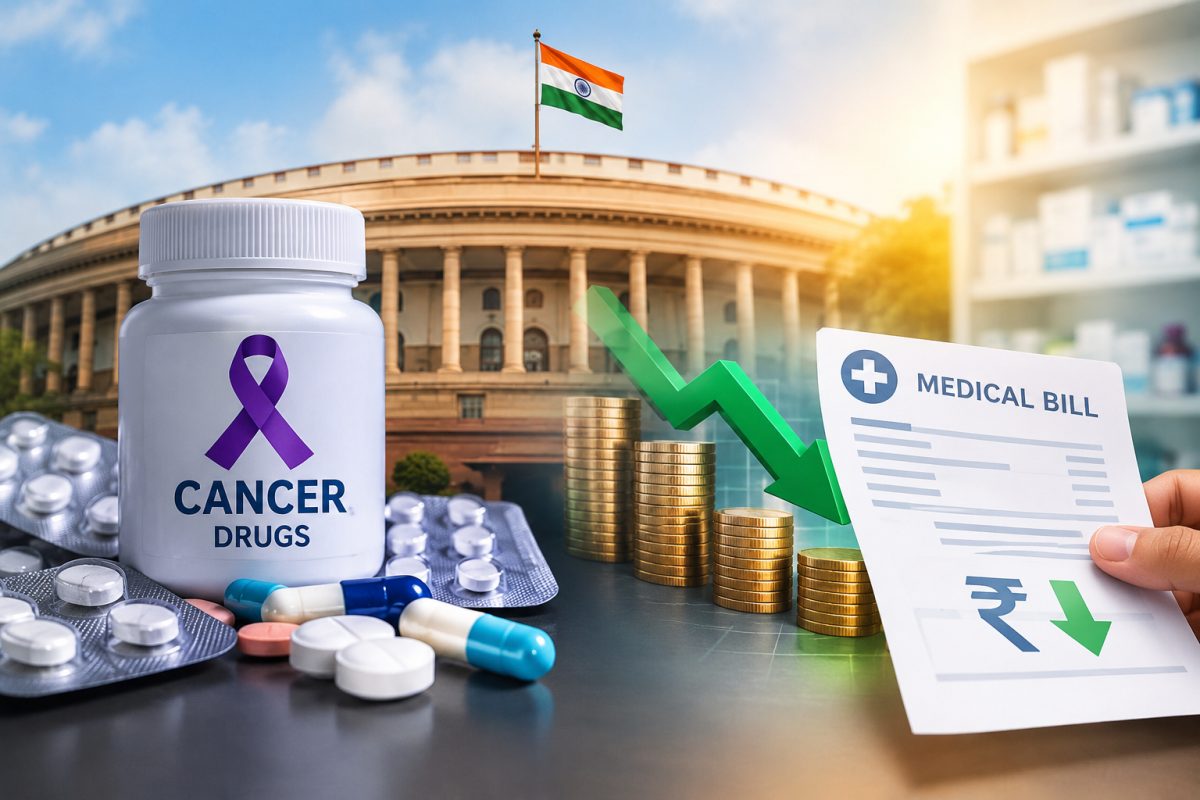

A new price cap on 137 cancer drugs sounds like huge relief, but the real savings depend on math most patients never see.
India's National Pharmaceutical Pricing Authority has capped trade margins on 137 cancer drugs at 30% of the maximum retail price, with revised prices taking effect from November 9, 2026, a move the government says could cut medicine prices by up to 70%, though actual savings will vary drug by drug.
HealthPartners and Essentia Health Plan Merger Creating Minnesota's Newest Health Care Giant
How the 137 cancer drugs trade margin cap India order came together
View this post on Instagram
The order landed on October 17, 2026, from the NPPA, which works under the Department of Pharmaceuticals in the Ministry of Chemicals and Fertilizers. The regulator used Paragraph 19 of the Drugs (Prices Control) Order, 2013, a rule that lets it step in on drug pricing even when medicines sit outside the usual essential medicines list. That matters here because all 137 drugs are non-scheduled, meaning they never had a fixed ceiling price before this order.
The list includes some expensive, widely prescribed cancer treatments, including patented drugs like atezolizumab and bevacizumab. These are not cheap generics. They are high-cost biologics often used in chemotherapy and immunotherapy regimens, which is exactly why their trade margins drew government attention in the first place. Reports from Economic Times and Express Pharma both confirm these two drugs sit on the notified list.
US-Zambia Health Deal Drops Mineral and Medical Data Demands
Breaking down the 30% cap and the real math behind it
Here is where things get tricky, and where most patients get confused. A 30% trade margin cap on MRP does not mean distributors can only add 30% on top of what they paid. The cap is calculated on the final MRP, excluding GST, not on the purchase price. So if the pre-GST MRP of a drug is ₹100, the permitted margin is ₹30, which means the price to the stockist or distributor would be around ₹70. Do the reverse math, and that ₹30 margin on a ₹70 base works out to roughly a 42.86% markup, not 30%, as reported by Hindustan Times and Economic Times.
This explains why the government's own figures describe a range rather than a fixed number. Some drugs had massive gaps between their factory price and their shelf price, so those could see the full 70% cut. Others already had thinner margins, and for those, the price drop could be small or barely noticeable. The official government language is careful to say prices "may fall by up to 70%," not that every single drug will.
Why the Supreme Court and public savings numbers matter here
This policy did not appear in isolation. On October 12, 2026, days before the NPPA order was issued, Additional Solicitor General Aishwarya Bhati told the Supreme Court that patients could save around ₹2,500 crore a year because of this planned intervention. That number came up during ongoing legal scrutiny over cancer treatment affordability in India, a signal that courts and government were already tracking this issue closely before the public announcement.
That ₹2,500 crore figure is a national, aggregate estimate. It does not mean every family dealing with cancer treatment will personally see that scale of relief. It is a projection of what could happen across the entire patient population buying these 137 drugs, spread across hospitals, pharmacies and states. Individual savings will depend entirely on which drug a patient needs and how overpriced that specific drug was before the cap.
Why hospital bills may not shrink the way patients expect
Cancer treatment costs are never just about the price of a vial or a tablet strip. There's the ex-factory price, the trade margin, GST, hospital procurement deals, infusion charges, diagnostic tests, doctor consultations, bed charges and a long list of supportive medicines that come with chemotherapy or immunotherapy cycles. The NPPA order touches only one piece of this puzzle, the regulated MRP of the medicine itself.
Hospitals often buy cancer drugs in bulk and bundle them into treatment packages rather than billing them as a standalone pharmacy purchase. That means even if the medicine's price drops sharply, the hospital's final bill depends on how that institution structures its billing, what margin it builds into its own procurement, and whether it passes the drug savings to the patient at all. This is the exact gap flagged by Hindustan Times in its breakdown of what the 30% cap actually means for real patient bills.
What to watch as the November 9 deadline approaches
The real test starts once revised prices kick in on November 9, 2026. Drug makers will need to update MRPs on packaging, distributors will need to adjust invoices, and hospitals will need to recheck their billing systems against the new ceiling prices. Enforcement will decide whether this policy becomes a genuine relief measure or just a paper exercise that gets diluted somewhere between the factory and the patient's bedside.
Government officials, pharmaceutical companies and hospital groups are all expected to watch compliance closely in the weeks following the rollout. For now, the clearest fact is this: trade margins on 137 identified cancer drugs are capped at 30% of MRP starting November 9, 2026, and the actual rupee-for-rupee benefit to patients will depend on how far each drug's old pricing strayed from that new ceiling.