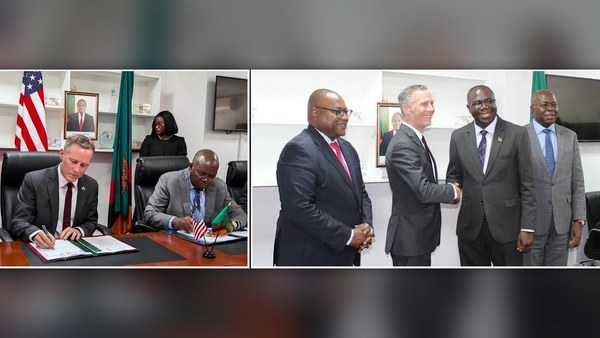

A months-long standoff over medical data and minerals just ended in Lusaka.
Quick Summary: The U.S.-Zambia health deal was signed on Oct. 8, 2026, after officials removed clauses on specimen sharing, patient data, and mineral access. The final pact gives Zambia about $1.5 billion from the U.S., with Zambia adding $2.1 billion of its own.
HUD Investigates Wells Fargo Over Black Homeownership Programs, Why Race Based Lending Is Under Fire
What the US-Zambia Health Deal Actually Says
Zambia and the United States signed a brand-new health agreement in Lusaka on Thursday, Oct. 8, 2026. It took months of back-and-forth to get here. The deal sets up five years of health funding for Zambia, and the numbers are big.
U.S. contribution: About $1.5 billion over five years. Zambia's contribution: Roughly $2.1 billion, making the combined deal worth close to $3.6 billion.
Signed location and date: Lusaka, Zambia, on Oct. 8, 2026. Deal type: A memorandum of understanding (MoU) covering health financing, not a trade or mining agreement.
Why the US-Zambia Health Deal Almost Fell Apart
This deal almost didn't happen. Back in February 2026, Zambia hit pause on talks. Why? Zambian officials got worried about an early draft that asked for a lot more than just money.
Medical data worries: The early draft reportedly let the U.S. access detailed health information from Zambia. Specimen sharing fears: Zambia would have had to hand over biological samples, including patient-linked specimens, if the U.S. asked. Mineral link rumors: People in Zambia feared health aid was secretly tied to U.S. access to copper and other critical minerals.
Civil-society groups in Zambia spoke out loudly against these terms. They said it could let outside groups control sensitive health data or pathogen samples for years. That pushback mattered.
Voya Financial Faces No-Confidence Vote as Activist Investor Questions CEO's Strategic Credibility
How the Final Agreement Changed Everything
The version signed this week looks very different from that early draft. Zambia's Health Minister, Roma Chilengi, said the toughest parts got cut out completely.
No specimen sharing: Chilengi said the final deal has "no reference to any specimen sharing conditions." No individual data sharing: He also said clauses requiring Zambia to hand over personal health data were "completely removed."
Limited data use only: Any data sharing now is strictly for checking how the U.S.-funded programs are working, nothing more. No mineral clause: Chilengi stated plainly, "As Ministry of Health, we never ever saw any MoU that speaks to minerals."
The Washington Post reported that the Trump administration had pulled back from an earlier push for greater access to Zambia's critical mineral reserves. Zambia is one of the world's top copper producers, and its mineral wealth is seen as strategically important. But officials on both sides say that topic, if it comes up again, will be handled in a completely separate conversation.
Former U.S. Ambassador to Zambia, Michael Gonzales, pushed back hard against claims that health aid was ever tied to mineral access. He called those allegations inaccurate.
Timeline: How the US-Zambia Health Deal Came Together
Here's a simple breakdown of how this story unfolded, start to finish.
February 2026: Zambia stalls talks over fears about data privacy and specimen demands. Earlier in 2026: Activists and civil-society groups publicly criticize the draft's data and specimen language.
Oct. 6, 2026: Zambia's health minister confirms a revised deal is ready, with the specimen clause gone. Oct. 8, 2026: Officials sign the final agreement in Lusaka, locking in the $1.5 billion U.S. commitment.
One detail still being watched closely: an earlier draft reportedly would have let the U.S. share Zambian health data and specimens with up to 10 American non-government groups for diagnostic and treatment research. Whether that idea survives in any narrowed form is something experts and watchdog groups plan to track closely.