
The Pentagon quietly emptied a key British airbase of its entire bomber fleet after commanders received intelligence of a possible Iranian plot, exposing new vulnerabilities in forward-deployed US airpower.
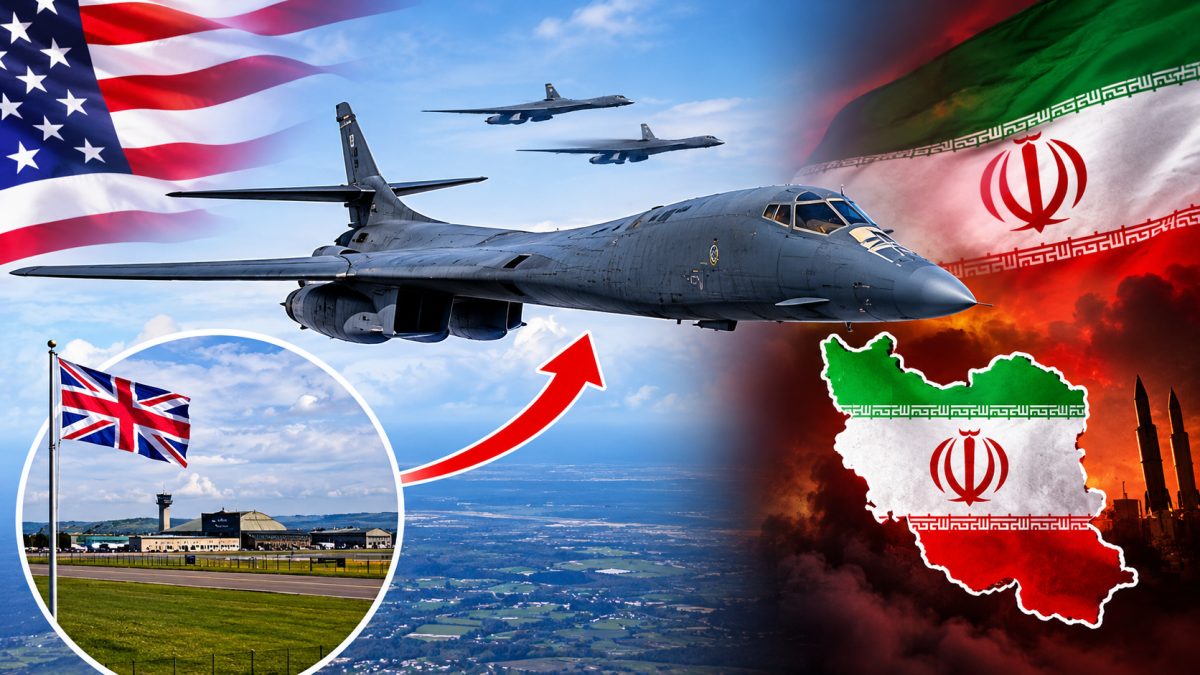
The United States rapidly withdrew all 12 B-1B Lancer bombers deployed at RAF Fairford in Gloucestershire, England, over the weekend of October 3–4, 2026, after commanders received intelligence suggesting a possible Iranian drone attack or other Iran-linked plot against the base. The Pentagon confirmed on Sunday, October 4, that the aircraft had returned to their home stations in the United States, though officials initially declined to detail the threat or operational specifics.
Voya Financial Faces No-Confidence Vote as Activist Investor Questions CEO's Strategic Credibility
A Weekend Scramble Confirmed After the Fact
A Pentagon spokesperson said: "We can acknowledge now that all U.S. bombers that were deployed to RAF Fairford have re-deployed to their home stations in the United States." The carefully timed wording reflected concern over operational security — officials avoided confirming the movements while they were underway, only acknowledging them once the aircraft had already departed, according to Reuters and CNN.
Open-source aircraft-tracking data reviewed by The National showed the withdrawal unfolded in four distinct waves, with the first bombers departing shortly before 9 a.m. local time and the last leaving after 1 p.m. One of the departing jets had arrived from the United States just six days earlier, underscoring how abrupt the evacuation was. Air & Space Forces Magazine reported the full withdrawal came roughly a week after arrests connected to a suspected plot against the base.
Russia's Biggest Energy Strike Since Spring Plunges Kyiv Into Emergency Blackouts Before Winter
Trump Points to Iran as Rubio's Account Diverges
President Donald Trump directly linked the relocation to a security threat tied to Iran. Asked why the bombers had been moved, Trump said there had been "some threats," and in a separate exchange stated simply, "We had a threat," according to BBC and Channel News Asia. He did not specify whether the intelligence pointed to a planned drone strike, an act of sabotage, or a broader warning against US military assets in Europe.
The episode exposed friction within the administration's messaging. Axios reported that Secretary of State Marco Rubio had earlier offered an explanation for the bomber movement that did not attribute it directly to an Iranian threat — an account that Trump's later comments appeared to contradict. The divergence raised questions about how the administration intended to handle sensitive intelligence and whether the withdrawal was purely a force-protection measure or part of a broader operational recalibration.
'Abundance of Caution' Versus an Imminent Attack
Vice President JD Vance described the withdrawal as having been made "out of an abundance of caution," a formulation suggesting officials judged the danger serious enough to remove high-value aircraft without confirming that an attack was imminent or that Iranian forces had actually launched a drone operation against Fairford.
Axios reported that the immediate concern centered on intelligence indicating an Iranian drone attack, while other outlets, including The New York Times, described the warning more cautiously as "new threats" involving an Iran-backed plot against the installation, citing two US officials. CNN and the Associated Press confirmed the bomber withdrawal but said officials had not specified the nature of the threat, underscoring a gap between sourced reporting and the Pentagon's sparse public confirmation.
Why Fairford Became a Target — and a Liability
RAF Fairford has long served as a US strategic aviation hub in western England, built to support long-range bomber deployments and operations requiring forward access to Europe and the Middle East. Multiple accounts indicated the B-1s stationed there had been used to launch or support strikes against targets in Iran amid the broader US-Iran confrontation, making the base a strategically valuable — and potentially vulnerable — target for retaliation or proxy activity.
British authorities maintained that the site itself remained secure, though the government did not publicly corroborate the Iranian drone allegation. Al Jazeera reported that a British bomb-disposal robot had recently operated near the base and that 85 homes were evacuated during an investigation into a suspected threat, though it remained unclear whether that incident was directly tied to the bomber withdrawal. Prime Minister Andy Burnham was reported as saying there were "strong indications" Iran was behind the threat, a stronger attribution than the Pentagon offered, though reporting did not establish whether investigators had identified a specific Iranian military order or proxy network.
What Remains Unconfirmed as Tensions Simmer
No official source has reported that any bomber was damaged, that an attack occurred, or that the United States has abandoned RAF Fairford permanently. The confirmed outcome remains limited: all deployed US bombers returned to their American home stations, with no announced date for their return to Britain or identification of replacement aircraft at the base.
The incident highlights the growing vulnerability of fixed military infrastructure in an era of drone proliferation, where threats to parked aircraft, fuel depots, or personnel do not require penetrating national airspace with conventional military force. Future deployments to Fairford will likely hinge on British security investigations, the credibility of the Iran-linked intelligence, and the broader trajectory of US-Iran hostilities, none of which had been resolved in the available reporting.