
Negotiators from both countries spent ten days in New Delhi trying to close the gap on farm goods, services and worker visas.
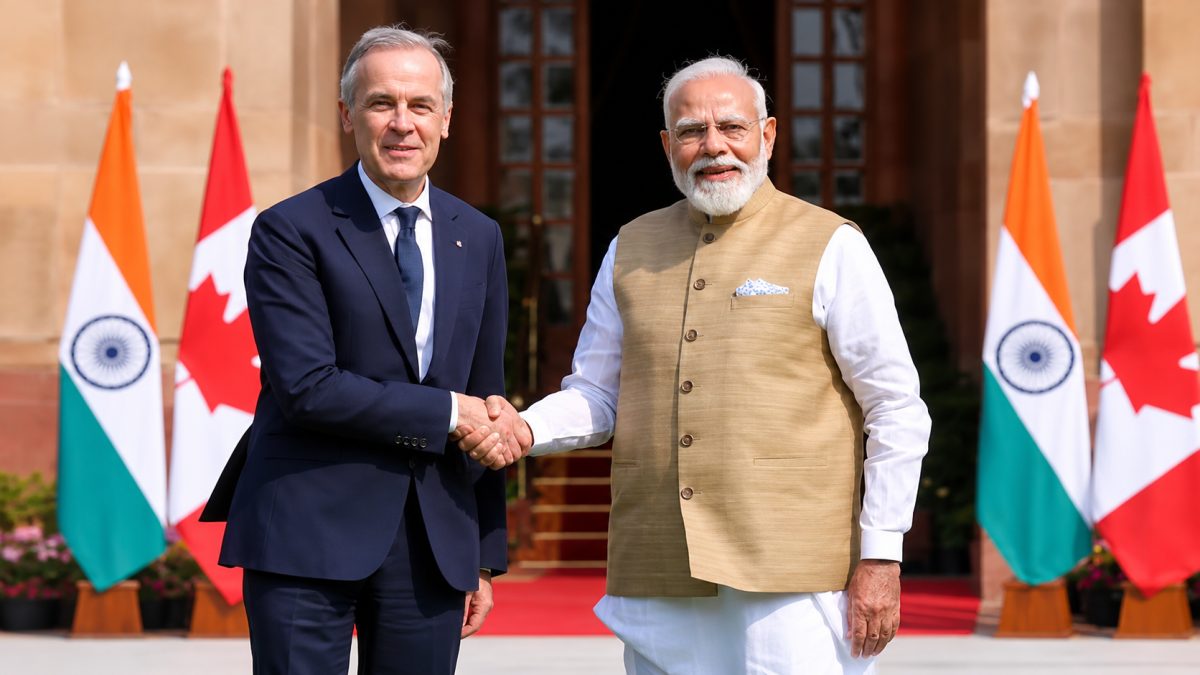
India and Canada wrapped up the sixth round of negotiations for their proposed Comprehensive Economic Partnership Agreement in New Delhi on November 20, 2026, after ten days of talks that began November 11. Both sides pushed for wider market access while leaving tough questions on agriculture and services unresolved.
₹2,814 Crore Critical Mineral Processing Scheme Gets Cabinet Nod
India Canada CEPA Sixth Round Trade Talks Cover Wide Ground
The sixth round touched almost every part of the trade relationship. Officials worked through trade in goods, trade in services, rules of origin, trade remedies, intellectual property and investment promotion, according to a statement from India's Commerce and Industry Ministry released on November 21.
This was not a quick meeting. Negotiators sat together for ten straight days, a sign that both governments wanted to make real progress rather than just hold a symbolic session. Canada's Minister of International Trade, Maninder Sidhu, flew to India for three days and joined negotiators directly, meeting with India's Commerce and Industry Minister Piyush Goyal to push the talks forward.
Goyal Slams Europe's Regulatory Burden, Tells Dutch Firms India Does It Better
Officials Call For A Balanced Deal That Helps Small Businesses
India's government statement said the two ministers underscored the importance of a balanced and mutually beneficial CEPA that delivers meaningful market access, builds on the complementarities of both economies and creates new opportunities for trade and investment. That language reflects a deal built on more than just cutting tariffs.
Both countries also repeated a promise to deliver tangible benefits to farmers, industries, businesses and small and medium enterprises in both nations. Canada framed its goal even more boldly, saying the agreement would help double bilateral trade to 70 billion Canadian dollars. India's own target, set earlier, is to double trade to 50 billion US dollars by 2030, a slightly different number that reflects each country's own way of measuring the same ambition.
Years Of Strain Gave Way To A Fresh Push For Trade Ties
This round did not happen in isolation. India and Canada relaunched their economic engagement after a rocky patch in their political relationship, choosing to rebuild trust through trade and investment rather than politics. The two economies fit together well on paper. India brings strength in information technology, pharmaceuticals, engineering goods and a massive skilled workforce. Canada brings agricultural products like pulses, energy, critical minerals, advanced technology and investment capital.
The hard part is balancing what each side wants most. Canada is pushing hard for predictable access for its pulse exporters and other agricultural shippers, along with clearer rules for its companies entering the Indian market. India wants its own farm exports treated fairly and is also demanding better mobility for its workers, students and professionals heading to Canada. Indian officials have also raised concerns that technical standards and sanitary checks could quietly block farm exports even after tariffs come down.
Momentum had been building for months before this round. Canada said in September that four rounds of talks had already wrapped up, with officials aiming to finish the whole deal by the end of 2026. In October, Canada sent its largest trade mission to India in 30 years, with Sidhu meeting Goyal in both New Delhi and Mumbai to keep pushing the agreement forward. By October 2026, the two ministers had already met ten separate times since May 2025, showing just how much political energy both governments have put behind this deal.
Gaps Remain Even As Both Sides Claim Progress
Despite all the positive language, this was not a finished deal. People familiar with the talks said negotiators reached near consensus on several chapters and actually closed out a few of them, but real gaps are still sitting on the table in market access, services and worker mobility. Those are not small, technical issues. They touch directly on how many visas Indian students and workers can get, and how easily Canadian pulse shipments can enter Indian ports.
The numbers show why both sides are motivated to keep pushing. Bilateral goods trade between the two countries reached 13.55 billion Canadian dollars in 2025, with India exporting 9.68 billion dollars worth of goods to Canada and importing 3.87 billion dollars in return. Canada separately reported that its merchandise imports from India hit 9.7 billion Canadian dollars in 2025, a jump of 20.7 percent from the year before. That kind of growth gives negotiators real evidence that a bigger, more open trade relationship is already taking shape on its own.
Modi's December Visit Could Become A Turning Point
All eyes are now turning to December. Prime Minister Narendra Modi is expected to visit Toronto and Ottawa on December 11 and 12, and that trip has become an unofficial deadline for the negotiating teams. Reports describe both countries racing to speed up the deal specifically so there is something concrete to point to during that visit, though nothing confirms a signed agreement will be ready by then.
What happens next will decide whether all this momentum turns into an actual signed pact or just another round of promising talks. Negotiators still need to settle firm tariff schedules, finalize services commitments, agree on rules of origin, and lock in enforceable rules on mobility and regulation. The sixth round moved the two countries closer together, but the hardest trade-offs, the ones that actually affect farmers, workers and exporters in both countries, are still being worked out line by line.