
A Bahraini court just handed down one of the biggest mass sentencing rulings in the Gulf region's recent history, and most of those punished are religious leaders.
Bahrain's High Criminal Court sentenced 64 Shia Muslims to life in prison on 16 November 2026, in a mass terrorism case tied to alleged links with Iran's Islamic Revolutionary Guard Corps. Five more defendants received 15-year sentences, bringing the total number of people convicted to 69, according to Bahraini authorities and the Bahrain Institute for Rights and Democracy.
Russia Demands NATO Pull Back in Eastern Europe as Price for Ukraine Peace
Inside the Bahrain Shia clerics life sentence ruling
The court in Manama found all 69 defendants guilty of forming and running a terrorist group connected to Iran's Revolutionary Guards. Sixty-four of them got life sentences. The other five got 15 years each. That's according to BIRD, the UK-based rights group tracking the case closely.
BIRD says 60 of the 69 defendants are Shia clerics, and the other nine are affiliates, including religious reciters called radoods. Of those 60 clerics, 47 stood trial while already in custody, and 13 were tried in absentia. Other reports, including from AFP, give a slightly different number, saying 57 of the 64 life-sentenced defendants were clerics. That gap likely comes down to how different groups are classifying who counts as a cleric, not a dispute over how many people were actually sentenced.
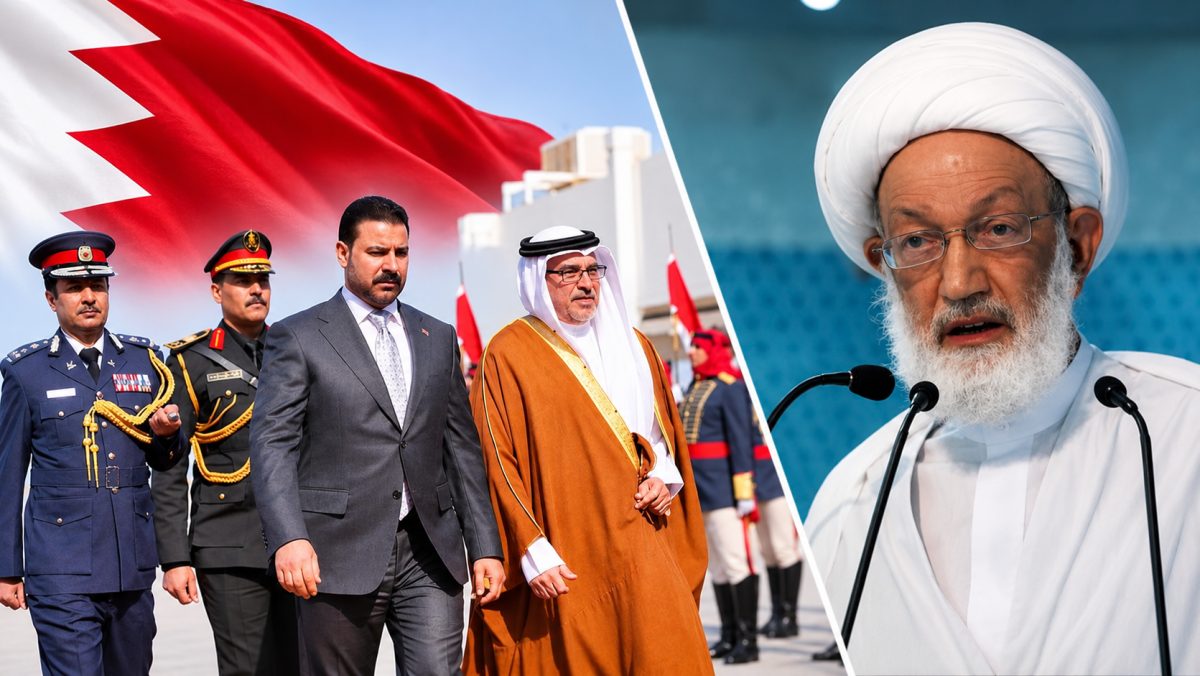
Among the named defendants are Sheikh Mohammed Sanqour and Sheikh Ali al-Sadadi, both of whom led Friday prayers at the Imam al-Sadiq Grand Mosque in Duraz. Sayed Moosa al-Alwedaie, a former imam at the Grand Mosque in Ras Rumman, is also named. BIRD said Ayatollah Isa Qassim, the man widely seen as the spiritual leader of Bahrain's Shia community, was sentenced in absentia. Qassim has lived in Iran since 2018.
Iran Tankers Hit Mines in Strait of Hormuz, Three Ships Burn in One Day
What prosecutors say happened
Bahrain's prosecution said the defendants tried to change the government by force through incitement to terrorism, rioting, and sabotage. Officials also claim the group raised money without permission and used mosques, sermons, charities, and schools to build loyalty to Iran's supreme leader.
The Bahrain News Agency described the defendants as members of a terrorist group linked to Iran's Revolutionary Guards, saying the group wanted to suspend the constitution and overthrow the ruling system. The state's account did not name all the defendants or say exactly how many were clerics, leaving that detail to rights groups and independent reporting.
Amnesty International's pre-verdict briefing had already flagged the scale of the case, noting charges that included building a terrorist group, overthrowing the constitutional system, and promoting Iran's doctrine of wilayat al-faqih, or Guardianship of the Islamic Jurist, through control of mosques and religious gatherings.
A crackdown years in the making
This case didn't come out of nowhere. Bahrain is ruled by the Sunni Al Khalifa monarchy, while most citizens are Shia Muslims. Shia groups and human rights organizations have long accused the government of unfair trials, arbitrary arrests, and restrictions on religious life. Bahrain's government denies any sectarian motive and says it is fighting terrorism and foreign interference, pointing to Iran as the outside hand behind domestic unrest.
The run-up to this trial started between May and June 2026, when security forces arrested more than 50 clerics and religious speakers accused of inciting rebellion with help from Iran's Revolutionary Guards. The mass trial reportedly opened on 5 July 2026. Amnesty International said on 8 November 2026 that the court was expected to deliver its judgment soon, identifying 69 defendants in its briefing, matching the final case numbers.
This isn't Bahrain's first major move against Shia opposition. After the large 2011 uprising, authorities dissolved opposition groups, jailed activists, stripped some people of citizenship, and limited protests. In 2016, the government shut down al-Wefaq, the main Shia opposition group, and ramped up legal cases against senior clerics. Qassim's departure from Bahrain in 2018 was part of that same wave.
Rights groups push back hard
BIRD condemned the verdicts, calling the case a sweeping attack on Bahrain's Shia religious leadership. The group alleged that confessions used in the trial were forced out of defendants, a claim also noted in BBC's coverage. Bahrain's official sentencing statements did not address this allegation directly, and no independent judicial finding confirming coerced confessions was found in current reporting.
Amnesty International's briefing focused on the sheer size of the trial and the number of people judged without being present in court. The group highlighted how religious institutions became central to the prosecution's case, something rights advocates say sets a worrying precedent for religious freedom in the kingdom.
The Washington Post reported that critics tied this crackdown to the wider U.S.-Iran conflict, arguing the clerics are being punished simply for their faith. Bahrain rejects that framing entirely, insisting the prosecutions are about alleged cooperation with Iran, not religious identity. That disagreement sits at the center of nearly everything written about this case so far.
What comes next for the convicted
Right now, there's no confirmed appeal date or review hearing on record. Bahrain hasn't released a full public judgment laying out evidence against each defendant individually, which rights groups say makes independent verification difficult. That gap is likely to draw continued criticism from international observers.
The big questions going forward are simple but unresolved. Will the defendants appeal? Will Bahrain publish more details about the evidence used against each person? And will the international pressure already building around this case change anything about how it's handled next. For now, 64 people are facing life behind bars, and the world is still waiting for more answers.