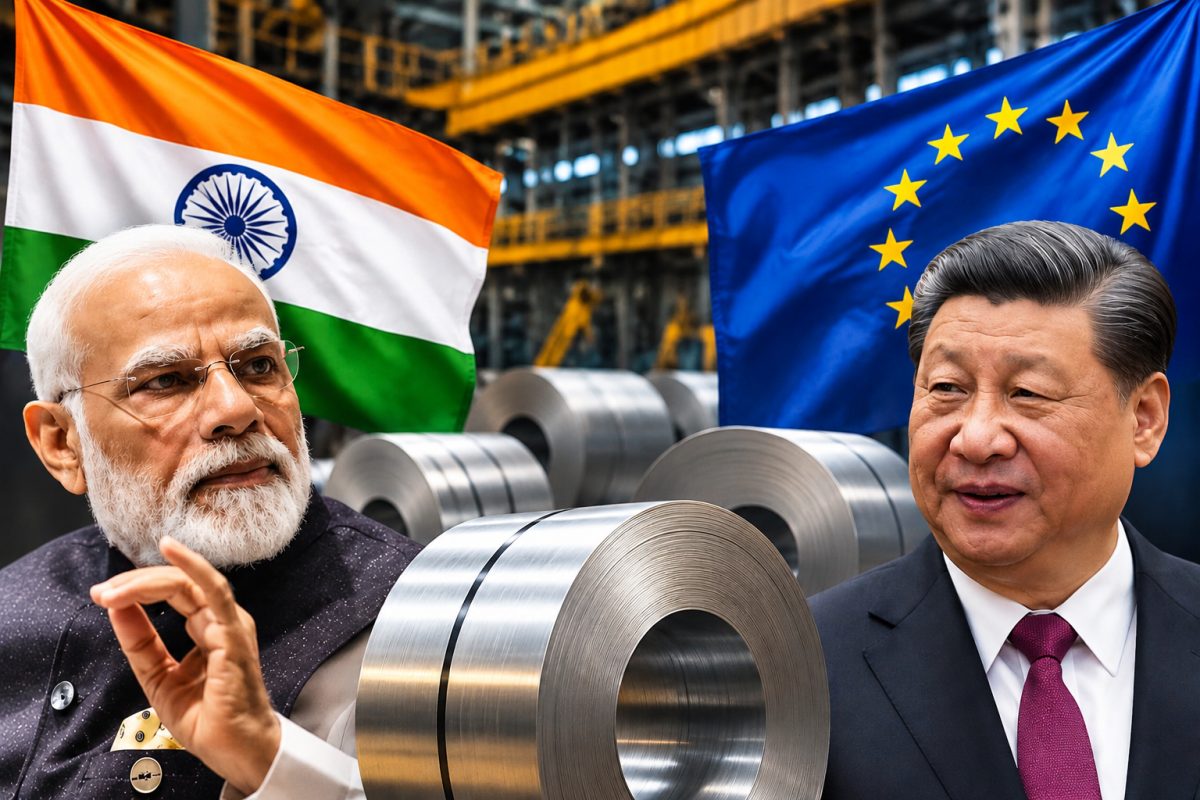

Steel buyers across Europe are about to pay more, and India's steelmakers are caught right in the middle of it.
The European Union imposed definitive anti-dumping duties on cold-rolled flat steel from India, Japan, Taiwan, Türkiye and Vietnam, with the European Commission announcing the decision on November 16, 2026, and the rates taking effect November 17 under new EU trade rules.
Crude Cost For Indian Companies Drops Fast As Hormuz Fears Ease
EU anti-dumping duty steel imports India takes center stage
View this post on Instagram
The European Commission said its investigation found that cold-rolled flat steel from these five countries was entering the EU market at dumped prices. In plain terms, that means the steel was being sold for less than what it should normally cost, giving foreign producers an unfair edge over European steelmakers. The Commission responded by setting duties meant to level that playing field.
India drew a 9.5% duty, the lowest among the five countries hit by this decision. Japan faces the steepest rate at 27.9%. Taiwan's duty ranges from 20.7% up to 27% for companies that did not cooperate with the investigation. Türkiye got the lightest treatment overall, with rates between 3% and 7.8% depending on the company. Vietnam sits in the middle at 16%. These numbers come straight from the Commission's own announcement and the formal regulation published alongside it.
Yes Bank AT1 Bond Write-Off Review Petition: Why It's Fighting Back in SC
Cold-rolled flat steel tariffs hit specific companies, not entire industries
This isn't a blanket ban on steel from these countries. The duties apply only to certain cold-rolled flat steel products, a category widely used to build cars, airplanes, household appliances, and construction materials. Reporting tied to the decision names specific companies affected by the new rates, including JSW Steel and Tata Steel from India, Nippon Steel and JFE Steel from Japan, China Steel Corp from Taiwan, and POSCO Vietnam.
The Commission's official statement used direct language to explain its reasoning, saying it had imposed anti-dumping duties on imports into the EU of certain cold-rolled flat steel products from India, Japan, Taiwan, Türkiye and Vietnam. The legal basis for the action is Commission Implementing Regulation (EU) 2026/2547, adopted on November 13, 2026, and published through the EU's official legal portal. That regulation formally labels the duties as definitive, which is a stronger and more permanent step than a temporary or provisional tariff.
Numbers behind the decision raise a few questions
The Commission's announcement initially put total imports from the five countries at a combined figure, broken down by country as €282 million from India, €240 million from Türkiye, €180 million from Japan, €345 million from Taiwan, and €125 million from Vietnam. Adding up those five numbers gives roughly €1.172 billion, yet some reporting on the same announcement cited a different overall total. That gap between the Commission's own country-by-country figures and the headline number it used is worth watching closely as more details come out in the coming weeks.
This kind of mismatch happens sometimes in large regulatory announcements, especially when figures get rounded or recalculated between drafts. Still, it's the kind of detail that trade analysts, steel companies, and government officials will likely want clarified directly from the Commission before using these numbers in their own planning or public statements.
Why the EU is protecting its own steelmakers
This decision didn't come out of nowhere. The European Commission has been running a broader campaign to shield its domestic steel industry from what it sees as unfair import pressure. Cold-rolled flat steel has been flagged as a priority product category in the Commission's ongoing steel-protection efforts, and this November 16 action is now listed among the EU's current moves to defend that sector.
European steelmakers have long argued that cheaper imports make it harder for them to compete, especially when foreign companies can sell steel below its real production cost. By making imports from India, Japan, Taiwan, Türkiye and Vietnam more expensive through these new duties, the EU is betting that local manufacturers will get some breathing room. But that relief for European steelmakers could come at a cost for European car makers, appliance manufacturers, and construction firms that rely on imported steel to keep their own prices down.
What happens next for exporters and EU buyers
Starting November 17, 2026, companies shipping covered cold-rolled steel products into the EU will need to pay the new duties at customs, with exact rates depending on which country and which specific company produced the steel. Businesses on both sides of the deal, European buyers and foreign exporters, now have to work out whether their particular products fall under this regulation's technical definitions.
It's still unclear whether India, Japan, Taiwan, Türkiye or Vietnam will formally challenge these duties through trade dispute channels, since no official response from any of the five governments or their steel companies appears in the Commission's announcement so far. Companies like JSW Steel, Tata Steel, Nippon Steel and POSCO Vietnam have not yet issued public statements reacting to the new rates. Until they do, the real financial impact on each exporter, and on the European industries that buy from them, remains something the market will be watching closely in the weeks ahead.