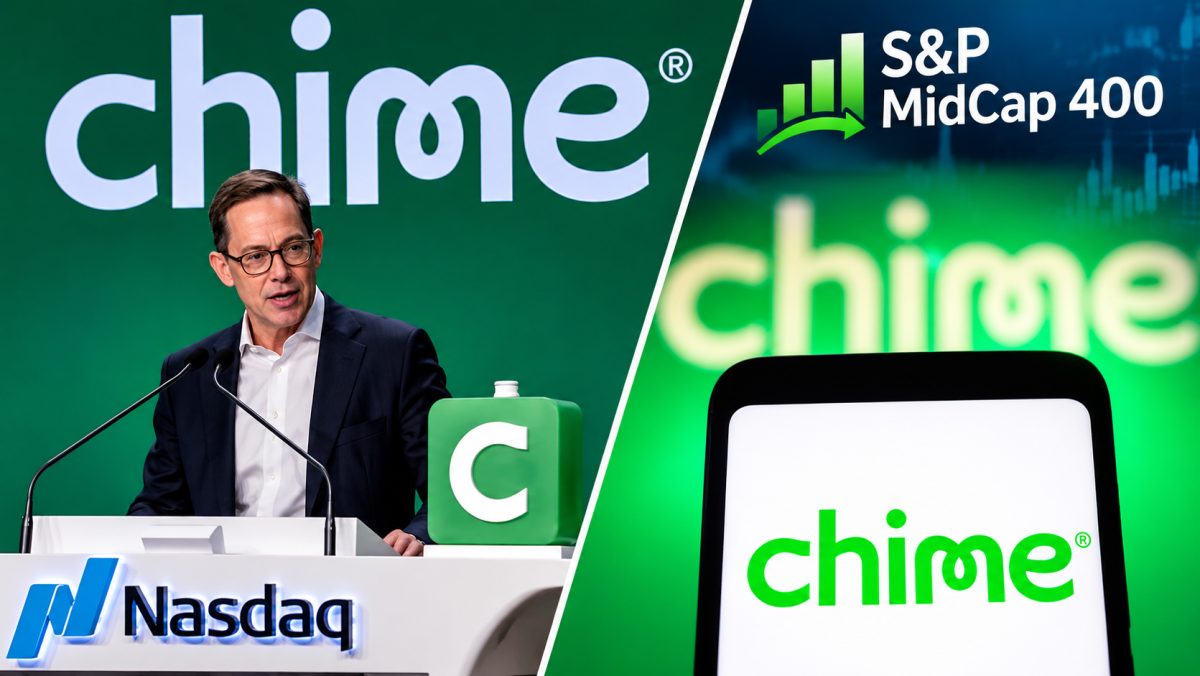

A fintech company most people know for its no-fee debit cards just landed a spot among America's mid-sized public companies.
Chime Financial Inc. will join the S&P MidCap 400 effective before the opening of trading on Wednesday, November 18, 2026, S&P Dow Jones Indices announced on November 13. The Nasdaq-listed company, trading under ticker CHYM, will replace NorthWestern Energy Group in the index and will sit in the Financials sector.
Nevada Economy Diversification Banking Finance Insurance Push Gains Steam
Chime Financial S&P MidCap 400 Move Tied to Utility Merger
The index change did not happen because S&P decided to expand its roster. It happened because NorthWestern Energy Group is being swallowed up by Black Hills Corporation, a company already sitting inside the S&P MidCap 400. Once that deal closes, NorthWestern can no longer stand on its own as a separate listed company, so its spot in the index needed a replacement.
That acquisition was expected to close on November 13, 2026, the same day the index announcement went out. After the deal wraps up, the combined business is expected to keep trading in the index, but under a new name, Bright Horizon Energy Corp., and a new ticker, HZN. So in a sense, two things happened at once: a utility merger closed, and a fintech company got the opening that merger created.
COP31 Climate Finance Fight Breaks Out Before Talks Even Begin in Antalya
Why CHYM Landed In The Financials Sector
Chime isn't a bank in the traditional sense, even though most people use it like one. The company runs a mobile and online banking platform, but the actual deposit accounts are held through partner banks, specifically The Bancorp Bank, N.A. and Stride Bank, N.A., both FDIC-insured. That setup is common across the fintech banking space, and it's exactly why S&P placed Chime in the Financials sector rather than somewhere else.
This distinction matters for anyone trying to understand what just happened. Joining the S&P MidCap 400 doesn't mean Chime suddenly became a chartered bank or changed how its accounts work. Nothing about customer protections, fees, or account features shifted because of this index news. The change is about how Wall Street classifies and tracks the stock, not about how the product works for everyday users.
Stock Reaction And Strong Quarterly Numbers
Investors reacted fast. Chime shares climbed about 1.8% in after-hours trading on Friday, November 13, right after the index announcement hit the wires. That bump came on top of a quarter that already surprised Wall Street. Chime reported third-quarter earnings of $0.11 per share on $718 million in revenue, beating analyst expectations, which had actually called for a loss of $0.02 per share.
That combination, solid earnings plus a fresh index spot, gave the stock two separate reasons to move in a single week. It's worth noting these are two different stories that happened to land close together. The earnings beat reflects how Chime's underlying business performed. The index inclusion reflects a corporate action involving a completely different company, NorthWestern Energy. Both fed into investor sentiment, but they came from separate sources.
What The Switch Means For The Index Itself
Index watchers will notice something bigger going on here too. The S&P MidCap 400 is losing a Utilities name and gaining a Financials name, which nudges the index's sector balance even if just slightly. For fund managers running portfolios that track the S&P MidCap 400, this swap isn't optional. Funds built to mirror the index generally need to adjust their holdings to match whatever the index contains, which means some buying of CHYM shares and selling of NWE shares was likely already happening behind the scenes before the effective date.
None of the available reporting puts a number on how much money those index funds will shift, or how many shares will trade hands because of the rebalancing. What is confirmed is the timeline. The deletion of NorthWestern and the addition of Chime both take effect before trading opens on November 18, 2026, giving fund managers a firm date to work against.
Looking Ahead To The November 18 Effective Date
The next real test comes on the effective date itself. That's when markets will see how CHYM trades once it's officially inside the index, and whether the after-hours bump holds up during regular trading. Investors will also be watching the final steps of the Black Hills and NorthWestern merger, since the surviving entity is expected to carry on in the index under the Bright Horizon Energy name and HZN ticker.
For Chime, this is a visibility moment more than an operational one. The company's banking products, its partnerships with Bancorp Bank and Stride Bank, and its day-to-day business for customers remain unchanged. What's changed is its standing among publicly tracked mid-cap companies, and that alone tends to put a stock in front of more institutional eyes than it had the week before.