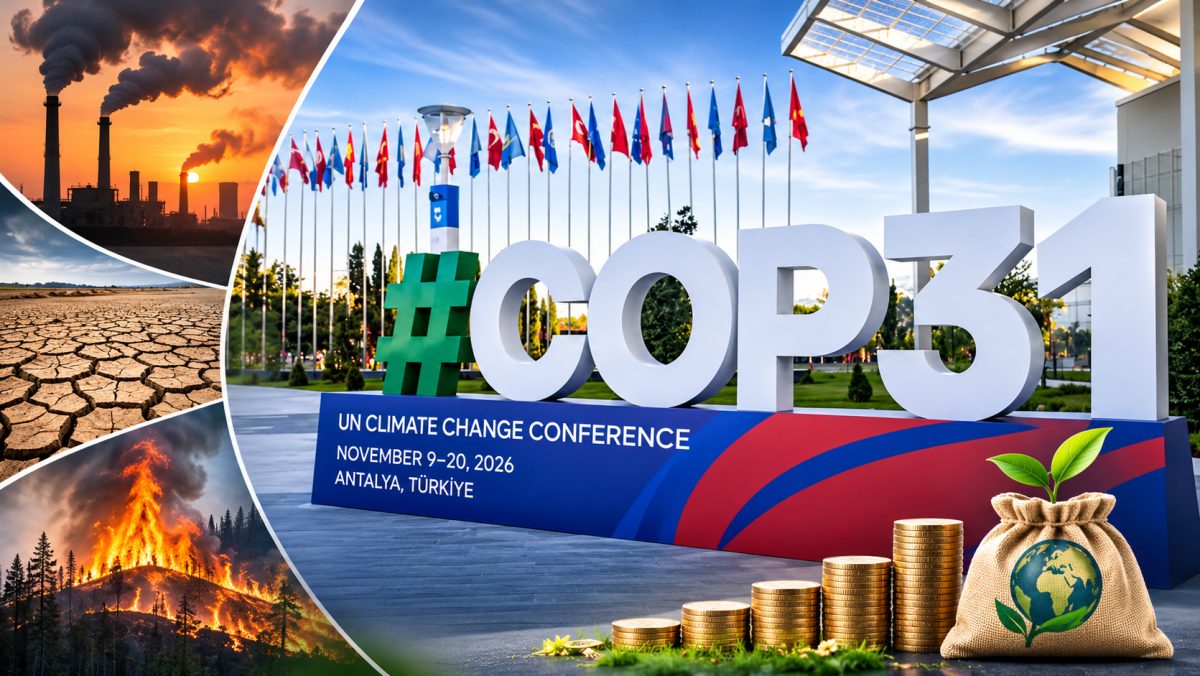

Nearly 200 countries showed up in Antalya, but the money fight started before the opening session even finished.
COP31 opened in Antalya, Türkiye, on November 9, 2026, with delegates from close to 200 countries gathering under pressure to make climate finance an official, trackable part of the agenda rather than a side conversation. Organizers are calling it the implementation COP, meaning the goal is funded projects, not more promises.
Semaglutide Chronic Kidney Disease Study Reveals Surprising Repair Signs
Climate Finance Becomes a Day-One Standoff
Before the opening ceremony even wrapped up, negotiators were locked in late-night talks over whether climate finance would get its own line on the official agenda. Developing countries pushed hard for this, and a source familiar with the discussions said a climate finance work programme would be folded into the agenda. That might sound like a small procedural win, but it matters. Putting finance on the formal agenda means it gets tracked, debated, and reported on, instead of floating around as background noise.
African countries went further, pressing for a tripling of adaptation finance, money meant for things like seawalls, drought-resistant crops, and flood defenses. That specific demand wasn't expected to land as its own agenda item, but negotiators said it would still surface inside related talks. The tension is simple to understand. Poorer countries say they can't build clean power grids or protect their coastlines without outside money, and borrowing that money often costs them more than it costs richer nations, even when the technology itself is cheap and ready to use.
Human Sacrifice Violence Peru Study Reveals a Strange Ancient Peace
Turkey's 35-by-35 Electrification Pledge Takes Center Stage
On the second day of talks, the energy transition took over the spotlight. Countries debated how to move away from fossil fuels, speed up clean energy, and knock down the financial and infrastructure walls blocking that shift. At the heart of it sits Turkey's own plan, a voluntary target called 35-by-35, which aims to push electricity's share of global final energy consumption up to 35% by the year 2035.
Right now that share sits at roughly 23%, according to the Overseas Development Institute, though AFP reported a separate figure closer to 20% for electricity's share of overall global energy demand. That gap between numbers isn't a contradiction, it just shows how the measurement method changes the baseline. Either way, the direction is the same: more of the world's energy needs to come from electricity, and that electricity needs to come from clean sources. The European Union has already signaled it wants the word "clean" attached to any electrification push, a sign that Brussels is wary of a numbers-only target that could still be met partly with fossil-fuel-generated power.
Guterres Sets a 2028 Deadline for Real Numbers
UN Secretary-General António Guterres used his platform at COP31 to push countries toward specifics. He called on governments to submit national plans with clear timelines and financing needs, and to show measurable progress by 2028. That's a tight runway. It tells governments the era of vague pledges is supposed to be over, and that actual spreadsheets, budgets, and construction schedules are now the expectation.
The Turkish presidency has also floated something called a Climate Implementation Bridge. It is not a new pot of money. Instead, it's described as a regulatory and technical platform meant to help countries build bankable, investment-ready projects in housing, industry, and transport. The idea is to fix a problem that's dogged climate finance for years: plenty of money exists globally, but too few projects are packaged in a way that banks and investors feel comfortable funding.
Why Concrete and Heavy Industry Made the Agenda
Concrete might seem like an odd thing to debate at a climate summit, but it's become a real focus under COP31's "green industrialization" theme. Cement production burns a lot of fuel and also releases carbon dioxide simply from the chemical process of breaking down limestone, meaning even a perfectly clean power grid wouldn't solve the problem on its own. That's why industrial decarbonization sits alongside electrification as one of the summit's ten official priority themes, which also include zero waste, methane reduction, resilient cities, food security, oceans, and public health.
UNFCCC documentation for the summit states plainly that finance, technology, and capacity building are meant to work as cross-cutting tools supporting every one of those themes, not as a separate silo. In practice, that means the same financing fights playing out over electrification and adaptation are also shaping how countries plan to decarbonize steel mills, cement plants, and construction supply chains.
What Comes Next for Negotiators
The Asian Development Bank has already laid out its own COP31 focus areas, covering adaptation investment, resilient infrastructure, clean energy, nature, and private-sector climate finance, a sign that development banks are positioning themselves as middlemen between big pledges and real construction projects. Whether that bridges the gap developing nations are complaining about remains to be seen.
Over the coming days, watch for whether the climate finance work programme actually produces binding numbers, or just another framework for future talks. The 2028 checkpoint Guterres mentioned gives the world a concrete date to judge progress against. And the 35-by-35 electrification target, while voluntary, will likely become the yardstick reporters and watchdogs use to measure whether Antalya's promises turned into anything real.