
Ancient bones from northern Peru tell a strange story where ritual killing existed but everyday fighting almost didn't.
A new study published Nov. 8, 2026, in Frontiers in Environmental Archaeology looked at skeletons from the Lambayeque Valley in northern Peru and found something unexpected. Even though communities there practiced human sacrifice for thousands of years, regular interpersonal violence was rare. The research covers roughly 1500 B.C. to A.D. 1800 and draws from about 30 archaeological sites.
Ironstone Bonebed Moab Dig May Hold North America's Oldest Dinosaur Fossils
Human Sacrifice Violence Peru Research Finds Surprisingly Low Everyday Conflict
Researchers Klaus and Thomas Snyder studied the Lambayeque Valley Biohistory Project's skeletal collection. The full chronological sample included around 1,600 individuals, though exact counts vary slightly across reports depending on which bones were well-preserved enough for trauma analysis. Out of this group, only 25 people, just 1.6%, showed injuries linked to interpersonal violence. Another 77 people, about 5.1%, had injuries that looked accidental rather than violent.
That number surprised the researchers. Northern Peru is famous for ritual sacrifice tied to powerful coastal societies and harsh environmental events. Yet the skeletons show that stabbing, beating, and warfare-type injuries were not common in daily life. The study makes clear this doesn't mean sacrifice caused low violence. It simply shows the two things didn't move together the way many assumed they would.
What Ended the Cosmic Dark Age? New Study Upends Old Supernova Theory
Why Human Sacrifice Violence Peru Patterns Don't Match El Niño Disasters
The Lambayeque Valley sits in a desert that depends on rivers and irrigation. Over centuries, people there dealt with flooding, food shortages, and political upheaval, including brutal El Niño events. Scientists have long assumed this kind of stress pushes societies toward violence. But the study found no strong link between unstable environmental periods and higher rates of either interpersonal violence or accidental injury.
The study states plainly that the team detected no strong evidence connecting environmental factors to interpersonal violence, and that non-ritual violence in the region stayed rare at 1.6%. The researchers also noted that past work in the valley suggests many violent impulses were instead directed into dramatic, organized acts, like sacrificial killings of people, animals, and objects, rather than spilling into everyday life.
One possible reason is geography. Klaus and Snyder suggested that people in the Lambayeque Valley may have had decent access to seafood and river water for farming, unlike populations living in the highlands. That access could have eased the kind of competition over resources that often sparks conflict.
Ritual Killing Looked Very Different From Daily Violence
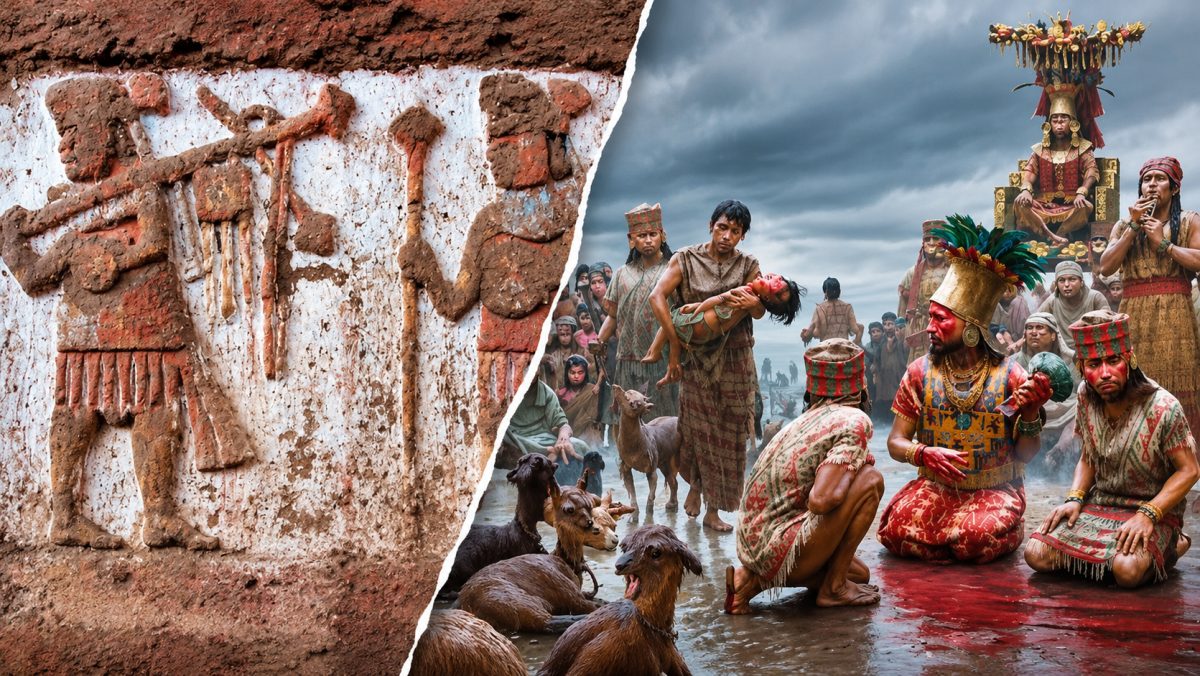
Sacrifice in ancient Peru wasn't random bloodshed. It appears to have been structured, repeated, and tied closely to political and religious power. A separate study of 49 sacrifices at El Pollo in the Moche Valley backs this up. Researchers there found chest-opening procedures on adult males, bound captives, and cuts made specifically to release blood. These were formal acts, not chaotic outbursts.
This distinction matters for how historians think about ancient violence overall. A public summary tied to the new study put it simply: violence and social breakdown are not guaranteed outcomes, even when a community faces climate disaster. Instead of falling apart during floods or droughts, Lambayeque Valley communities may have used sacrifice as a kind of pressure valve, something controlled by leaders rather than driven by desperate individuals.
What This Means for How We Understand Ancient Societies
The findings push back against a simple idea that disasters always lead straight to violence. Archaeologists covering the study have pointed out that ritual sacrifice likely served political or religious goals, helping leaders reassure frightened communities or reinforce their own authority during hard times. That's very different from a society collapsing into random brutality.
Still, the study leaves real questions open. Researchers don't yet know whether sacrificial victims were included in the general skeletal sample or counted separately, which could shift the numbers. They also can't say for certain whether this pattern of low everyday violence and organized ritual killing shows up in neighboring valleys or highland communities facing similar environmental pressures.
More Digging Needed Before the Full Picture Is Clear
No new hearings or official actions are tied to this research. The next step is comparison. Scientists want to check whether this same pattern, rare daily violence paired with structured ritual killing, shows up elsewhere in Peru or in other ancient societies that relied on irrigation and centralized leadership.
Better dating of individual skeletons and improved climate modeling could also help clarify whether El Niño events directly triggered specific waves of sacrifice, even if they didn't trigger everyday fighting. For now, the Lambayeque Valley stands as a rare example where a society faced repeated disaster without falling into the kind of widespread violence many researchers expect to see.