
States just got a little more room to fund affordable apartments, thanks to a fresh IRS inflation update for 2027.
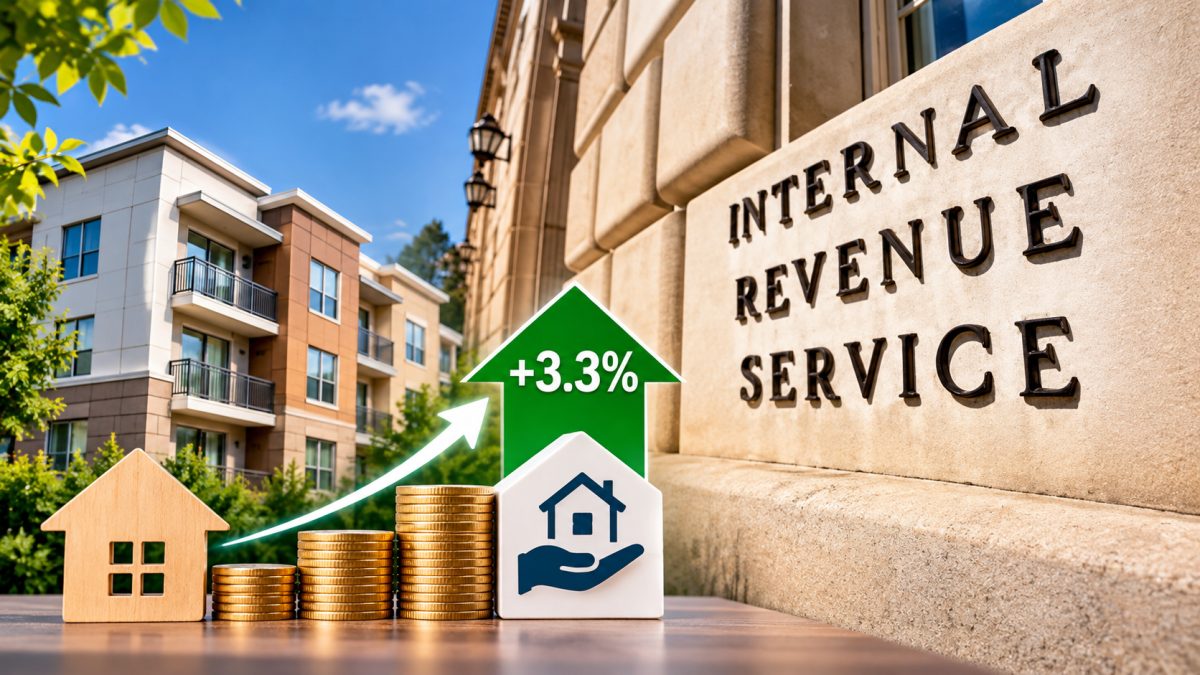
The IRS has raised the 2027 LIHTC caps, lifting the per-resident housing tax credit limit from $3.416 to $3.53 and pushing the small-state minimum from $3,953,600 to $4,082,400. The change comes from Revenue Procedure 2026-35, released November 5, 2026, and it applies to credits states will hand out starting in calendar year 2027.
Crude Cost For Indian Companies Drops Fast As Hormuz Fears Ease
How the 2027 LIHTC caps changed from last year
Every state gets a yearly pot of Low-Income Housing Tax Credits based mostly on how many people live there. Under Section 42(h)(3)(C)(ii) of the tax code, the IRS sets a formula each year, and for 2027 it picked whichever number is bigger: $3.53 times a state's population, or $4,082,400 flat. That second number matters most for smaller states that would otherwise get a tiny slice based on population alone.
That's a jump of about 3.3% on both numbers compared to 2026. The per-capita rate grew by just over 11 cents, while the flat minimum climbed by $128,800. For a state that leans on the population formula, every extra million residents now unlocks $3.53 million in credit authority, up from $3.416 million the year before.
These credits are not cash grants handed directly to builders. They are allocated through state housing finance agencies, which run their own application rounds and set rules through what's called a Qualified Allocation Plan, or QAP. So while the federal ceiling went up, how fast that money reaches real housing projects still depends on each state's own process.
Stock Futures November 9 2026: Why Tech Is Trying to Bounce Back From AI Rout
Why the IRS adjusts LIHTC caps every year
This isn't a brand-new housing law or a special announcement from a cabinet secretary. It's the routine annual inflation adjustment the tax code requires, bundled into a broader IRS document that updates dozens of tax figures for 2027. The LIHTC piece just happens to be one of the most closely watched because it directly shapes how much affordable housing gets built each year.
The IRS revenue procedure plainly states that for 2027, the number used to calculate a state's housing credit ceiling is the greater of $3.53 multiplied by the state's population or $4,082,400. That language mirrors last year's bulletin almost word for word, except for the updated dollar figures, which is typical for these yearly inflation updates.
Alongside the LIHTC bump, the same guidance raised the Section 42 rehabilitation expenditure threshold from $8,700 to $9,000 per low-income unit. That number sets the minimum a developer must spend fixing up an existing unit before it can qualify for certain rehabilitation-related tax credit treatment, which matters a lot for preservation projects working with older buildings.
What the bond cap increase means for 4% housing credits
Not every affordable housing deal uses the competitive 9% credit system. Many rely on 4% credits, which usually get paired with tax-exempt private-activity bonds. The per-resident bond cap stayed flat at $135, but its small-state minimum rose from $397,625,000 to $410,520,000, an increase of nearly $12.9 million.
That distinction matters because bond-financed deals often move on a rolling basis rather than through a single competitive round. In Pennsylvania, for example, the state housing finance agency runs competitive 9% credit funding rounds while accepting 4% bond-financed applications on an ongoing basis, as long as bond volume cap is still available. So a bigger bond cap minimum could mean more room for those rolling 4% applications in smaller states.
New Hampshire's housing agency describes the basic LIHTC trade fairly simply: investors get a dollar-for-dollar cut in their federal tax bill in exchange for putting money into affordable housing developments. States write their own QAPs to decide which projects get picked and how the federal dollars get divided up locally.
What bigger LIHTC caps actually mean for renters and builders
A higher ceiling sounds like good news, and in raw dollar terms it is. But construction costs, insurance, labor, and land prices have all been climbing too, so a 3.3% bump in credit authority doesn't automatically mean 3.3% more affordable units get built. Developers and housing agencies have been watching rising costs eat into what a fixed pot of credits can actually deliver.
Industry analysts who reviewed Revenue Procedure 2026-35 flagged five key changes together: the higher per-resident LIHTC rate, the bigger small-state minimum, the unchanged bond cap rate, the larger bond cap minimum, and the higher rehabilitation threshold. Taken as a package, the update gives states modestly more flexibility heading into 2027 allocation planning, even if it doesn't solve deeper affordability pressures on its own.
What happens next as states plan their 2027 allocations
The real test now shifts to state housing agencies, which must fold these new federal numbers into their 2027 competitive rounds and bond-financed project pipelines. Agencies like Pennsylvania's will use the updated ceiling alongside their own QAPs to decide which affordable housing developments move forward and which get passed over.
Whether this increase actually translates into more completed apartments will hinge on local zoning rules, investor demand for the credits, interest rates, and how many projects are competing for a limited allocation. For now, the confirmed facts are simple: the 2027 LIHTC caps are higher, the small-state minimum grew by roughly $128,800, and states will start applying these new numbers to real housing deals once the calendar turns to 2027.