
An 81-year-old writer just rewrote the record books at one of publishing's biggest nights.
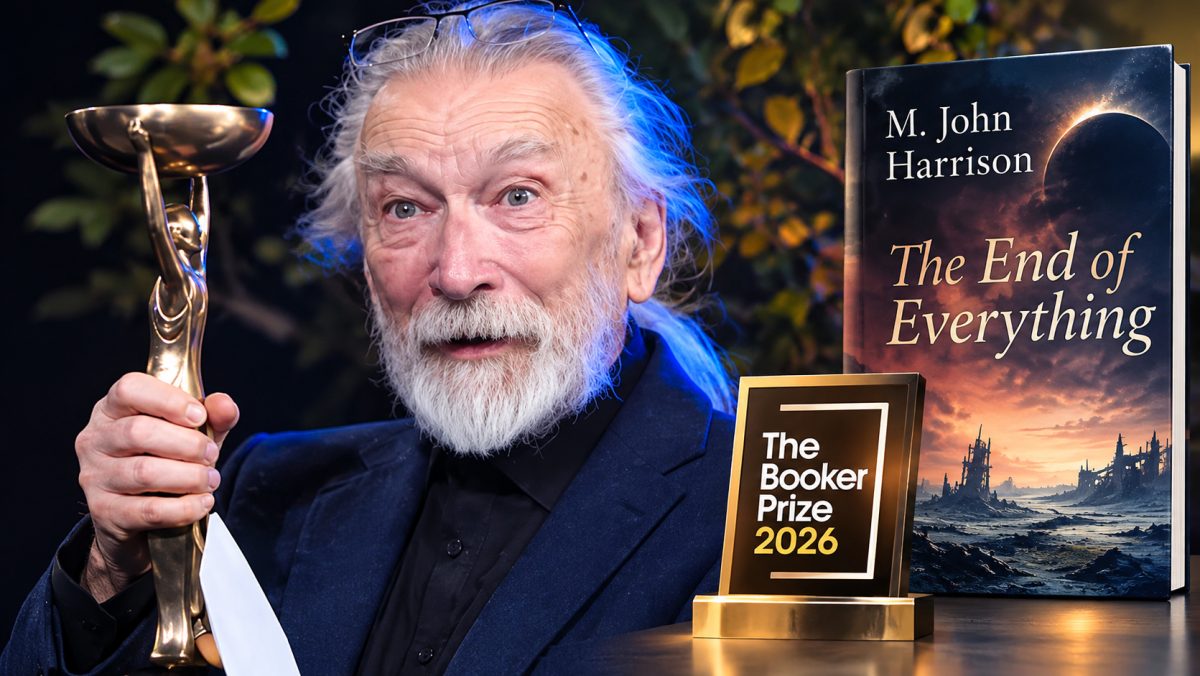
M. John Harrison won the 2026 Booker Prize on Monday, November 9, for his novel The End of Everything, at a ceremony held at Old Billingsgate in London. The win makes Harrison, 81, the oldest author ever to receive the £50,000 prize, and the first Booker winner to come directly from the science-fiction world.
Panthers Week 9 Injury Report Reveals Four Starters Out Before Broncos Clash
How The End of Everything Took the 2026 Booker Prize
Harrison's novel beat out a shortlist that included books by Marlon James, Douglas Stuart, and Elizabeth Strout, according to the Independent. Judges spent a full day debating the shortlist before reaching a unanimous decision, with chair Mary Beard later noting there was "a lot of discussion, disagreement and debate," though she added, "Nobody stomped off."
The ceremony saw David Szalay, last year's winner, hand the trophy to Harrison. The judges had already trimmed an original longlist of 163 novels down to six finalists before settling on The End of Everything. Beard called the book one that "turns you upside down, raises a wry smile – and surprisingly, given the subject matter, leaves you with a twinge of optimism."
Hunter Mense Royals Hitting Coach Move: Why Giants Lost Him After One Year
The End of Everything Booker Prize Story Behind the Novel
The End of Everything is set largely along England's Kent coast, in a world transformed by an unnamed catastrophe. The story follows a man named Philip, who searches for mysterious "artifacts," and his aunt Marnie, as they navigate a society upended by shape-shifting beings called the iGhetti. Rather than a straightforward alien-invasion thriller, the book leans into confusion, memory, and the slow unraveling of normal life.
Beard described it as "the politics of now seen through the lens of the future," portraying a society "undergoing a catastrophe that they don't really understand." Judges also praised the novel for its "extraordinary, expert writing and huge ambition," a phrase repeated across multiple outlets covering the award. It is Harrison's 13th novel, arriving after close to six decades of writing science fiction, fantasy, and literary criticism.
Why This Booker Prize Win Breaks New Ground for Science Fiction
Gaby Wood, chief executive of the Booker Prize Foundation, called Harrison "the first Booker winner to arise from the authentic S.F. realm." That distinction matters because past Booker winners, including Margaret Atwood and Kazuo Ishiguro, used speculative or dystopian ideas in their books, but neither writer was primarily known as a science-fiction author the way Harrison is.
Harrison himself has pushed back for years against the idea that genre fiction can't be serious literature. Before the win, he said he'd spent "40 to 50 years" trying to shift that thinking, both as a novelist and as a critic. "Why shouldn't a well-written work of science fiction be considered to be literary fiction?" he asked. His win now stands as a real answer to that question, delivered on one of the biggest stages in publishing.
Record-Breaking Age and Mixed Critical Reaction
At 81, Harrison overtakes Margaret Atwood as the oldest person to ever win the Booker Prize. He told reporters the win made him feel like "a proper writer at last," after building what the BBC called a cult following across a 60-year career. The moment carries extra weight given how long he worked outside the traditional literary mainstream before this recognition arrived.
Not every critic embraced the novel without hesitation. The Guardian praised it but warned it "won't be for everyone," according to the BBC. The Literary Review called it "a work of uncanny beauty, tender and terrifying in equal parts," while the Telegraph compared the reading experience to dreaming rather than conventional storytelling. The New York Times focused on the book's premise as an alien invasion of Britain, framing the award as a milestone moment for genre fiction within a prize long associated with literary realism.
What the Win Means Going Forward
The prize carries a cash award of £50,000, worth roughly $67,000 at the exchange rate cited by the Associated Press, though other outlets placed the dollar figure slightly higher. Beyond the money, the win is expected to bring fresh attention to Harrison's earlier novels and to reignite debate over where the line sits between genre fiction and literary fiction.
No film adaptation, sequel, or follow-up event has been announced yet. For now, the clearest next step is simply watching how readers respond to The End of Everything as it reaches a wider audience following the award, and whether its experimental, dreamlike style pulls in readers who don't normally pick up science fiction.