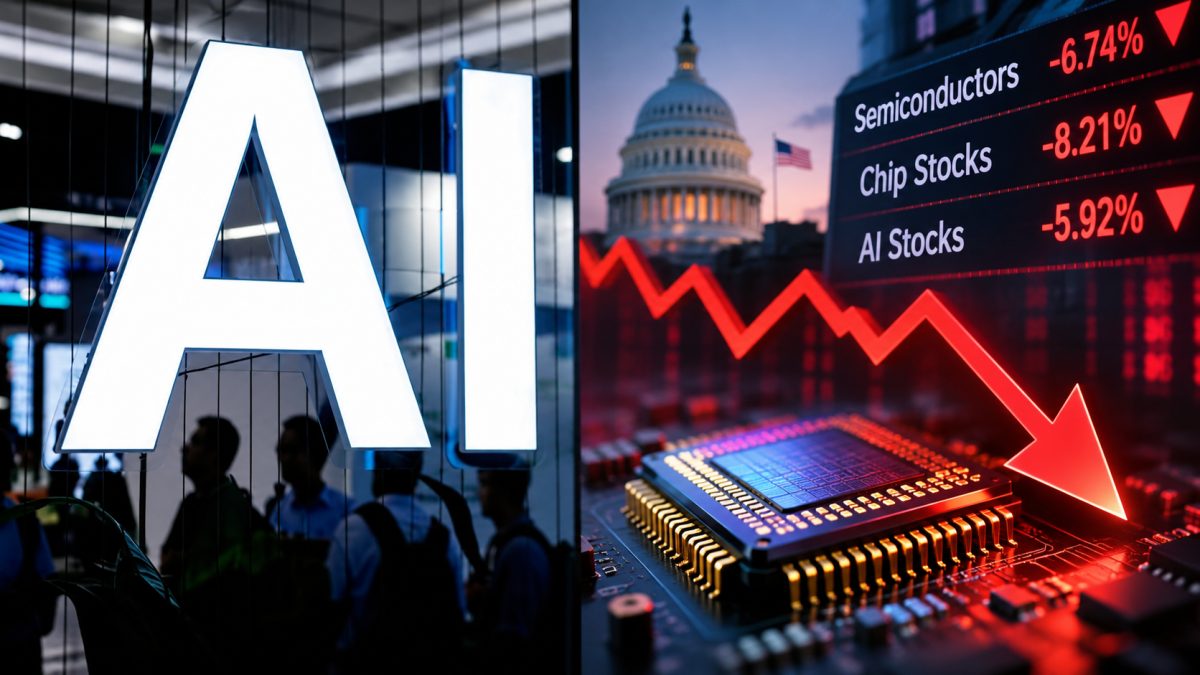

One rough Thursday erased months of AI-fueled gains and left traders wondering if the boom finally hit a wall.
The AI trade selloff of November 2026 slammed Wall Street on Thursday, November 5, as chip and data-center stocks collapsed and the Nasdaq Composite tumbled into correction territory, just one day after a big post-election rally following the Democrats' sweeping midterm wins.
2026 Midterm Elections Stock Market: Why Wall Street Isn't Panicking Yet
A Wild Reversal Inside Two Trading Days
Wednesday felt like a victory lap. Stocks rallied after Democrats won big in the midterm elections, and investors seemed to shrug off any worry about what the results might mean for business. Then Thursday arrived, and everything flipped. The Philadelphia Stock Exchange Semiconductor Index plunged as much as 11% during the session, its worst intraday drop since March 2020. The Nasdaq fell as much as 5%, pushing it more than 10% below its October 6 record close of 27,599.89 and confirming what traders call a correction.
Nvidia dropped 7.7% in intraday trading, dragging the rest of the chip sector down with it. By the closing bell, the damage was clear across the board. The Dow Jones Industrial Average fell 3.4%, or more than 1,800 points. The S&P 500 lost 4.3%. The Nasdaq dropped 5.5%. Reuters commentary summed it up bluntly, calling the session a market bonfire and saying the AI trade had imploded as investors scrambled to figure out what the election results meant for the massive data-center buildout driving so much of the market's gains this year.
Stock Market Today: Nasdaq Falls 1% as Dow Rises After Friday's Selloff
Fear Gauge Spikes to Levels Not Seen Since Last Year's Tariff Shock
Wall Street's fear gauge, the Cboe Volatility Index, told its own story. The VIX jumped 11.5 points to close at 28.09, its highest level in eight months. At its peak during the session, it posted its biggest one-day jump since the chaos that followed President Trump's April 2025 tariff announcement, often called Liberation Day. That kind of spike means investors were paying up fast to protect their portfolios from more losses.
Jim Carroll, senior wealth adviser and portfolio manager at Ballast Rock Private Wealth in Charleston, South Carolina, captured the mood with a simple line that stuck with traders all day. "It really did look as though things were going to relax a little bit and then, you know, the steamroller showed up today," he said. Reuters reporting described the selling as an unwinding of a crowded trade rather than the result of one company's bad earnings report. Much of the capital chasing AI stocks over the past year had piled into the same names, which made the exit just as crowded as the entry.
Why Investors Suddenly Got Nervous About Data Centers
The roots of this selloff go back further than one election night. The Nasdaq hit its record close of 27,599.89 on October 6, riding a wave of optimism about AI spending. But cracks had already started forming. Earnings from Alphabet and Meta in late October did little to convince investors that the enormous sums being poured into AI infrastructure would actually pay off anytime soon. Investors started asking harder questions about whether the spending made financial sense at all.
Then came the midterms. Democrats won sweeping victories across the country, including in states that matter a lot for data-center construction. That raised fears of tougher regulation, closer scrutiny of how much electricity these facilities use, and local pushback that could delay or shrink future projects. Dozens of ballot initiatives passed during the elections were also expected to complicate construction plans in the months and years ahead. None of this amounted to an outright ban on data centers, but it was enough to spook a market that had already priced in years of uninterrupted AI growth.
Billions Vanish as Hyperscalers Face Tougher Questions
The financial toll was staggering. Reuters commentary estimated that roughly $2 trillion was wiped from Nasdaq market capitalization during the selloff. Semiconductor makers, data-center builders and equipment suppliers all took hits, since their fortunes are tied directly to how much hyperscalers plan to spend going forward. Weaker stock prices also made it harder and pricier for these companies to raise money, creating a feedback loop that worsened the selling.
Treasury yields moved lower during the same session, a sign that money was flowing out of risky assets and into safer ground. Oil prices held below $100 a barrel even as the broader market churned. Taken together, the moves pointed to a market-wide reassessment, not just a single sector correction. Big tech names that had powered the market's record highs just weeks earlier were suddenly the biggest drag on it.
What Comes Next for the AI Trade
Nobody in the reporting pointed to a single event, hearing, or rule that will settle this uncertainty quickly. What happens next depends on whether hyperscalers can show that AI spending is actually paying off, and whether data-center projects can still get permits, power, and funding without major delays. Upcoming earnings reports and capital spending guidance from the biggest tech companies will be watched closely for clues.
Until then, chip and data-center stocks look exposed to more swings. The selloff on November 5 showed how quickly sentiment can turn when a trade gets this crowded and this big. Whether this turns into a longer slide or just a sharp gut check for an overheated sector is still an open question heading into the rest of November.