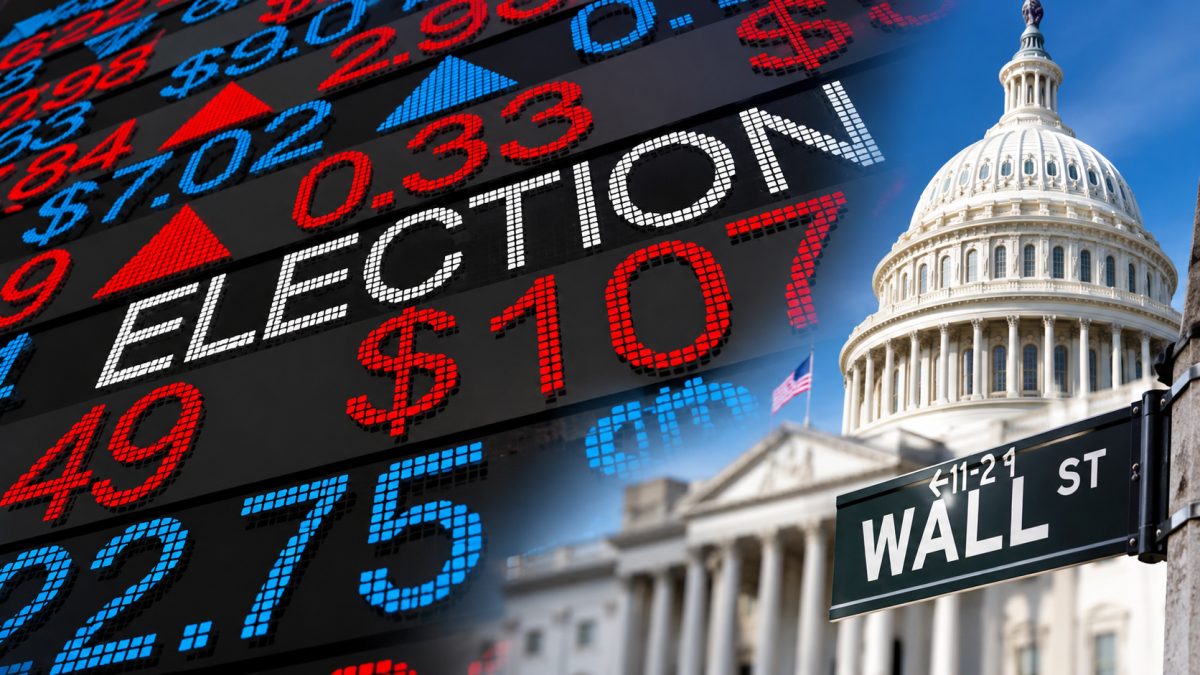

Investors spent election night watching Congress, not just candidates, because the outcome could shake up taxes, spending and interest rates.
Americans cast ballots on Tuesday, Nov. 3, 2026, in midterm elections that would decide control of the House and Senate, and the 2026 midterm elections stock market reaction became a top concern for Wall Street as investors weighed how different outcomes might shape taxes, spending and borrowing costs.
Brazil Election 2026 Lula Bolsonaro Runoff: Why This Vote Shocked Everyone
How the 2026 midterm elections stock market story unfolded
Control of Congress was never just a political question this year. It carried real weight for markets because either party winning both chambers, or neither party winning full control, could change the path for taxes, federal spending, regulation and the debt ceiling. CBS News reported that Wall Street analysts were not treating the vote as a simple up-or-down moment for stocks. Instead, they were mapping out how each possible outcome in Congress could shift fiscal policy and political risk in the months ahead.
Many analysts actually favored a divided government. Their reasoning was simple. When one party does not control both chambers, it becomes much harder to pass sweeping new laws on taxes or spending. That kind of gridlock, strange as it sounds, has historically made investors feel calmer rather than nervous. Options markets reflected that calm too. MarketWatch cited data showing traders expected a fairly modest post-election move of about 0.8% in either direction for stocks, not a dramatic swing.
Robbinsdale School Finances Under Fire as Parent's Report Challenges District Before Vote
What history says happens to the S&P 500 after midterms
The numbers from past elections offered a reassuring backdrop. Edward Jones found that the S&P 500 gained an average of 1.7% in the month following each of the last 14 midterm elections going back to 1970. Zoom out further and the pattern looks even stronger. A Charles Schwab analysis found that since 1974, the S&P 500 averaged a 5.7% return in the three months after midterm elections, finishing positive in 11 of 13 instances.
Ryan Detrick of Carson Group summed up why that pattern tends to hold. "There's some anxiousness before these elections," he said, adding, "Once you are through it, it's a big relief, and markets tend to do pretty well." Morgan Stanley data cited by CNBC added another layer. Under Republican presidents, the S&P 500 gained an average of 23% in the year after midterms when Congress ended up split, compared to 16% when Democrats held both chambers. Those figures describe what happened in the past, not a guarantee for what comes next.
Why a Democratic sweep worried some investors
Not everyone expected smooth sailing. CNBC reported that the stock market was not fully pricing in a Democratic sweep of Congress, even though some polls and most prediction markets pointed that way heading into Election Day. That gap between expectations and reality is exactly what can rattle stocks, because surprises tend to hit markets harder than outcomes investors already saw coming.
JPMorgan put numbers on that risk. The bank estimated a 66% probability of a so-called blue wave, with the S&P 500 potentially falling 0.25% or rising as much as 0.50% in that scenario, according to commentary cited by Yahoo Finance and CNBC. A Republican hold of both chambers, by contrast, was seen as more likely to spark a rally. Ed Yardeni offered a longer-term view on the risk of a sweep, saying, "Hence, a blue wave could deliver a cold shower for stocks, though we would view a significant selloff as a buying opportunity given the remarkable strength of the economy and corporate earnings."
Debt, AI jitters and sectors tied to Washington
The election landed at a tricky moment for markets already on edge. MarketWatch reported that the Nasdaq-100 had slipped into correction territory, marking its third drop of at least 10% from a recent high during the year, as investors questioned whether massive spending on artificial-intelligence infrastructure would actually pay off. National debt crossing $40 trillion added another layer of worry, making any congressional fight over borrowing or shutdowns feel higher stakes than usual.
Chris Low, chief economist at FHN Financial, explained why many investors still preferred gridlock despite those risks. "Less change makes a more predictable environment, which allows companies to invest in longer-term projects," he said. But he also flagged the flip side. "Prolonged shutdowns and fiscal standoffs could push Treasury yields higher, weighing on equity valuations," Low warned. Higher yields make bonds more attractive compared to stocks and can drag down the value investors place on future company profits.
Certain sectors were watching the results especially closely. CNBC highlighted defense, healthcare, cryptocurrency and artificial-intelligence companies as industries most exposed to whatever Congress decides next. Defense firms depend heavily on government contracts and spending bills. Healthcare companies answer to reimbursement rules and regulation. Crypto firms are waiting on digital-asset legislation. AI companies face both regulatory scrutiny and potential government investment, making the congressional balance directly relevant to their bottom lines.
What comes next for markets after the vote
UBS Global Wealth Management urged investors not to treat the midterms as a single make-or-break event for stocks. Its outlook pointed instead to AI investment, economic growth, corporate earnings, inflation and interest rates as the forces that would really drive markets over time, with the election outcome shaping the medium-term picture rather than flipping a switch overnight.
Magdalena Ocampo, a market strategist at Principal Asset Management, captured the mood heading into results night. "Volatility around the vote is possible, but markets have historically performed well in the year following midterms as political uncertainty recedes and attention returns to the economic outlook," she said. Whether Congress ends up divided, fully Republican or fully Democratic, analysts expect the real test to come from how lawmakers handle debt, spending and shutdown risks in the weeks that follow, not from the election result itself.