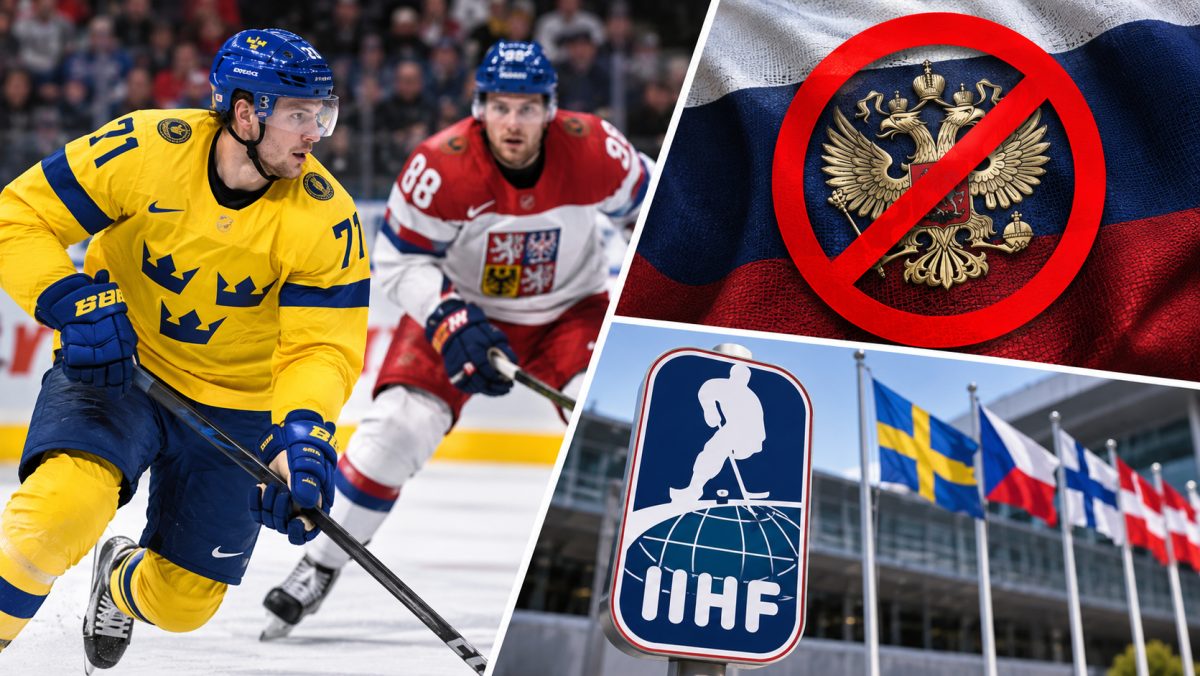

Six of hockey's biggest nations just told the sport's governing body they won't share the ice with Russia.
Sweden and Czechia announced on Tuesday, November 3, 2026, that their men's national teams will refuse to play Russia at future world championships, joining Finland, Norway, Latvia and Denmark in a boycott that now covers six of the 16 nations expected at the 2027 IIHF World Championship in Germany.
Rosneft Ukraine Refinery Strikes Push Russian Oil Giant Toward Lasting Damage
Sweden and Czechia join a fast-growing boycott movement
Sweden's hockey federation said its team will keep playing every other scheduled opponent, but not Russia, as long as the war in Ukraine continues. It's a targeted refusal, not a walkout from the whole tournament. Sweden has won the world championship 11 times, so its decision carries real weight inside the sport.
Czechia's move came together fast. The federation first said it would wait for a board meeting the following week before deciding anything. Instead, it flipped that plan and announced its opposition the same day as Sweden. Czech federation general secretary Jan Cerny said the country had "clearly rejected the return of Russian national teams to international competitions under the current circumstances." Swedish federation chairman Anders Larsson put it bluntly: "The Three Crowns will not play Russia in coming world championship tournaments."
NHL Hometown Remix Jerseys Debut With Pink Panthers Look That Stunned Players
A CAS ruling lit the fuse on this fight
This entire standoff traces back to a single legal decision. The Court of Arbitration for Sport ruled on October 30, 2026, that the IIHF must reinstate Russian national teams, starting with the world junior championship in December. That ruling effectively undid years of exclusion that began after Russia's full-scale invasion of Ukraine in February 2022, when the IIHF banned Russian and Belarusian teams from international hockey over the war and security concerns.
Finland moved first. Heikki Hietanen, chairman of the Finnish Ice Hockey Association, said his group was working to build what he called a common front. "We are currently gathering as many countries as possible to form a common front to tell the IIHF that none of us will play against Russia in this situation," Hietanen said. Within a day, Norway, Latvia and Denmark signed on, and then Sweden and Czechia made it six. The IIHF responded by saying it respects CAS's authority but is "disappointed" by the ruling, leaving the federation stuck between a binding legal order and a wall of resistance from its own member countries.
Canada adds a political fight on top of the sports dispute
The trouble isn't staying confined to Europe. Canada's World Junior Championship starts December 26 in Edmonton and Red Deer, Alberta, and Prime Minister Mark Carney made his government's position clear on Tuesday. "So if you're asking specifically about the world juniors, the Russians will not be there," Carney said on CPAC. His government has said it will keep restrictions on Russian athletes at events that receive federal funding, putting Ottawa directly at odds with the CAS ruling the IIHF is supposed to follow.
That sets up a strange situation where a court has ordered Russia back into the sport, but a host country's own prime minister says it simply won't happen on his soil. Canada's stance doesn't resolve the bigger question for May 2027, when the senior men's championship is set for Germany, but it shows how fast this legal dispute turned into a political one involving national governments, not just hockey federations.
Money and logistics now hang over the sport
Six countries pulling out of games against one opponent isn't just a symbolic headache. It's a scheduling nightmare. Tournament organizers would need to figure out brackets, forfeits, or entirely new formats if Russia ends up drawn against any of the six nations refusing to play. Reports also point to a major sponsor threatening to walk away from the sport over the dispute, which adds financial pressure on top of the governance chaos.
Sweden, Finland and Czechia aren't minor hockey programs sitting on the sidelines. They're three of the sport's top powers, and their combined refusal puts real pressure on the IIHF to find some kind of middle ground. Norway, Latvia and Denmark may not carry the same championship history, but their support shows this isn't just a protest by the biggest countries. It's spreading across the continent.
What comes next for Russia's return to hockey
The first real test arrives at the Alberta World Juniors in late December, where Carney has already drawn a line that conflicts with the CAS decision. How the IIHF handles that clash will set the tone for everything that follows. If Russian teams are kept out of Edmonton and Red Deer despite the court ruling, expect Russia and its supporters to push back hard, possibly through more legal action.
The bigger deadline is May 2027 in Germany. Unless the IIHF, CAS, national governments and the federations themselves find some kind of compromise, the men's world championship could see a reshuffled schedule, Russia excluded in practice despite winning its legal case, or some of the six protesting nations walking away entirely. Nobody involved seems ready to back down yet, and the clock is now running toward both tournaments at once.