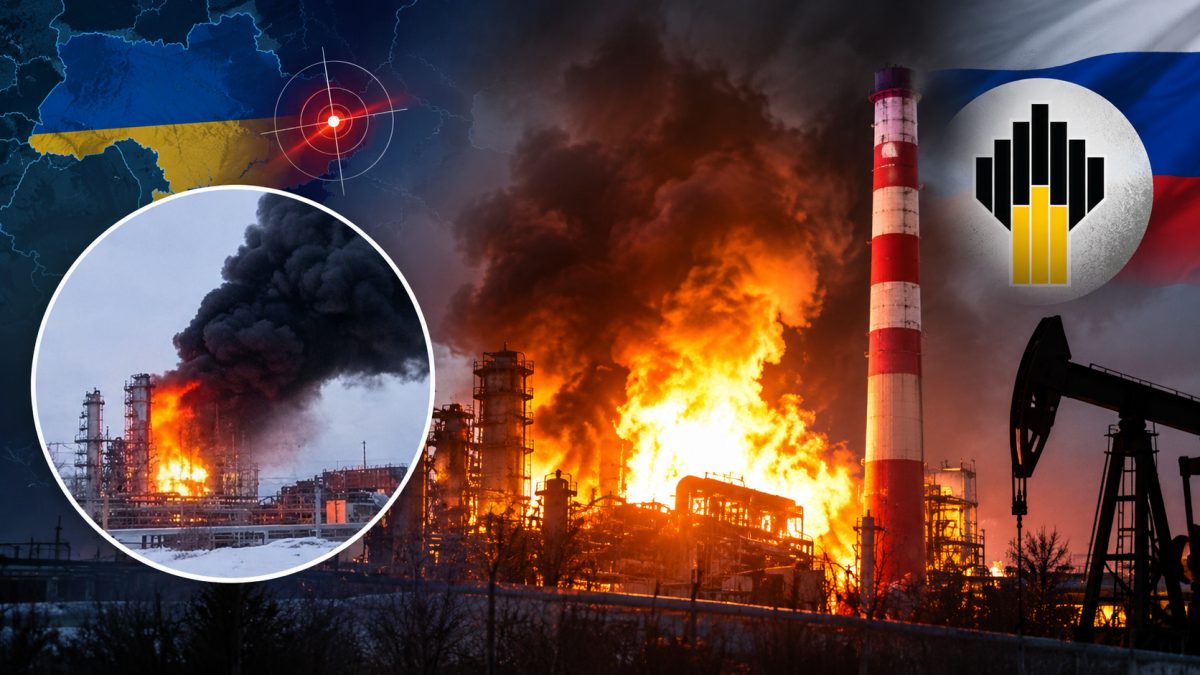

Russia's biggest oil company is quietly worried that it cannot absorb many more months of drone attacks on its refineries.
Rosneft officials privately fear that just a few more months of Ukrainian drone strikes on its refineries could cause lasting damage to the company, Bloomberg reported on October 22, 2026, citing people familiar with the matter and internal loss estimates.
Saudi Arabia Houthi Airport Strike Kills 12, Vows Decisive Response Now
Rosneft Ukraine Refinery Strikes Drain Company Finances
View this post on Instagram
Rosneft runs 12 refineries, which together make up roughly one-third of all the oil-refining capacity in Russia. That size now works against the company. Ukrainian drones keep hitting these plants, sometimes just after repair crews finish fixing earlier damage, according to Bloomberg's reporting.
The pattern has become a costly loop. A refinery gets hit, workers rush to repair it, the plant restarts, and then another strike lands before the company earns back what it spent on repairs. That cycle is driving up costs and making fuel output unreliable across Rosneft's network, the people familiar with the matter told Bloomberg.
The Ryazan refinery shows how bad things have gotten. This plant is one of Rosneft's largest and supplies fuel to Moscow and nearby regions. Since it was first struck in May 2026, Ryazan has been shut more than half the time, and it has run well below full capacity whenever it does operate, according to damage assessments reviewed by Bloomberg.
Gen. Alexus Grynkewich Warns NATO Will 'Fight' If Russia Ever Attacks Europe
Syzran Refinery Shutdown Deepens Rosneft's Operational Crisis
The Syzran refinery tells a similar story. Over the past six months, it has spent most of its time either completely shut down or running at less than one-third of its normal capacity, Bloomberg's sources said. For a company that depends on steady refining output to turn crude oil into profit, that kind of prolonged downtime cuts deep.
Rosneft has responded in an unusual way. Instead of rushing every repair, the company has reportedly started deliberately slowing down some fixes, stretching jobs that would normally take a few days into projects lasting several weeks. The thinking behind this, according to people familiar with the matter, is that finishing repairs too fast just invites another strike before Rosneft recoups its repair costs.
That strategy might save money in the short term, but it also means less fuel reaching the market. Since the start of 2026, Ukraine has launched at least 114 strikes on Russian oil refineries, more than double the number from the same period the year before, based on Bloomberg-linked reporting. These attacks have pushed Russian refining volumes down to their lowest levels in several years and triggered fuel shortages along with export restrictions on gasoline, diesel, and jet fuel.
Profits Fall While Debt Climbs to Five-Year High
The numbers back up the worry inside Rosneft. Net income for the first half of 2026 fell almost 20% to about 200 billion rubles, which comes out to roughly $2.4 billion. That drop happened even though many expected the war in the Middle East to hand Rosneft an unplanned profit boost through higher oil prices. That expected windfall never fully showed up in the company's results.
Debt tells an even more worrying story. Rosneft's net-debt-to-EBITDA ratio hit 1.8 by the end of June 2026, the highest level the company has seen in more than five years. In plain terms, Rosneft now owes much more relative to what it actually earns from its operations, and that gap keeps widening as repair bills, security costs, and lost production pile up.
Sanctions make the whole situation harder to fix. Restrictions on Western technology, financing, and shipping limit Rosneft's ability to buy replacement parts or bring in the specialized equipment needed to properly restore damaged refinery systems. Bloomberg's report also pointed to setbacks hitting Vostok Oil, Rosneft's major Arctic development project that was supposed to drive long-term growth for the company.
Moscow Faces a Fuel Supply Dilemma
The fallout from these strikes reaches far beyond Rosneft's balance sheet. Lower refinery output has already squeezed domestic fuel supplies inside Russia, forcing the government to restrict exports of gasoline, diesel, and jet fuel just to keep enough product at home. That puts Moscow in an uncomfortable spot, since the war effort itself depends on steady fuel supplies for military logistics and transport.
Bloomberg's analysis suggests this financial pain helps explain why Russian officials have pushed to reduce or stop Ukrainian strikes on energy infrastructure. For Ukraine, hitting refineries offers a way to pressure Russia's economy and military without needing to target crude oil production directly, since refined fuel is what actually powers tanks, trucks, and planes.
For global energy markets, the bigger risk isn't a sudden drop in Russian crude exports. It's a longer, grinding disruption to refined products like gasoline and diesel, the kind of slow squeeze that builds up over months rather than hitting all at once.
What Comes Next for Rosneft's Battered Refineries
Bloomberg's reporting does not include a public statement from Rosneft confirming these internal warnings. Instead, the picture comes from people familiar with the company's situation, internal loss estimates, and damage assessments that Bloomberg reviewed. That distinction matters: this is an inside look at private concern, not a formal company announcement or earnings warning.
Looking ahead, the outcome depends almost entirely on whether Ukraine keeps up its current pace of strikes. If the attacks continue for several more months, Rosneft could see deeper profit declines, even higher debt, longer refinery shutdowns, and further delays to Vostok Oil. If the strikes slow down or a ceasefire takes hold, Rosneft could start rebuilding, but sanctions and the damage already done would still slow any real recovery.