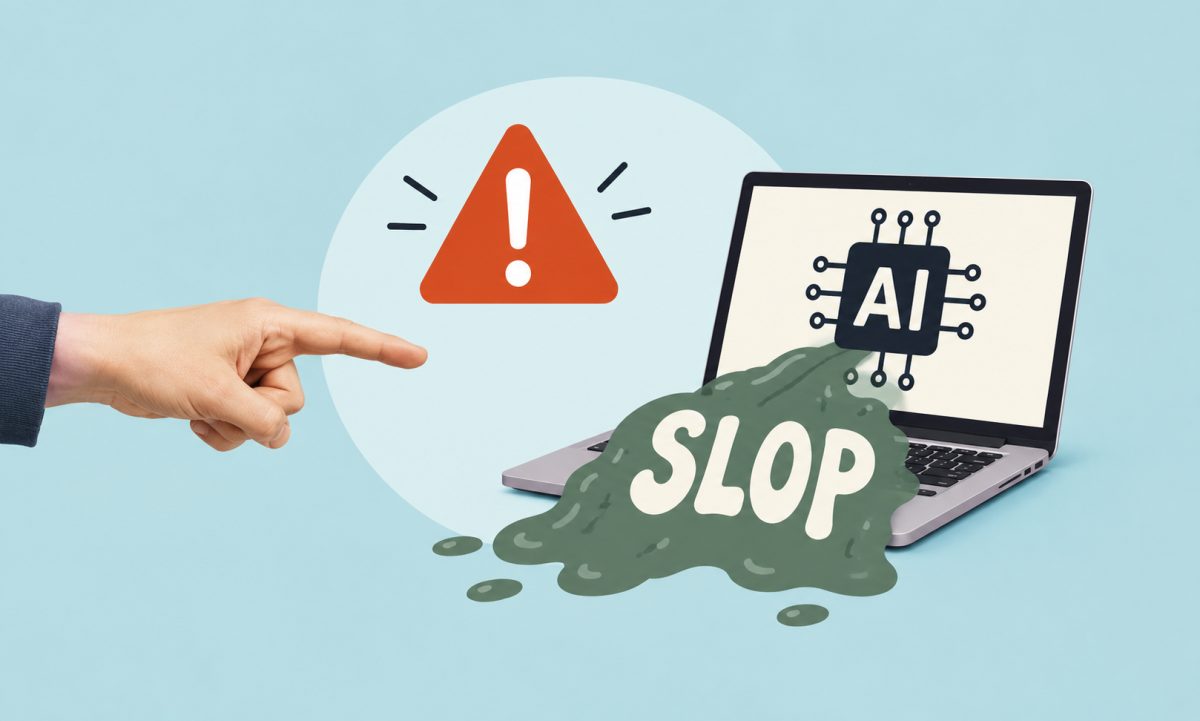

One writer says his favorite online communities are drowning in quick, throwaway code that nobody sticks around to fix.
On October 22, 2026, Aftermath published a technology feature by Chris Person arguing that AI slop in hobbyist software is spreading fast across emulation forums, open-source projects, and other enthusiast corners of the internet, driven by the rise of so-called vibe coding tools that let anyone generate working software from a simple text prompt.
AI-Driven Impersonation Banking Threats Push Banks to Fight Back With New Tools
How AI slop in hobbyist software took over niche communities
Person's piece, titled "All My Hobbies Are Getting Slopped Up, And It's Exhausting," lays out a simple but troubling idea. Making software used to take real time. You needed to learn a language, test your code, fix bugs, and usually lean on other people who had done it before you. Vibe coding changes that math. Now someone can describe what they want in plain English and get a working program back in minutes.
That sounds great on paper. But Person's reporting points to a darker side effect. The article states plainly that "the explosion in vibe coding has created an endless sea of drive-by, unserious, and unmaintained software that is destabilizing longstanding communities." Instead of a handful of trusted tools built by people who stick around, hobbyist spaces are now flooded with projects that show up, generate buzz, and then get abandoned.
GCCs Top Career Choice for Tech Talent, But There's a Catch Workers Missed
Why vibe coding floods communities with disposable software
The piece draws a clear line between making software and actually owning it. Writing code with an AI assistant is fast. Supporting that code for years, fixing it when an operating system updates, and answering questions from confused users is a completely different job. That second job is the one vibe coding tools don't help with at all.
Person frames this as a cultural problem as much as a technical one. Hobby communities like emulation scenes and open-source utility projects run on trust built slowly over time. People learn which developers answer bug reports, which projects get updated, and which maintainers actually care about their users. When dozens of new AI-assisted projects appear every week, that trust system gets overloaded. Nobody can tell anymore which tool is reliable and which one will vanish the moment its creator loses interest.
The hidden cost for maintainers and everyday users
The burden described in the article doesn't fall equally on everyone. Volunteer maintainers who have spent years supporting their own software now face a flood of copycat projects, duplicate bug reports, and confused newcomers who can't tell AI-generated knockoffs from the real thing. That extra noise eats up time that used to go toward actually improving software.
Everyday users face a different kind of headache. They have to figure out on their own whether a given tool is safe, whether it respects their privacy, and whether anyone will still be updating it in six months. Person's piece suggests this guessing game is becoming the new normal rather than an occasional annoyance, and that shift is what makes the trend feel exhausting rather than just mildly inconvenient.
No single villain, just a system under strain
Importantly, the Aftermath feature does not claim that every AI-assisted project is bad or that AI tools themselves are the enemy. The criticism is aimed squarely at volume and neglect, not at the existence of AI-assisted coding. A single person spinning up a quick tool for personal use is not the problem. The problem, as the article frames it, is the sheer number of half-finished, unsupported projects crowding out the ones built with real care.
There is no quote in the available material from any AI company, open-source foundation, or platform addressing this directly, and no official industry response has been documented. This appears to be one writer's close read of a trend he has watched build for months inside communities he personally cares about, rather than a story tied to a single company announcement or regulatory action.
What comes next for hobby communities dealing with the flood
The Aftermath piece does not point to any scheduled fix, policy change, or industry meeting that will resolve this. Instead, it leaves the question open for the communities themselves. Will moderators start requiring disclosure when a project is AI-generated? Will maintainers build new ways to flag which tools are actively supported? Those are open questions, not confirmed plans.
What is confirmed is the core argument itself: vibe coding has made it easier than ever to produce software, but it has not made it easier to maintain, trust, or stand behind that software. Until hobby communities figure out new norms for sorting the reliable from the disposable, the flood Person describes shows no sign of slowing down.