
NATO's top general just spelled out exactly how he plans to stop Russia cold, and it's rattling nerves far beyond the battlefield.
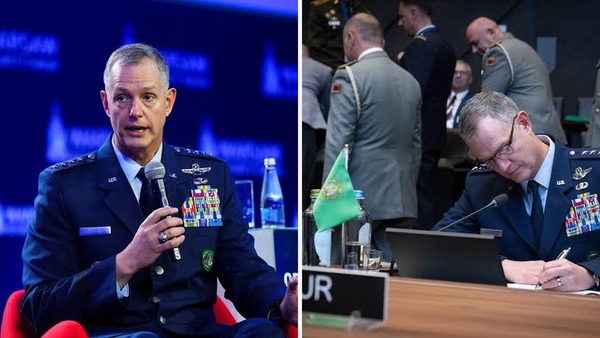
Gen. Alexus Grynkewich, NATO's top military commander and head of U.S. forces in Europe, said on Oct. 12, 2026, at the Warsaw Security Forum that any Russian attack on a NATO member would be met with overwhelming force, while also warning that Ukrainian strikes on Russian oil refineries were straining relations with Washington.
Russia's Biggest Energy Strike Since Spring Plunges Kyiv Into Emergency Blackouts Before Winter
Grynkewich Lays Out NATO's Block, Blunt and Break Plan
View this post on Instagram
Standing before a room full of defense officials in Warsaw, Grynkewich described a three-part military concept he called block, blunt and break. The first step, block, would stop Russian forces from grabbing their early objectives. The second, blunt, would wear down the attacking force and kill its momentum. If Moscow kept pushing anyway, break would come next, aimed at destroying everything that keeps a war machine running, from troops and supply lines to command centers and the infrastructure behind them.
Grynkewich did not mince words about what that would mean in practice. "If someone is foolish enough to attack us, we will fight," he said, according to Reuters. He added that NATO forces would destroy "anything and everything" tied to an assault, making sure that any aggression against an alliance member turned out to be pointless from the start.
He made clear this wasn't a narrow promise to defend only the exact spot where troops might cross a border. The response, he said, would reach deep into whatever systems were sustaining the attack, a deliberate signal meant to discourage Moscow from even trying.
Ovechkin Appears In Pro-Putin United Russia Campaign Ad Ahead Of Elections
Why Gen. Alexus Grynkewich Chose to Speak Publicly Now
NATO rarely talks this openly about classified military planning, and Grynkewich acknowledged that. He said he decided to share pieces of the alliance's normally secret strategy because Russian sabotage, arson, cyberattacks and disinformation campaigns had been rattling nerves across Europe. Countries backing Ukraine have reported a steady stream of these hybrid operations, and officials worry they're designed to chip away at public support without triggering a full-blown war.
Even so, Grynkewich tried to strike a careful balance. He said a direct confrontation between NATO and Russia wasn't "imminent or inevitable," framing his remarks as reassurance rather than an alarm bell. The goal, he suggested, was to calm jittery allies while sending Moscow an unmistakable warning at the same time.
Ukraine's Refinery Strikes Create Friction With Trump
While Grynkewich praised Ukraine's "fighting spirit," he also pointed to a growing dispute over Kyiv's drone campaign against Russian oil refineries. President Donald Trump has repeatedly pressed Ukrainian President Volodymyr Zelenskyy to stop the attacks, arguing they were pushing up diesel and fuel prices worldwide.
A Washington Post investigation of 54 refinery strikes found that more than half appeared to hit desalting and distillation units, the hard-to-repair components that are critical for turning crude oil into usable fuel. Ukraine has used long-range drones since the campaign ramped up in August 2025, according to the research group Tochnyi, hitting targets from Moscow's outskirts to refineries deep in Russia's interior, including one strike on June 16, 2026, against a heavily defended facility near Moscow.
Ukraine's Defense Ministry said on Oct. 5, 2026, that recent strikes on refineries in Moscow, Yaroslavl, Ust-Luga, Perm, Saratov and Syzran had knocked out 51 percent of Russia's refining capacity. That figure comes from Kyiv and has not been independently confirmed, but the disruption has been real enough that Russia restricted gasoline sales earlier in 2026 and banned diesel exports to ease domestic shortages.
Zelenskyy Pushes Back on a One-Sided Ceasefire
Trump first urged Ukraine on Sept. 13, 2026, to halt the refinery strikes, tying them directly to rising fuel costs. Zelenskyy has resisted, arguing the refineries fund Russia's war and remain fair game. He's also framed any potential deal as a two-way street, saying Ukraine would only consider pausing attacks if Russia stopped hitting Ukraine's power grid in return.
"We have one refinery," Zelenskyy said, pointing out that it's already badly damaged, which makes a refinery-only ceasefire lopsided in Russia's favor. He wants any energy truce to cover both sides of the war equally, protecting Ukraine's electricity system just as much as it limits Ukrainian strikes on Russian fuel production.
What Comes Next for NATO and the Energy Standoff
NATO's public rollout of its block, blunt and break strategy is meant to deter Russia, not signal that war is coming. Alliance officials are expected to keep reinforcing defenses along the eastern flank while repeating that the plan is purely defensive in nature.
The refinery dispute looks harder to resolve. Without a broader deal that protects Ukraine's power grid too, Kyiv seems unlikely to back down, and continued strikes could keep straining its relationship with the Trump administration. Meanwhile, Russian attacks on Ukraine's energy system are expected to make the coming winter brutal for ordinary Ukrainians, adding more pressure on both sides to find some kind of compromise before the cold fully sets in.