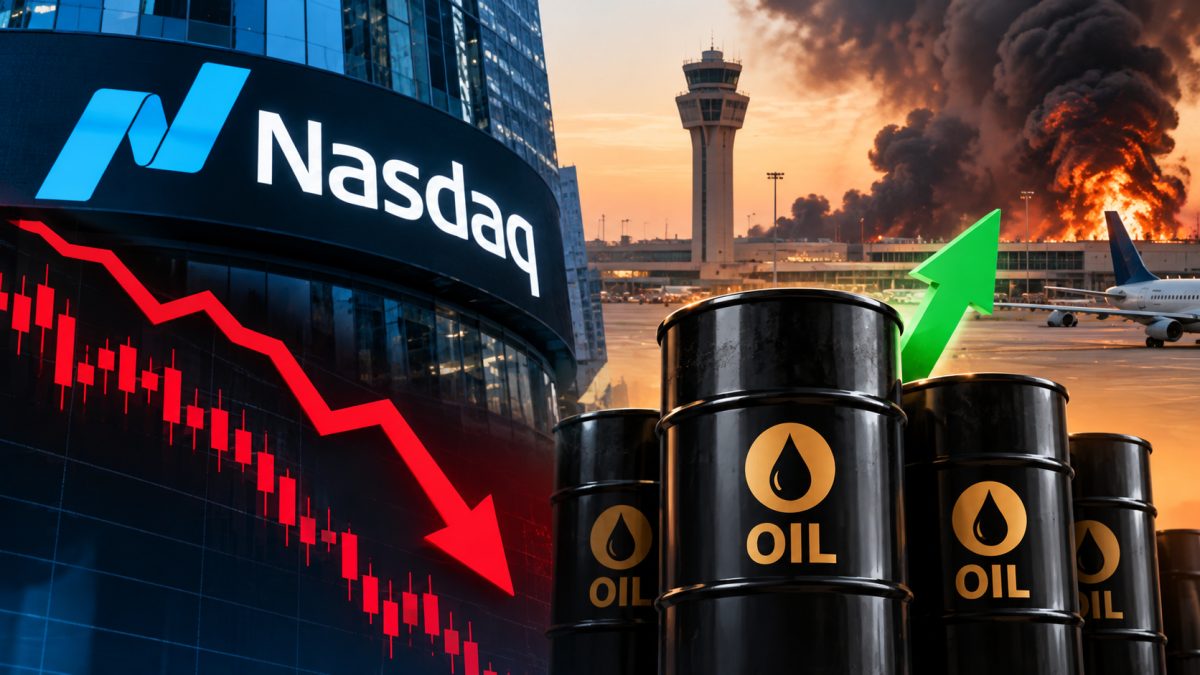

Oil jumped, tech stocks slumped, and Wall Street braced for a big week of earnings and inflation news.
The Nasdaq ends lower as oil prices surge, closing down 0.44% on Monday, October 12, 2026, after attacks on Saudi Arabia's Riyadh airport sent crude prices nearly $2 a barrel higher. The tech-heavy index fell 120.17 points to 27,246.00, while traders also watched for the start of bank earnings and fresh U.S. inflation data.
US Stocks Weekly Gains October 9 2026: Why Wall Street Just Jumped
Nasdaq Ends Lower While Dow Bucks the Trend
The split performance across Wall Street told its own story. The S&P 500 dipped just 3.75 points, or 0.05%, to settle at 7,807.79. The Dow Jones Industrial Average actually climbed 198.22 points, or 0.38%, finishing at 51,853.17. That gap between the Dow and Nasdaq showed how differently investors treated tech stocks versus companies tied to energy, industry, and banking.
Technology shares dragged the Nasdaq down for the session, giving back some of the gains built over four straight winning weeks. Energy stocks moved the opposite direction, rising alongside crude prices as traders bet that oil producers would benefit from tighter supply fears. That kind of split session, where one index falls while another climbs, usually points to a rotation in investor money rather than a broad panic.
Attacks on Riyadh Airport Push Crude Prices Higher
The spark behind Monday's oil move came from weekend attacks on Riyadh's international airport. Reports tied the strikes to Yemen's Iran-backed Houthi movement, which launched additional attacks on Saudi Arabia even as oil traders tried to assess the damage. Powerful explosions were reported in the Saudi capital, and officials there vowed a response.
Crude oil rose about 2% during the session, with U.S. crude trading near $93 a barrel and Brent crude near $106. Saudi Arabia sits at the center of global oil supply, so any threat to its airports, pipelines, or production sites tends to push prices up fast, even before any real disruption happens. Diesel futures in the U.S. also edged higher alongside crude.
S&P 500 and Nasdaq Hit Record Highs, But Earnings Could Make or Break the Rally
Trump's Energy Ceasefire Claim Adds to Market Confusion
Adding another layer to Monday's trading, President Donald Trump had announced what he called an energy ceasefire involving Russia and Ukraine just a day earlier. But Ukrainian President Volodymyr Zelenskyy quickly pushed back, saying Moscow had already broken the agreement. That contradiction left energy traders with more questions than answers about how stable the ceasefire really was.
Trump also said the United States was weighing whether to join Saudi Arabia in its fight against the Houthis. That comment raised the stakes for investors, since direct U.S. involvement could widen the conflict and threaten oil supply even further. Reported casualty figures from the attacks varied, with one count putting recent deaths at 18 and another weekend estimate at 12, numbers that remained preliminary as the situation developed.
Bank Earnings and Inflation Data Loom Large
Monday's trading set the stage for a packed week on Wall Street. Major U.S. banks, including JPMorgan, Wells Fargo, Goldman Sachs, and Citigroup, were scheduled to kick off third-quarter earnings season on Tuesday. Investors wanted to see how banks were handling loan demand, credit quality, and interest rates, all signals of how the broader economy is holding up.
Beyond earnings, traders were also bracing for a heavy slate of economic data later in the week, including September readings on consumer prices, producer prices, and retail sales. Higher oil prices tend to feed into those inflation numbers, which matters because stronger inflation could push the Federal Reserve to keep interest rates higher for longer. That is exactly the kind of environment that tends to hurt growth-heavy tech stocks the most.
What Investors Are Watching Next
The next few days will likely decide whether Monday's Nasdaq slide was just a blip or the start of something bigger. Bank earnings on Tuesday could either calm nerves or add to them, depending on how companies describe consumer spending and credit trends. Strong numbers from major lenders often give the broader market a confidence boost.
Oil markets remain the wildcard. Any further attacks on Saudi energy infrastructure, a Saudi military response, or deeper U.S. involvement against the Houthis could push crude prices even higher. On the other hand, signs of de-escalation could quickly erase some of the risk premium built into oil prices this week, giving tech stocks room to recover.