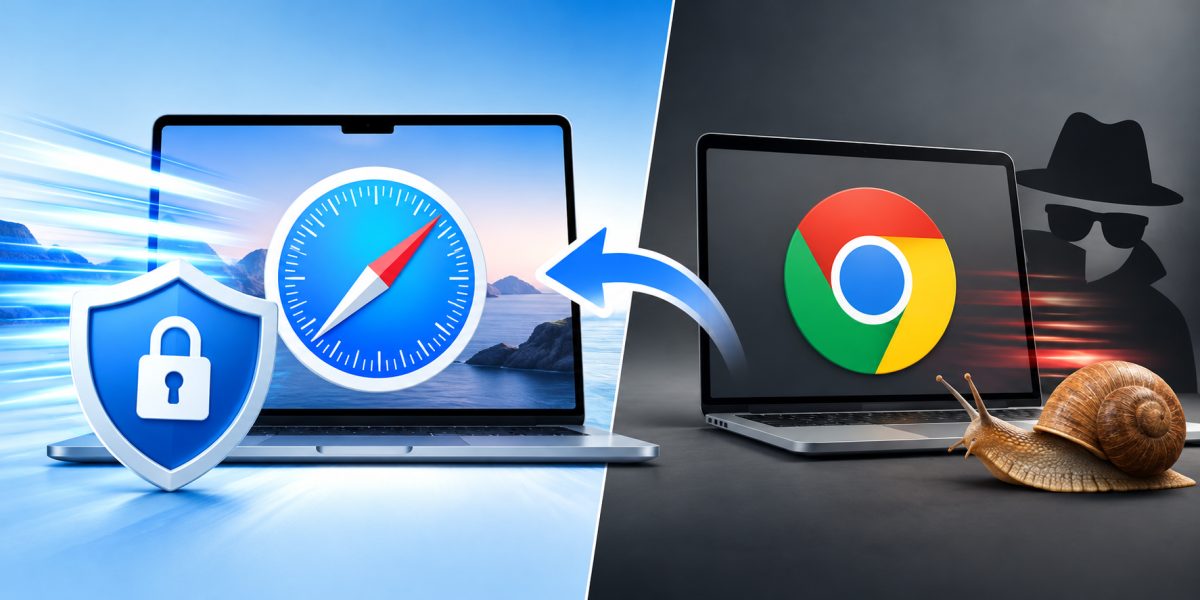

Apple just told Chrome users it's time for a change, and it's got numbers to back up the pitch.
Apple launched its new Switch to Safari campaign on October 12, 2026, urging people to drop Google Chrome for Safari. The push includes a dedicated webpage, a side-by-side browser comparison chart and two YouTube videos, all built around claims that Safari is faster, more private and easier on your battery.
Amazon Drops Apple Prices to Record Lows Days Before Prime Big Deal Days Even Starts
What Apple's Switch to Safari Campaign Actually Says
View this post on Instagram
The campaign centers on a simple idea. Apple says Safari is "a more powerful and private browser than Chrome." That line sits right at the top of Apple's new switch page, and everything else on the site backs it up with specific numbers.
Apple claims Safari gives Mac users up to five extra hours of video streaming compared to Chrome. That's a big deal for anyone who watches shows or movies on a laptop away from a charger. Apple also says Safari loads frequently visited websites up to 35% faster than Chrome on Mac. These aren't vague marketing phrases. They're specific, measurable claims that Apple is putting directly in front of shoppers comparing browsers.
On privacy, Apple says Safari blocks third-party cookies by default, while Chrome does not. Apple also states plainly that "Chrome lets more third-party trackers follow you across the web and collect and sell your data to advertisers." That's a pointed accusation, and it sits right next to Apple's own list of protections, including Intelligent Tracking Prevention, hidden IP addresses from known trackers, and removal of tracking parameters from web addresses during Private Browsing.
Apple Unveils iPhone Duo Camera Photos Shot by Pros Ahead of Launch, Here’s What They Reveal
Features Apple Wants You to Notice
Beyond speed and privacy, Apple is pushing a bundle of Safari features it says make switching worthwhile. Distraction Control lets people hide annoying parts of a webpage, like pop-ups or auto-playing videos. Reader Mode strips away clutter so articles are easier to read. Profiles let users separate work browsing from personal browsing. Apple Pay and Notify Me round out the list of built-in tools Apple says remove the need for extra browser extensions.
Apple frames all of this as convenience baked in, rather than something users have to hunt down and install themselves. The message is that Chrome users are doing more manual work to get privacy and organization that Safari already includes.
To make switching painless, Apple also published simple instructions. On a Mac, users go to System Settings, then Desktop & Dock, and pick Safari under the "Default web browser" menu. On an iPhone, it's Settings, then Apps, then Safari, then tapping "Default Browser App." Apple clearly wants to remove any friction between reading the pitch and actually making the switch.
This Fits a Pattern Apple Has Been Building for Years
This isn't Apple's first shot at Chrome, and it won't be the last. Apple started blocking all third-party cookies by default in Safari back in 2019, which became a cornerstone of its privacy messaging for years afterward. The company has kept building on that foundation ever since.
Earlier in 2026, Apple ran its "Privacy on iPhone" campaign, which featured chrome-colored spy characters that vanish the moment someone opens Safari. The visual trick wasn't subtle. It directly tied Chrome's branding to the idea of being watched and tracked online. Then on June 3 and 4, 2026, Apple pushed out its "Clingers" ads, showing data trackers as clingy silver-clad creatures that swarm rival browsers and disappear the instant a user switches to Safari.
By August 21, 2026, Apple's Safari privacy page already listed most of the protections now featured in the October campaign, including machine-learning-based tracking prevention, blocked third-party cookies, and restrictions on what web extensions can see. The October 12 launch essentially packaged all of that messaging into one aggressive, numbers-driven pitch aimed squarely at Chrome users.
Why This Battle Matters for Everyday Users
Chrome still has a massive global user base, built on cross-platform support, deep Google account integration and a huge extension library. Those are real advantages that Safari doesn't fully match, especially for people who jump between Windows, Android and Apple devices throughout the day.
But Apple's bet is that privacy and battery life matter more to a growing number of users, especially people who already own Macs and iPhones but still default to Chrome out of habit. The campaign isn't just about bragging rights. It's a direct attempt to convert people who already live inside Apple's ecosystem but haven't made Safari their main browser.
It's worth remembering that the five-hour battery claim and the 35% speed claim come from Apple's own testing, not from an independent lab. Apple's materials include footnotes tied to those numbers, and real-world results will likely depend on the specific Mac model, the websites being tested and how someone actually uses their browser day to day.
What to Watch Next as the Campaign Rolls Out
Apple is expected to keep running its two new YouTube videos and promoting the Switch to Safari page in the coming weeks. Given its track record with "Privacy on iPhone" and "Clingers," more ads in this same vein are likely to follow, each one hammering the same contrast between Safari and Chrome.
The bigger question is whether any of this actually moves people to switch. Apple hasn't released data showing a shift in browser usage, and there's no public response yet from Google addressing the specific claims. Expect closer scrutiny of how Apple measured that battery boost and speed increase, along with ongoing debate over whether Safari can really replace Chrome for people who depend on heavier web apps and cross-platform syncing.