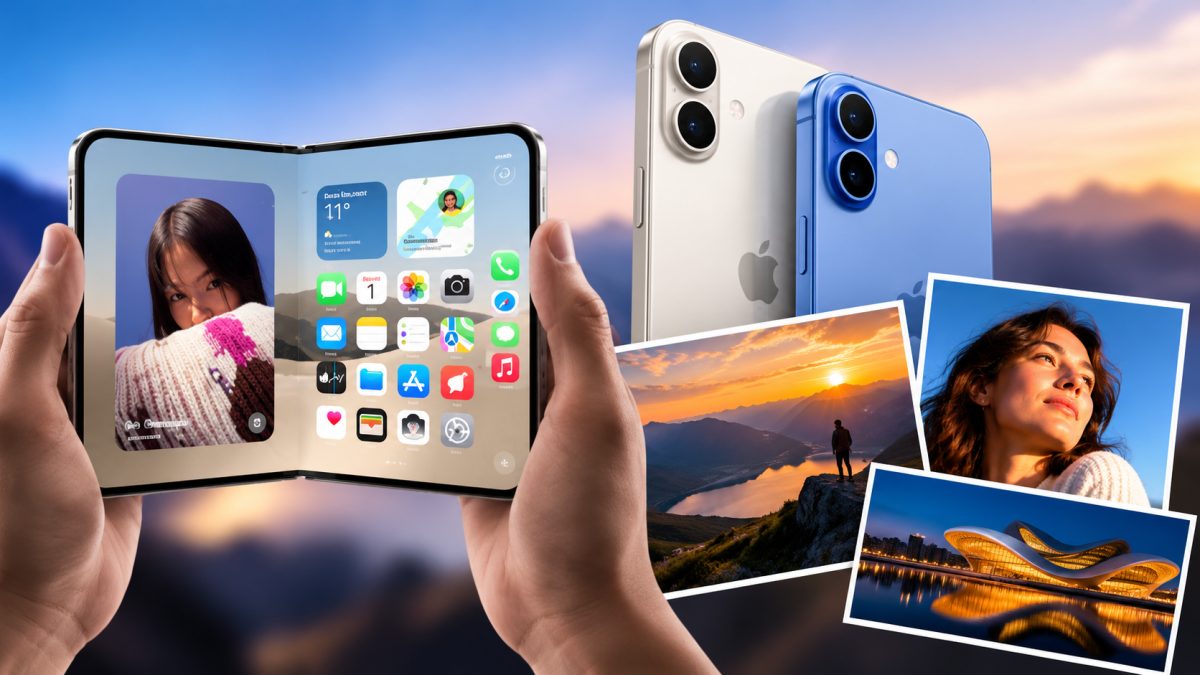

Apple's curated Instagram gallery spotlights the iPhone Duo's four-camera system through the lens of two professional photographers, days before pre-orders open.
Apple on Thursday, October 1, 2026, published a curated gallery of six photographs taken with its upcoming iPhone Duo on its official Instagram account, crediting American photographers Jake Michaels and Jason Nocito for the Apple-commissioned project. The post, first reported by MacRumors, arrives roughly two weeks before pre-orders open on October 16 and three weeks before the foldable device reaches customers on October 23, positioning the imagery as a strategic marketing push during a critical pre-launch window.
Apple Code Leak Hints at iPad Mini With iPhone-Grade A20 Pro Chip and Redesigned Camera
A Familiar Marketing Playbook Applied to a New
Form Factor
The gallery extends Apple's decade-old "Shot on iPhone" campaign, which has historically used both professional and amateur photography to showcase successive camera systems. According to 9to5Mac, Apple has relied on this branding strategy for roughly ten years to highlight new hardware, computational photography advances, and device-specific shooting modes. The iPhone Duo campaign follows that established pattern but applies it, for the first time, to a foldable device entering a product category Apple has never previously occupied.
By leading with real photographs credited to named photographers rather than product renders or conventional advertising copy, Apple is directing public attention toward imaging rather than the hinge mechanics, display durability, or multitasking features that typically dominate foldable phone discourse. Apple described the iPhone Duo as having a "versatile camera system packed with delightful new features," according to MacRumors' reporting on the Instagram post.
Apple's iOS 27 iPhone Handoff Lets One Number Span Two Devices
What the Camera Specifications Reveal
The iPhone Duo's published configuration includes four cameras. The rear houses a 48-megapixel Fusion Main camera alongside a 48-megapixel Ultra Wide camera. The front-facing system is split across the device's dual-display design: a 12-megapixel Center Stage camera sits in the outer display, while a separate camera is positioned beneath the inner display. Available reporting does not provide a megapixel rating for that under-display sensor, leaving an open question about potential image-quality trade-offs inherent to under-display camera technology.
This four-camera arrangement reflects the structural complexity of a book-style foldable that closes into a conventional phone shape and opens into a larger inner display. Apple executive Kate Bergeron has said the device includes a replaceable cover layer on its folding screen intended to mitigate the crease visibility that commonly affects foldable displays over time, according to 9to5Mac's coverage of the broader iPhone Duo rollout.
Professional Photographers Lend Editorial Credibility
The selection of Jake Michaels and Jason Nocito as credited photographers is central to how the campaign is positioned. Rather than presenting the iPhone Duo exclusively through Apple-generated product shots or studio advertising, the company opted for an editorial approach that frames the device's output as professional-grade photography. This mirrors Apple's long-standing practice of enlisting recognized photographers and filmmakers to associate its camera systems with high-end visual production.
However, the gallery remains promotional material rather than an independent evaluation. Apple commissioned the work, selected the final images, and controls the marketing presentation entirely. The six photographs demonstrate what the hardware can achieve under professional direction and skilled post-processing conditions, not necessarily how the camera performs in typical consumer hands. Available reporting does not specify lighting conditions, editing workflows, image file formats, software versions, or whether any post-processing occurred before publication, and it offers no direct comparison against the iPhone 18 line, rival foldables, or dedicated cameras.
Positioning Within a Broader Pre-Launch Campaign
The photography release is one element of a wider advertising rollout that began well before the October launch window. The Apple Post reported that outdoor and transit advertising for the iPhone Duo began appearing in major cities, including New York, and in Japan, more than a month ahead of the device reaching customers. Those campaigns emphasized the two-screen design and incorporated carrier branding from AT&T in the United States and NTT Docomo in Japan.
The device carries a reported starting price of $1,999, according to Fortune's coverage of Apple's foldable debut, placing it well above Apple's conventional iPhone lineup and positioning it as a premium, early-adopter product. At that price point, camera performance becomes a critical component of the value proposition, since foldable phones already compete heavily on screen size, multitasking capability, and portability. The commissioned photo gallery gives Apple a way to argue that buyers are not sacrificing flagship-level photography by adopting the new two-screen form factor.
What Comes Next for Buyers and Reviewers
Apple's commercial timetable for the iPhone Duo is already fixed. Customers can begin preparing for pre-orders on October 12, with formal pre-orders opening Friday, October 16, across more than 70 countries and regions. Retail availability and customer deliveries begin October 23. The photography campaign's release on October 1 places it squarely in the gap between Apple's initial product unveiling and the opening of pre-orders, a period when the company is working to convert public curiosity into purchase commitments.
Independent reviews and consumer-generated photo samples, expected to emerge after October 16 and more substantially after October 23, will likely address questions the curated gallery leaves unanswered. These include how the dual front-facing cameras perform across the outer and inner displays, whether the under-display sensor involves measurable image-quality compromises, how the foldable form factor affects framing and stability during shooting, and how the 48-megapixel rear sensors handle low-light and ultra-wide conditions outside a controlled, professional shoot.