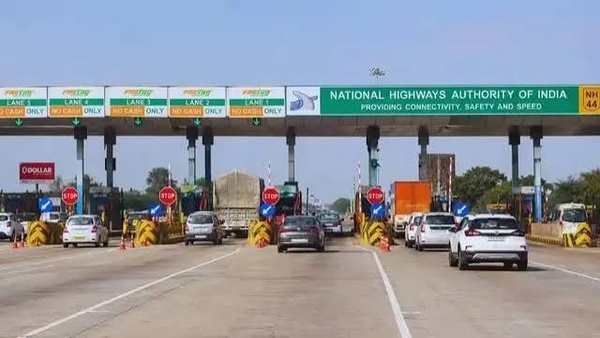

Cash almost disappeared from toll booths while highway traffic quietly pushed collections to a level nobody had seen before.
India national highway toll collection October 2026 reached an all-time high of around Rs 6,640 crore, according to a Times of India report from New Delhi published on November 15, 2026. Officials linked the jump to stronger economic activity and heavier vehicle movement across the country's highway network.
India Windfall Tax Diesel Exports Jump as Petrol Levy Drops to Zero
Record Numbers Behind the October Surge
The October total marked a roughly 16% rise over the Rs 5,715 crore collected in October 2025. That is not a small bump. It also beat the previous all-time high of Rs 6,185 crore, set just five months earlier in May 2026, by about Rs 455 crore, or close to 7.4%.
Two record months within the same year suggests something more than a one-off spike. Highways carry trucks, buses, cars and vans every single day, so a rise in toll money usually means more goods and more people are moving across the country. Officials did not break down exactly how much came from freight versus passenger traffic, but they pointed to the broader economic picture as the main driver.
India Poverty Decline 27.1% to 2.6% Stuns World Bank, But There's a Catch
Cash Nearly Vanishes While UPI Takes Over
Perhaps the sharper story sits inside the payment data. Cash collected at toll plazas fell to roughly Rs 4 crore in October 2026, compared with Rs 84 crore in October 2025. That is a drop of about 95%, and it shows how thoroughly electronic payments have taken over India's highways.
At the same time, toll payments made through UPI climbed to about Rs 100 crore in October 2026, a category that barely registered a year earlier. Government releases from October 17 and October 30, 2026 stated that more than 98% of all user-fee collection across the country now happens through FASTag under the National Electronic Toll Collection program. That figure comes from a separate official dataset, but it lines up with the near-total disappearance of cash reported for October.
How FASTag and New Rules Pushed the Shift
FASTag works through a small tag stuck on a car's windscreen. A radio signal reads the tag as the vehicle passes through the toll gate, and money gets deducted automatically. No stopping, no fumbling for notes. The system was built to cut down long queues and reduce manual cash handling at toll plazas.
Rules introduced from November 15, 2025 added extra pressure on drivers without a valid tag. Vehicles without FASTag could pay 1.25 times the regular fee if they used UPI instead, while other non-compliant situations could cost even more. That kind of pricing nudges people toward digital payment almost automatically, since nobody wants to pay extra at a toll booth.
NHAI also rolled out a FASTag Annual Pass, valid at around 1,150 national highway and expressway plazas for Rs 3,075, good for a year or 200 crossings for eligible private vehicles. More than 10 million passes have been issued since it launched in August the previous year. A survey covering 580 toll plazas found the pass improved traffic flow and cut down payment complaints, though it is not clear exactly how much of October's record came from annual pass users.
Growing Pains at Barrier-Free Toll Plazas
India has also started testing barrier-free tolling, where cameras and sensors read vehicles as they drive through without stopping at all. Parts of the Delhi-Jaipur highway switched to this system starting August 1, 2026. It sounds simple, but the rollout has not been smooth everywhere.
At Shahjahanpur in Rajasthan, around 2.60 lakh crossings stayed unidentified out of 24 lakh recorded after the barrier-less system started. Manoharpura saw more than 99,500 unidentified crossings as well. These gaps matter because unidentified vehicles can slip through without paying, which creates headaches for toll operators trying to reconcile their books. Separately, Delhi is also set to roll out multi-lane free-flow tolling at nine highway entry points, a sign that this technology is spreading fast even as early kinks get worked out.
What the Record Means Going Forward
Officials said that if the current trend holds, total toll collection could reach around Rs 74,000 crore for the year. The report does not make clear whether that figure covers the calendar year or the financial year, so it is worth treating as a rough projection rather than a locked-in number.
Either way, the direction is obvious. Highways are busier, digital payments have nearly replaced cash, and new technology like barrier-free tolls is spreading across major corridors. The next monthly toll report will show whether October was a peak moment or the start of a longer climb, and whether authorities can fix the identification problems showing up at automated plazas before the system expands further.