
Google says its newest AI model skips the usual tradeoff between speed and smarts, and it's already live for paying subscribers.
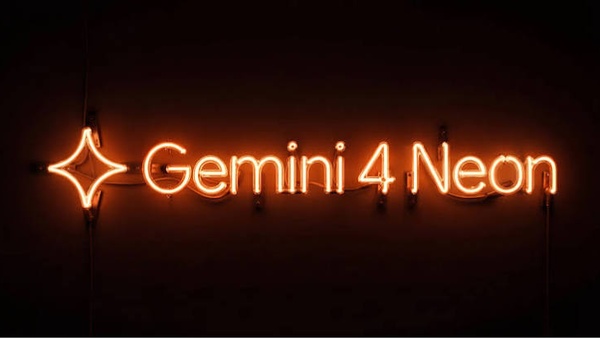
Google launched Gemini 4 Neon on November 18, 2026, rolling it out through the Gemini app, Google AI Studio, Android Studio, and Google Antigravity. The company describes Neon as a middle-tier model built for complex coding, scientific reasoning, and enterprise workflows, sitting between its faster Hydrogen model and its more powerful Carbon model.
Google DeepMind Non-Disparagement Clauses Spark Staff Revolt Over AI Risks
How Gemini 4 Neon fits into Google's new lineup
Neon arrives just a week after Google released Gemini 4 Carbon and Gemini 4 Hydrogen, filling out a three-model structure that didn't exist before this month. Hydrogen is built for speed, handling routine prompts and high-volume agent tasks quickly and cheaply. Carbon sits at the top, meant for the hardest, longest, most demanding projects. Neon lands in the middle, aimed at work that needs real reasoning power but doesn't require Carbon's full cost or weight.
Google's own description puts it simply: Neon "balances depth and efficiency" across complex coding, analytical reasoning, and enterprise tasks. The company says it brings "frontier-level intelligence with fast end-to-end task completion" to software engineering, knowledge work, and science projects. That positioning shows up across Google's blog post, its developer documentation, and its Antigravity announcement, all published the same day.
According to 9to5Google, Neon offers performance that matches or beats Carbon on coding, reasoning, and agentic benchmarks, but does it at a lower price. That's a notable claim, since Carbon was positioned just one week earlier as Google's top reasoning model. It suggests Google sees Neon not as a lesser option, but as the more practical pick for most serious users.
Apple Smart Glasses Will Use Siri AI Apps Instead of a Screen in 2027
Pricing tells its own story
Gemini 4 Neon costs $3 per million input tokens and $15 per million output tokens on the paid API tier. Cached input tokens are much cheaper, priced at just $0.15 per million, which Google calls a 95% discount. The model also carries a full 1 million token context window, and it can handle text, images, audio, video, and PDF files as input.
That price tag is double what Hydrogen costs, which runs $1.50 per million input tokens and $7.50 per million output tokens, according to 9to5Google's reporting. But Google argues the real comparison should be cost per completed task, not cost per token. By that measure, the company says Neon runs 32% cheaper than Carbon at its default high-thinking setting, while matching or beating it on quality.
There's a wrinkle, though. Carbon is currently available at an introductory price of $2 per million input tokens and $10 per million output tokens, a deal that runs only through November 30, 2026. After that date, Carbon's price jumps to $4 and $20. Until the deadline hits, Carbon can actually look cheaper than Neon on a pure token basis, even though Google says Neon wins on overall task efficiency.
Who gets access and when
Paid subscribers to Google AI Pro and Google AI Ultra can already use Neon inside the Gemini app. The same two subscriber tiers also get access through Google Antigravity, Google's desktop app, command-line tool, and IDE extensions. Inside Antigravity, Neon can run on its own or team up with Hydrogen through a feature called the Orchestrator, which lets the two models split work based on speed and complexity needs.
Developers get their own path in. Neon is live on the paid tier of the Gemini API inside Google AI Studio and Android Studio, and it's also available through Gemini for business, including API access and a model selector tool. Free Gemini app users are not mentioned anywhere in Google's launch materials, which suggests Neon access is tied specifically to paid plans for now.
The model uses the identifier gemini-4-neon and supports four thinking levels, labeled low, medium, high, and xhigh. High is the default setting listed in Google's AI Studio documentation. Output can run up to 64,000 tokens under standard use, or stretch all the way to 1 million tokens in supported long-decode workflows, giving developers room for very large coding or analysis jobs in a single pass.
Why this matters for everyday users and businesses
This launch also marks the end of the road for Gemini 3.1 Pro inside the Gemini app for paid users, according to 9to5Google. Google's documentation names Neon as the direct upgrade path for anyone relying on 3.1 Pro, along with general coding and enterprise reasoning tasks that used to run on Gemini 4 Argon. It also points to Neon as the replacement for complex coding and science work previously handled by Gemini 3.8 Flash or earlier Gemini 3 Flash models.
That migration signal matters more than it might seem. It tells developers and businesses that Google isn't just adding another option to the shelf. It's actively retiring older models and steering users toward Neon as the new default for anything beyond routine, simple tasks. Google also promoted Neon as a top performer on the Artificial Analysis Coding Agent Index, along with strong scores in STEM reasoning and long-context recall, though those specific claims come from Google's own social media posts rather than independent testing.
What comes next for Google's AI model lineup
The most concrete date on the calendar right now is November 30, 2026, when Carbon's introductory pricing expires and its rates jump upward. That shift will likely reset how developers compare Neon and Carbon on cost, since Neon's pricing stays fixed while Carbon's doubles.
Beyond that, the bigger question is how smoothly Google manages the shift away from Gemini 3.1 Pro and older Flash models. With Neon positioned as the recommended landing spot for so many existing workloads, it looks increasingly like Google's intended default model for serious coding, reasoning, and enterprise use going forward, with Hydrogen and Carbon serving as the speed and power extremes on either side.