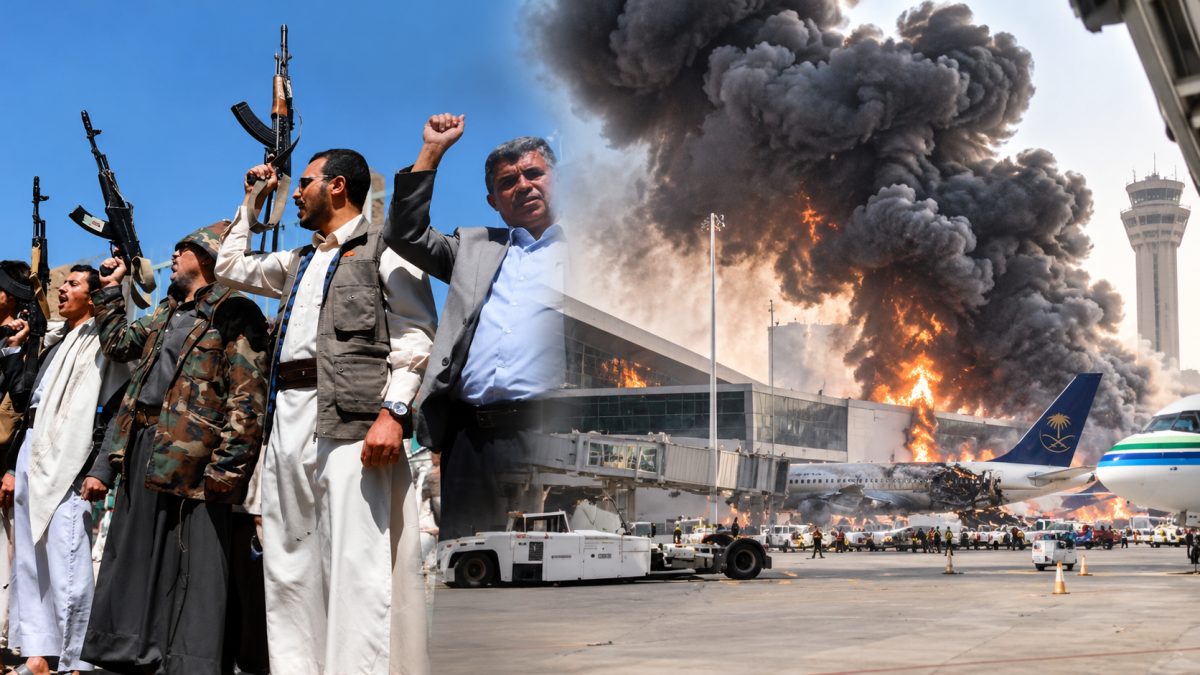

Three attacks in one week at Riyadh's busiest airport left a trail of death, fear, and grounded planes.
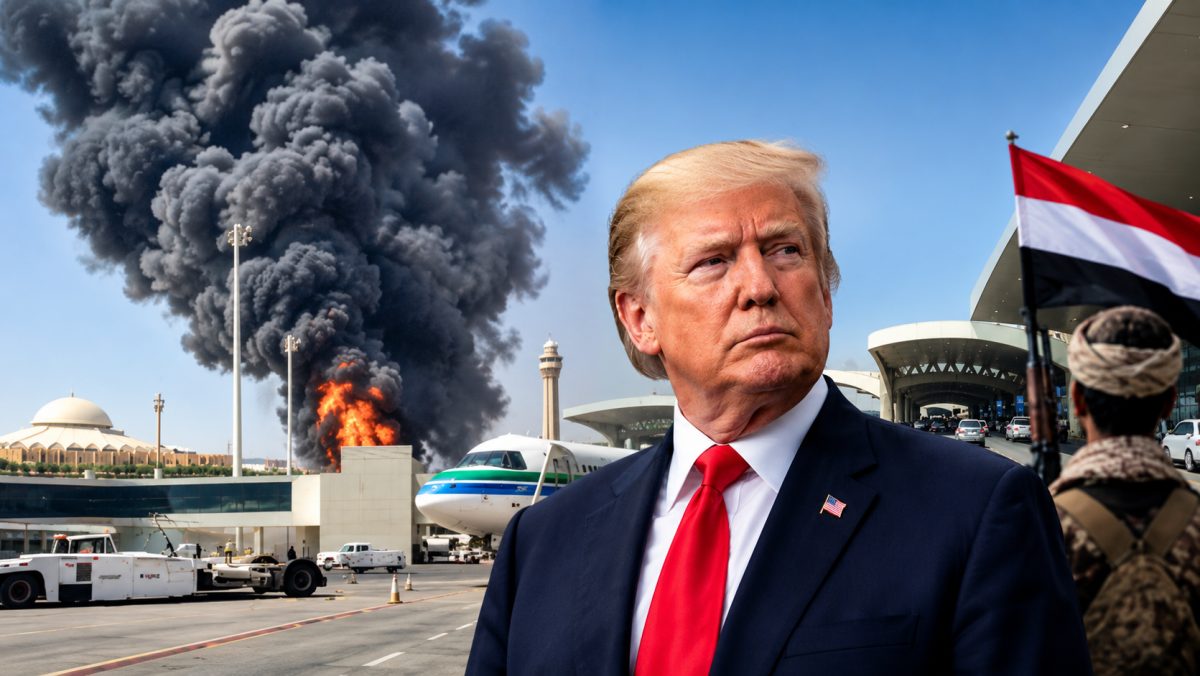
A Houthi attack on Riyadh airport killed at least 12 people and wounded 309 others on Saturday, October 10, 2026, Saudi officials said. The strike hit King Khalid International Airport in the Saudi capital and was the third attack on the facility that same week, forcing a full shutdown of airport operations.
Riyadh Airport Attack Kills 12, Will Trump Send US Troops Against Houthis Next?
Third Strike In A Week Turns Deadly
View this post on Instagram
Saudi Arabia's General Authority of Civil Aviation confirmed the casualty numbers on Saturday night. The dead came from at least eight countries. Four were Saudi citizens, two were from Bangladesh, and one each came from the United States, Egypt, Jordan, Syria, Palestine, and Sudan. The 309 injured included people in critical condition, according to the aviation authority.
This was not the first strike that week. On Thursday, October 8, the Houthis said they fired two ballistic missiles at the airport. Saudi officials later confirmed that attack, along with damage to a Saudia aircraft, killed three Saudi nationals, including an airline pilot. Reuters described Saturday's attack as the deadliest in Saudi Arabia in more than a decade, a grim marker showing how fast the violence had escalated in just days.
Flights were cancelled through the night as loud blasts were reported near the terminal. Airlines pulled back additional flights on Sunday, and witnesses described evacuations and chaos inside the airport. The shutdown left travelers stranded and cut off a major international gateway for the Saudi capital.
Israeli Killed Near West Bank Settlement Hours Before Yom Kippur as Troops Kill Palestinian Motorist
Saudi Arabia Calls Riyadh Airport Attack A War Crime
Saudi-led coalition spokesman Maj. Gen. Turki al-Maliki did not hold back. He called the assault on the passenger terminal a "full-fledged war crime" and said the coalition would "respond decisively to this terrorist attack." His comments came as Saudi authorities formally pointed to the Houthi movement as responsible for Saturday's strike, even though one report noted the group had not immediately claimed that specific attack.
The Houthis had already claimed the earlier strikes that week, saying their forces fired ballistic missiles directly at Riyadh's airport. A Houthi military spokesman framed the attacks as payback for what the group called Saudi "aggression," claiming Saudi forces carried out 60 airstrikes and missile attacks in Yemen in the prior 24 hours. That claim has not been independently verified in the available reporting.
World Leaders Condemn The Houthi Attack On Riyadh Airport
Reaction poured in fast. U.S. Secretary of State Marco Rubio said the attacks "demonstrate a blatant disregard for innocent civilian life." Washington confirmed an American citizen was among those killed.
United Nations Secretary-General António Guterres said he was "deeply shocked" by the strike. He said attacks on civilians and civilian infrastructure violate international law and demanded they "cease immediately." UN Special Envoy for Yemen Hans Grundberg called the strikes on civilian airports "a grave escalation," a warning that the Yemen war is spilling further into Saudi cities.
Qatar's Foreign Ministry called the attacks a "serious violation of Saudi sovereignty" and said they threatened regional security, civilians, and air navigation. Egypt condemned the strikes as a flagrant violation of international law. Japan's embassy in Saudi Arabia said attacks on civilians "cannot be tolerated." Kuwait and Pakistan also condemned the earlier attacks on the airport that week, adding to a wall of international criticism aimed at the Houthis.
Years Of War Between Saudi Arabia And The Houthis
This attack did not come out of nowhere. The Houthis, known formally as Ansar Allah, seized Yemen's capital, Sanaa, back in 2014. That takeover triggered a civil war that pulled in Saudi Arabia a year later, when it led a military coalition to back Yemen's internationally recognized government against the Houthi advance.
Since then, the fighting has repeatedly crossed Yemen's borders. The Houthis, who are backed by Iran, have sent missiles and drones toward Saudi airports, military bases, oil facilities, and cities over the years. Saudi Arabia has responded with its own airstrikes inside Yemen. This latest round of attacks began over the summer, according to reporting, and has now reached a level of violence against Riyadh's airport that officials say they haven't seen in more than ten years.
King Khalid International Airport is not just any target. It is Saudi Arabia's main gateway for the capital and a hub used by travelers from across the world, which explains why victims came from so many different countries. Hitting it repeatedly in a single week sends a message far beyond Yemen's borders, rattling airlines, foreign governments, and ordinary travelers who now have to think twice about flying through Riyadh.
What Comes Next For Saudi Arabia And Yemen
Saudi Arabia's coalition has promised a "decisive" response, but it has not said when or how that response will happen. That leaves a tense waiting period, with questions swirling about whether Saudi forces will strike harder inside Yemen or pursue some other path.
For now, attention is on reopening King Khalid International Airport safely and tracking the dozens still in critical condition. Investigators are also expected to look closely at the missile type used, where it launched from, and how Saudi air defenses performed during all three attacks that week. With Iran's alleged backing of the Houthis already drawing scrutiny, this latest escalation could push the wider conflict into a new, more dangerous phase.