
Hong Kong says tighter security rules and open global markets can live side by side, and the numbers from late 2026 back that claim up.
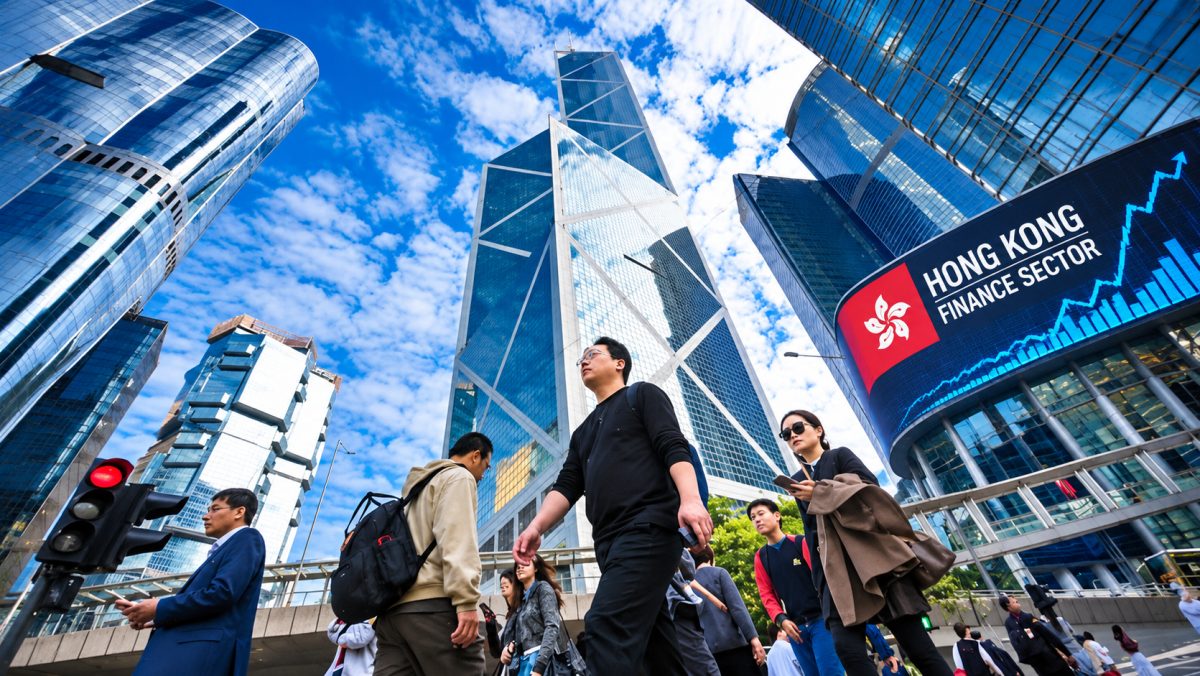
Hong Kong finance sector security opening up became the center of debate on November 3, 2026, after the South China Morning Post published an editorial arguing the city's national-security agenda and its push for global capital are not at odds. The piece landed during the fifth Global Financial Leaders' Investment Summit and Hong Kong FinTech Week 2026, two events meant to show the city still matters to international banks and investors.
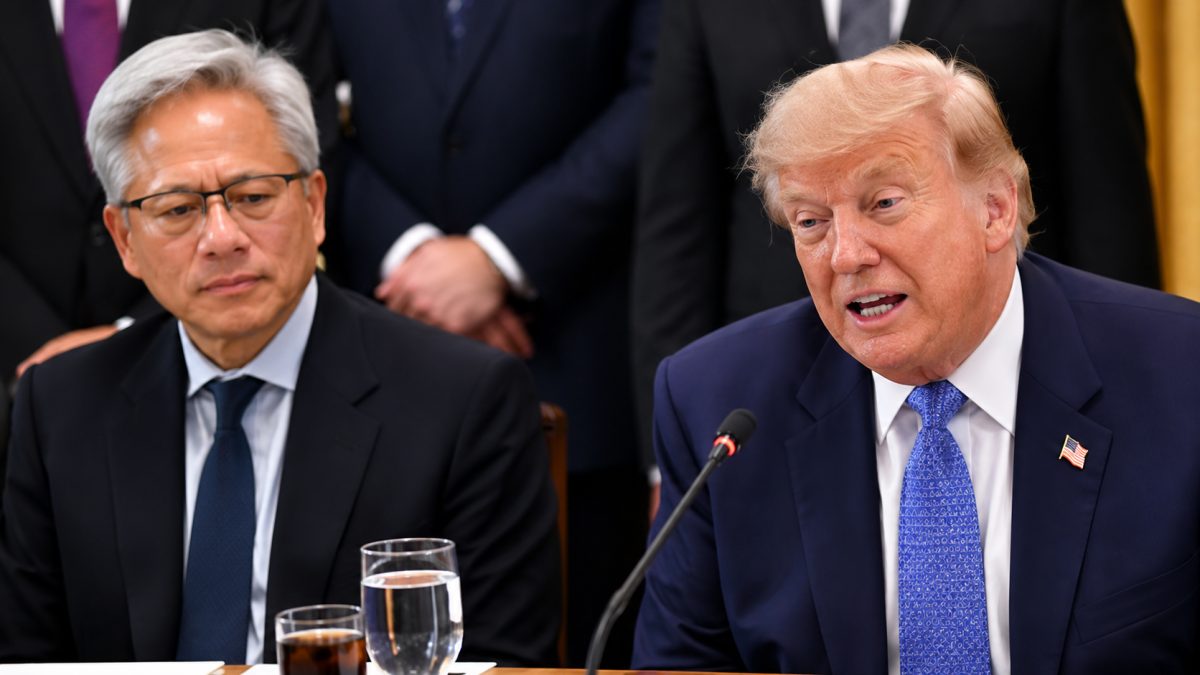
Trump Addresses Jensen Huang Chinese Spy Plot, Calls Nvidia CEO 'Brilliant'
Security laws paired with record financial activity
The Hong Kong Monetary Authority opened the investment summit by saying finance "plays an irreplaceable role in Hong Kong's high-quality development." That message came right alongside fresh data showing the city isn't slowing down financially. Offshore RMB lending hit a record RMB935 billion in 2025, and bond issuance crossed RMB1 trillion for a second straight year, according to figures cited in the Chief Executive's Policy Address.
Hong Kong digital bonds made up nearly half the global market between 2025 and the first half of 2026. The Securities and Futures Commission reported 47 new listings in its latest quarter, raising roughly HK$100 billion, a 12% jump year on year, with 559 active listing applications still pending. None of that reads like a market pulling back from the world. It reads like one trying to prove it hasn't lost its edge.
Xi Jinping Corruption Crackdown Hits Top Generals as Party Meets in Beijing
What officials are saying about stability and control
Chief Executive John Lee used his 2026 Policy Address to frame security laws as good for business, not bad for it. He said the rollout of the Hong Kong National Security Law and the Safeguarding National Security Ordinance had given "better protection for the security of our country and Hong Kong," and that these measures brought "a sense of stability, certainty and predictability to the market."
Lee went further, calling Hong Kong a "safe harbour" and adding that "a safe harbour is a harbour for development." He said plainly that "Security has become a clear advantage for Hong Kong's development." At the investment summit, Lee also told global finance leaders that Hong Kong remains the nexus for global finance even as geopolitics, AI, and blockchain reshape the industry around it.
The arrests and numbers critics point to
Not everyone buys the stability argument without question. The UK government's six-monthly report on Hong Kong, covering January through June 2026, recorded that by the end of 2025, police had arrested 385 people on national-security offences, including 69 arrests during 2025 alone. More than half of those arrested had been formally charged, the report said. Since the 2024 Safeguarding National Security Ordinance took effect, at least 47 people had been arrested under it and 14 charged, based on local media reporting cited in the UK document.
The same report flagged at least five more national-security prosecutions in the first half of 2026, including three subversion cases and two terrorism cases. A separate US State Department investment-climate assessment acknowledged Hong Kong's complete freedom of capital movement and its "well-understood regulatory and legal environment," while also noting that national-security legislation remains a defining feature of the city's investment climate. So the disagreement isn't really about whether Hong Kong is still doing business. It's about whether legal certainty and tighter political controls can hold together over time.
Growth bets on RMB, wealth management, and digital assets
Hong Kong's government isn't hedging on its financial ambitions. The 2026 Policy Address commits the city to deepening its global offshore renminbi business and capital market, building out an international asset and wealth-management center, and expanding risk management along with securities, fixed-income, and commodity trading. Lee's address also claimed Hong Kong has become the largest cross-boundary wealth management center globally and reclaimed its spot as the world's third-largest international financial center.
Digital assets are part of the push too. On April 10, 2026, the HKMA granted licences to Hong Kong's first stablecoin issuer, a move officials describe as a milestone for regulated digital finance. Two months later, on June 15, 2026, the government launched a public consultation on its first Five-Year Plan for Economic and Social Development, including what it calls a "Finance+" strategy tied to China's own 15th Five-Year Plan. The Policy Address also noted that mainland financial institutions with stronger capital and compliance standards are being encouraged to set up international headquarters in Hong Kong, as long as they do so in a risk-controlled, voluntary, and legally compliant way.
Who showed up and what it signals next
FinTech Week 2026, held November 2 to 3, drew HSBC Group chief executive Georges Elhedery along with senior officials from the Banque de France and the Bank for International Settlements. HKMA chief executive Eddie Yue moderated a panel featuring Banque de France's first deputy governor Denis Beau and the BIS's Tommaso Mancini-Griffoli, a lineup officials point to as proof that global institutions are still willing to sit at the table with Hong Kong.
What comes next is less about reversing course and more about finishing what's already started. Officials plan to wrap up the Five-Year Plan consultation, keep expanding the offshore RMB and wealth-management ecosystem, and continue rolling out digital-asset rules. The real test, though, isn't whether Hong Kong can attract capital in the short term. It's whether investors keep trusting a system that promises both tighter security enforcement and deeper global integration at the same time, and whether that promise holds up the longer it's tested.