
Markets closed October on a high note, but cracks underneath mean Monday could go either way.
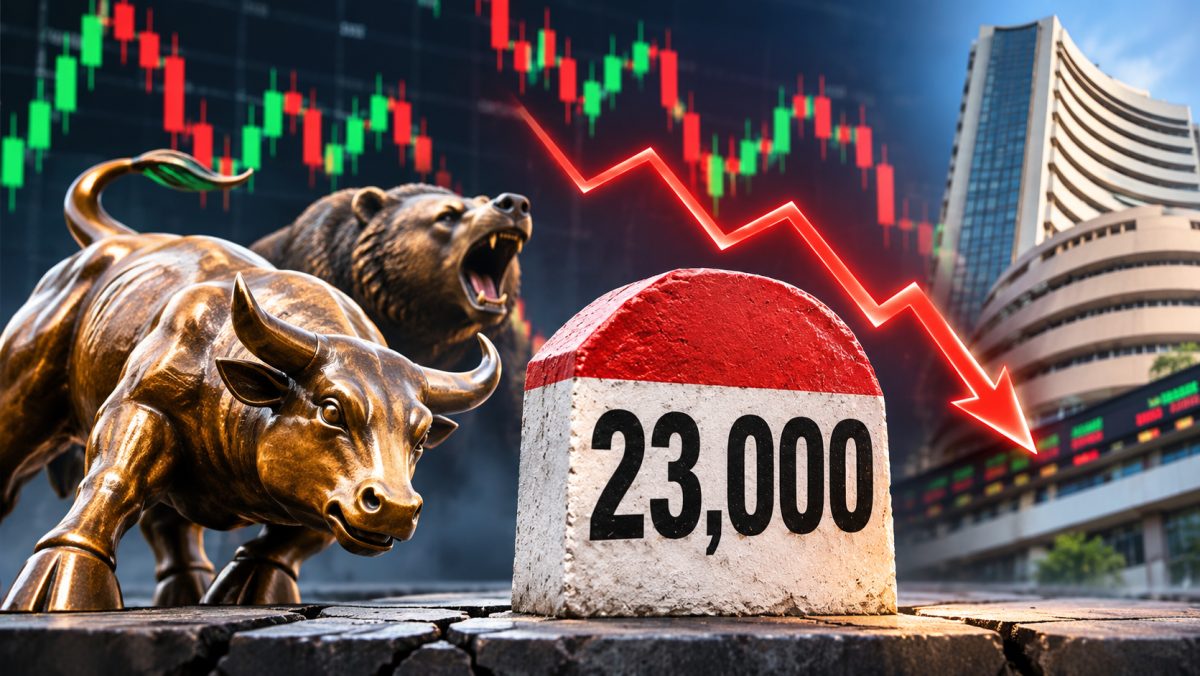
Indian investors head into the stock market Monday November 2 2026 session with a mixed picture. The Nifty 50 closed Friday, October 30, at 23,053.10, up 0.51%, while the Sensex gained 308.49 points to end at 74,459.53. But midcap and smallcap stocks fell sharply the same day, raising questions about whether this rally can hold.
Sensex Jumps 900 Points, Nifty Gains 1% , What Sparked The Rally
Nifty Sensex Monday Market Outlook Faces A Tricky Setup
The headline numbers looked good last week. The Nifty 50 rose about 2%, adding 453 points, while the Sensex climbed nearly 1.8%, gaining roughly 1,336 points over five sessions. Friday was especially notable because the Nifty closed above 23,000 for the first time in eight sessions, a level traders had been watching closely.
But look past the index numbers and the story gets murkier. The Nifty Midcap 100 dropped 0.93% on Friday alone, and the Nifty Smallcap 100 fell even harder, down 1.85%. That means while big, well-known companies pulled the market higher, smaller and mid-sized stocks were actually being sold off. This kind of split, where blue-chip names rise but the broader market sinks, often signals that investors are nervous and sticking to safer bets.
Sensex Nifty Erase ₹5 Lakh Crore as Eight-Week Losing Streak Becomes Worst in 25 Years
Crude Oil Impact On Indian Stocks Takes Center Stage
Oil prices are the biggest worry heading into Monday. Brent crude shot up to around $117.8 a barrel on Friday, its highest level since April, while US crude, WTI, pushed toward $104. Some reports placed Brent trading above $116 during the session itself. For the entire month, oil's rise was tracking above 12%, a steep jump that nobody in the market can ignore.
Why does this matter so much for Indian stocks? India buys most of its oil from abroad. When crude gets expensive, it costs the country more to import, which can weaken the rupee and push up inflation. Higher inflation often means companies face costlier raw materials and consumers spend less, both of which hurt stock prices. Renewed tension in West Asia was the main reason behind the sudden spike, and any further escalation there could send oil even higher before Monday's opening bell.
FII Activity And Nifty Prediction Monday Hinges On Foreign Money
There's a silver lining buried in last week's data. Foreign institutional investors, or FIIs, reportedly turned net buyers of Indian stocks after selling for 10 straight weeks. That's a meaningful shift. When foreign funds start buying again, it usually lifts large-cap stocks first, since that's where big institutional money tends to flow.
Whether that buying continues into Monday is the real question. If FIIs keep adding Indian shares to their portfolios, it could help the Nifty hold its position above 23,000 even if crude oil stays elevated. But if foreign investors get spooked by oil prices or global technology stock weakness and start pulling money out again, the benchmark gains from last week could unwind quickly. Domestic institutions, including mutual funds, will also play a role in cushioning any selling pressure from abroad.
Ten Things To Watch Before Stock Market Opens Monday
Beyond oil and foreign flows, several other factors will shape Monday's trade. A global technology sell-off hit markets worldwide last week, even though Indian IT stocks actually helped lift the Sensex and Nifty on Friday, led by strong performers in the sector alongside pharma and healthcare names. Whether that global tech weakness spreads further or fades will matter a lot for Monday's opening mood.
Wall Street's overnight performance, US bond yield movements, and any fresh signals on Federal Reserve policy will also filter into Indian trading. Market breadth remains a genuine concern. Friday's steep fall in midcap and smallcap stocks suggests many investors are playing it safe, and that caution could easily carry into the new week. Corporate earnings reactions, rupee movement against the dollar, and whether the Nifty can defend the 23,000 mark on a sustained basis round out the key triggers traders are tracking.
What History Of Last Week Tells Us About Monday's Risks
The rally that built up through the week came from a few supportive forces working together: renewed FII buying, a Federal Reserve policy outcome that didn't surprise anyone, and a modest recovery in the rupee. Brent crude started the week near $110.85 a barrel, according to weekly market tracking, before climbing steadily toward its Friday peak. That steady oil price climb is exactly what turned a confident rally into a more cautious one by week's end.
The divergence between large caps and broader stocks isn't just a one-day blip, either. It reflects investors actively choosing safety, sticking with liquid, well-established companies in IT, pharma and healthcare while trimming exposure to smaller, more richly valued names. Going into Monday, that pattern could easily repeat itself. A stable oil market and continued foreign buying would likely extend the recovery in large caps. But another spike in crude, renewed global tech selling, or a reversal in FII flows could quickly expose just how fragile the broader market's footing really is.